Sovereignty is the foundation of democracy: the political realities of the Sahel
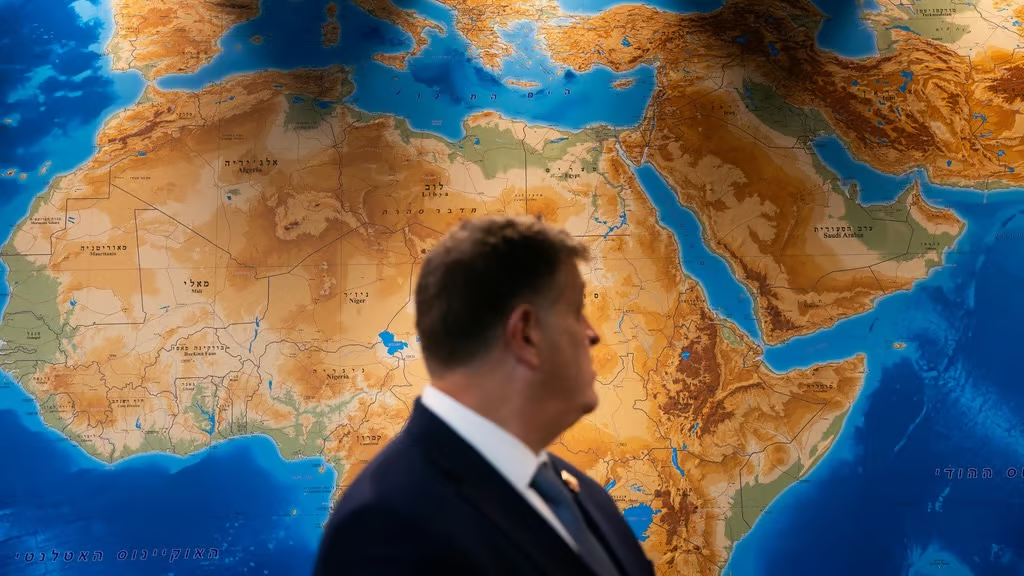
As debates over democracy and governance intensify across Africa, the Alliance of Sahel States (AES) has advanced a political struggle that challenges conventional understandings of democratic transition in the context of its fight for sovereignty.
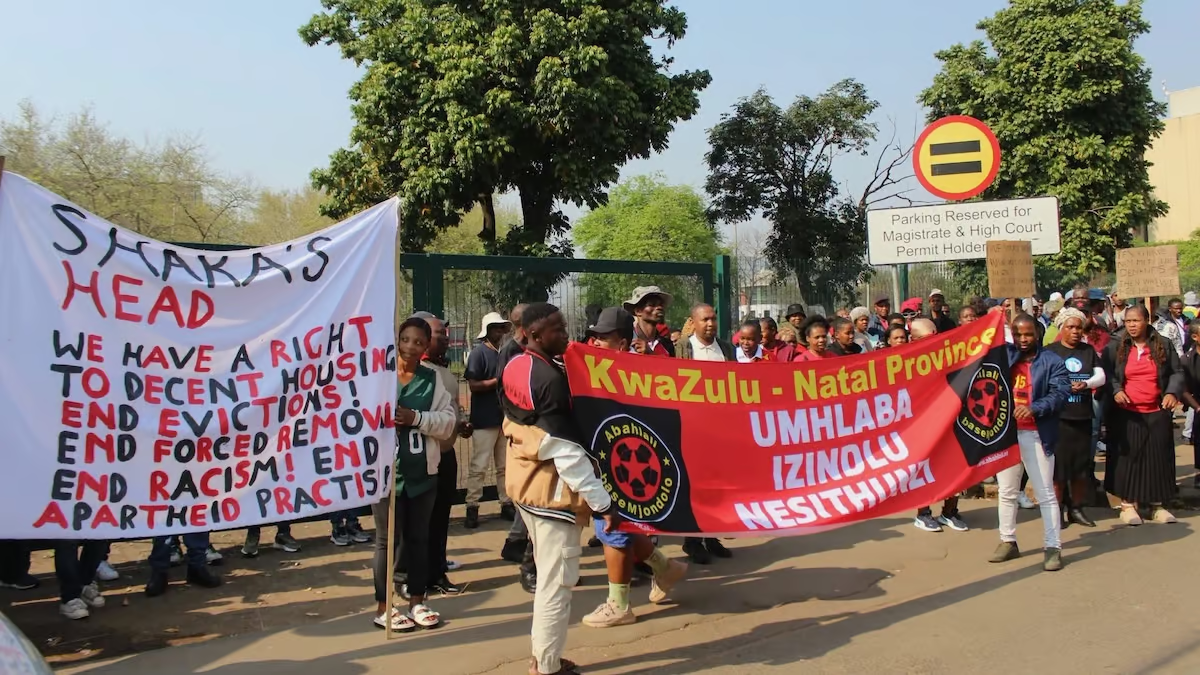
South Africa’s anti-immigrant protests expose a deeper national crisis
South Africa's deadline of June 30, set by anti-immigrant groups for undocumented immigrants to leave the country, came and went under heavy police deployment, closed businesses, and widespread anxiety. While fears of large-scale violence prompted heightened security across several provinces. Some demonstrations remained peaceful, while other areas experienced looting, isolated attacks, and arrests, like KwaZulu-Natal and Western Cape.
It is the latest in a growing movement that has gathered momentum throughout 2026, with anti-immigrant groups organizing marches, blocking access to public institutions, and demanding the removal of undocumented migrants. The movement has already announced that protests will continue every Thursday.
South Africa continues to struggle with one of the world's highest unemployment rates, particularly among young people, alongside persistent inequality, rising living costs, deteriorating public services, and slow economic growth. These conditions have created fertile ground for narratives that portray migrants as competitors for scarce jobs, housing, healthcare, and social services.
Throughout the year, anti-immigrant activists have or attempted to block hospitals and schools, demanding that South Africans receive priority treatment. Others have stopped individuals in communities, asking them to produce identity documents, actions the South African government has repeatedly declared unlawful, insisting that immigration enforcement remains the responsibility of state agencies rather than citizens.
For many, the protests are driven by a genuine belief that undocumented migration has worsened unemployment, crime, and reliance on state benefits. But whether those perceptions are supported by evidence is highly contested.
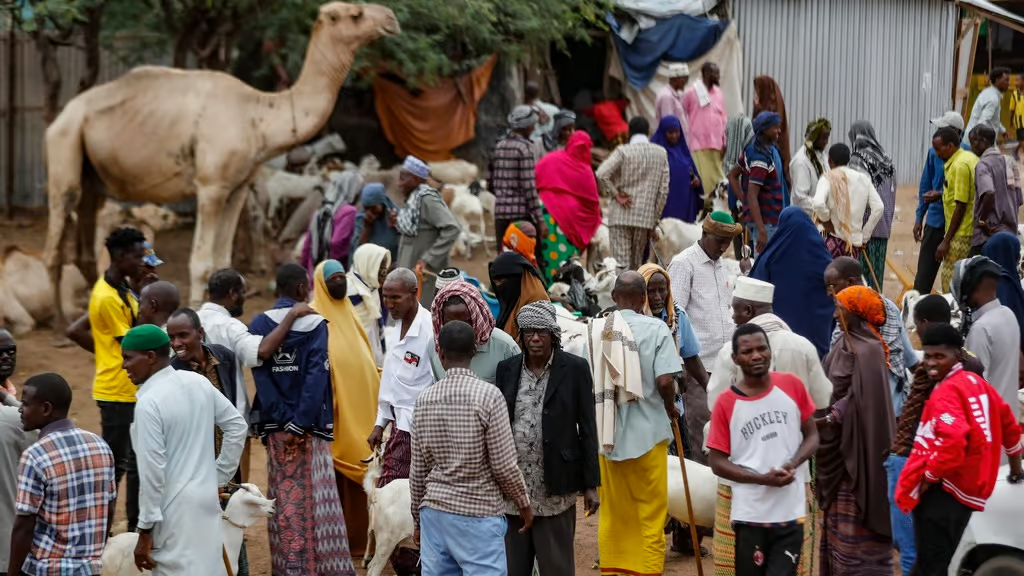
Hundreds arrested in Kenya during second anniversary of 2024 protests
Tight security measures and road barricades were deployed across Nairobi and other towns, in an attempt to prevent commemorative protests. Police arrested hundreds of Kenyans marking the second anniversary of the 2024 protests that left more than 60 young people dead.
Burkina Faso rejects EU resolution as ‘neo-colonial’ interference
The European Parliament adopted a resolution on June 18, criticizing Burkina Faso’s human rights record, civic freedoms, and governance under the government led by popular leader Ibrahim Traore. In response, Burkina Faso summoned the Head of the European Union Delegation in Ouagadougou, rejecting the resolution as an infringement on its sovereignty and accusing European lawmakers of relying on misinformation and a neo-colonial understanding of African affairs.
The European Parliament passed the resolution with 476 votes to 11, and 75 abstentions. It called for greater scrutiny of human rights and press freedom in Burkina Faso, urged authorities to lift media restrictions, investigate alleged violations, reconsider withdrawal from the International Criminal Court, and ensure counterterrorism operations comply with international law. It also raised concerns over growing Russian influence in the country following the withdrawal of European forces.
On June 22, 2026, Burkina Faso's Minister of Foreign Affairs, Regional Cooperation and Burkinabè Abroad, Karamoko Jean Marie Traoré, summoned the Head of the European Union Delegation to Burkina Faso, Ambassador Philippe Bronchain, to formally protest both the parliamentary resolution and remarks made during the debate by French Member of the European Parliament Christophe Gomart.
In a statement, the Burkinabè government expressed its "disapproval, regret, disappointment and disgust" over both the resolution and what it described as "accusing, rude and lying statements" made during the parliamentary session.
According to Minister Traoré, the arguments presented before the European Parliament were built on misinformation and reflected a profound misunderstanding of the realities facing Burkina Faso.
13 World Cup nations call out UEFA president over ‘uninteresting matches’ remark
UEFA President Aleksander Čeferin’s remarks suggesting that the increase in the number of teams at the World Cup could lead to “uninteresting matches” has been strongly criticized by several football federations.
Sudanese survivors file war crimes complaint against RSF in Kenya
A landmark war crimes complaint was filed in Kenya against 10 RSF commanders accused of atrocities committed during Sudan’s ongoing conflict.
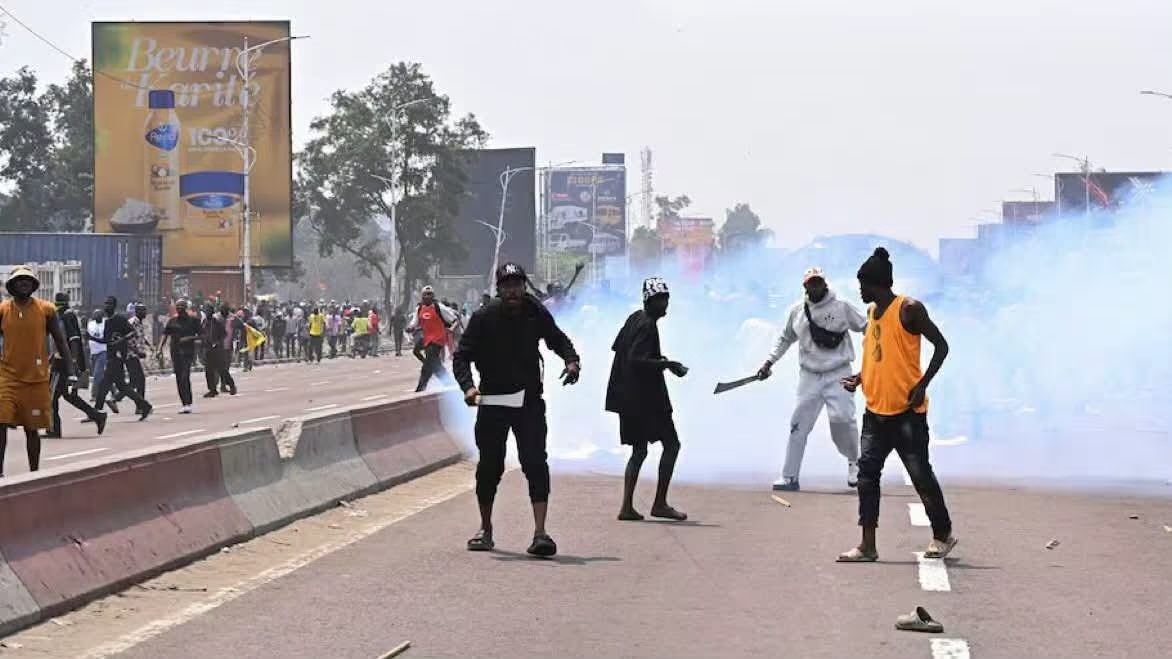
Push for referendum in DR Congo sparks protests over possible Tshisekedi third term
Opposition groups in the DRC fear that the bill could pave the way for a referendum on constitutional amendments, including on the presidential mandate. Protests have been heavily repressed.
Ethiopia’s 2026 race: Abiy Ahmed set for re-election
Many describe the election as largely procedural and faced with ongoing insecurity, economic pressures, and limited political participation.