Sudanese survivors file war crimes complaint against RSF in Kenya
A landmark war crimes complaint was filed in Kenya against 10 RSF commanders accused of atrocities committed during Sudan's ongoing conflict.
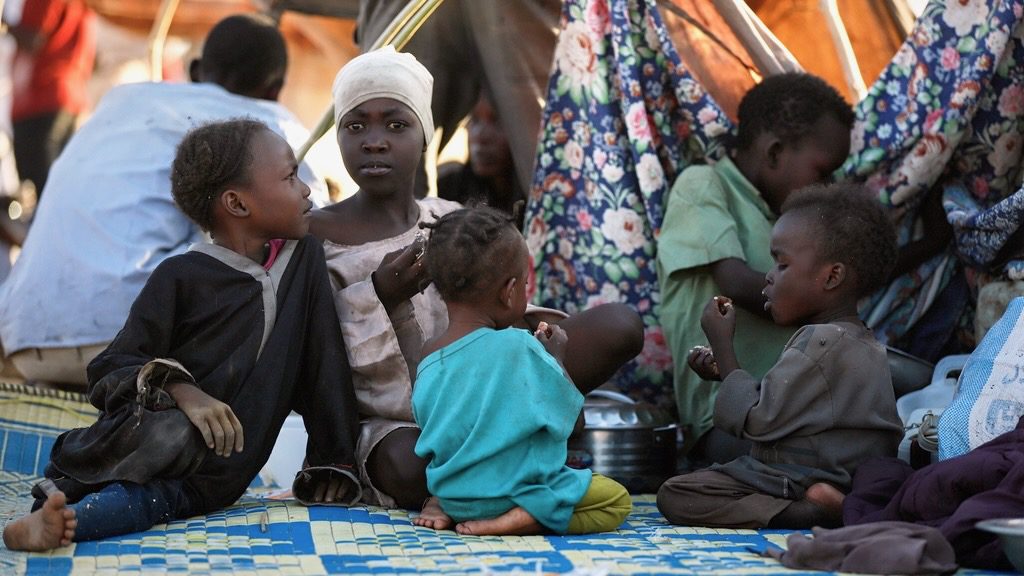
Displaced children and families from el-Fasher. Photo: AP
A landmark legal complaint seeking accountability for atrocities committed during Sudan’s ongoing conflict has been filed in Kenya against members of Sudan’s Rapid Support Forces (RSF).
On June 9, Legal Action Worldwide (LAW) and its partners filed the first war crimes complaint with the Director of Public Prosecutions (DPP) in Nairobi against ten persons of interest linked to Sudan’s Rapid Support Forces (RSF). The complaint identifies mid- to senior-level RSF commanders alleged to have committed international crimes in and around Khartoum between April 2023 and March 2025.
The 196-page complaint was submitted on behalf of twelve Sudanese survivors who say they were subjected to arbitrary detention, torture, rape, sexual slavery, and other grave abuses. Several of the complainants also witnessed family members being killed during the conflict.
While the complaint focuses on twelve survivors, the case represents millions of Sudanese who have endured atrocities since the outbreak of war in April 2023.
The complaint has already been officially received and stamped by Kenya’s office of the Director of Public Prosecutions.
Pursuing justice beyond Sudan’s borders
The filing comes following growing international concern over atrocities committed during the war between the Sudanese Armed Forces (SAF) and the RSF. Since fighting began in April 2023, Sudan has experienced one of the world’s largest humanitarian crises.
Millions of people have been displaced, tens of thousands killed, and widespread reports have emerged of massacres, sexual violence, torture, ethnic targeting, and attacks on civilians. International human rights organizations and United Nations bodies have repeatedly documented allegations of serious violations of international humanitarian law and international human rights law.
The decision to file the complaint in Kenya is particularly important given Nairobi’s controversial relationship with the RSF leadership.
Kenyan President William Ruto has hosted RSF leader Mohamed Hamdan Dagalo in Nairobi on several occasions. Kenya has also faced criticism from Sudanese political actors and civil society groups over allegations that it has provided diplomatic space and legitimacy to RSF-linked actors.
The complaint therefore places Kenya at the center of an emerging legal battle over accountability for crimes committed during Sudan’s devastating conflict.
“The contradictions were bound to surface”
Speaking on the significance of the case, Sudanese researcher and journalist Mosaab Baba told BreakThrough News, that the filing was both surprising and necessary. Imperial forces project the image of Kenya as a haven for democracy and human rights, yet it is hosting RSF, Baba explained.
“At first glance it creates a huge confusion. How can this be possible? How can a group as bloody as the RSF have a safe haven in Kenya? But that goes back to the fact that from the beginning the RSF was already legitimized by powerful international actors.”
According to Baba, the RSF’s international relationships over the past decade helped create conditions where governments and institutions were willing to engage with the militia despite mounting evidence of abuses.
“The European Union worked with them on migration control. Gulf states relied on them in the war in Yemen. For years the RSF was given legitimacy internationally. That made it easier for countries to engage with them politically and economically.”
Baba says that the most troubling aspect has been the willingness of international actors to overlook allegations of atrocities in pursuit of strategic interests.
“The mind-boggling thing is how people can simply dismiss all the atrocities committed by the RSF and continue doing business with them. The contradictions became so severe that it was only a matter of time before people stepped forward and demanded accountability.”
He added that even if accountability for senior RSF figures proves difficult to achieve immediately, legal efforts remain important.
“If we cannot get accountability for the RSF leadership right away, we can begin pursuing accountability for those who facilitate, support, or protect them. Legal processes create pressure and establish a public record.”
A first-of-its-kind legal challenge
Baba emphasized that the Kenyan filing is unprecedented in its scope and importance.
“This is the first time there has been an actual legal complaint of this nature against the RSF. That alone makes it a huge step.”
He noted that victims of RSF abuses are spread across the region, including in Kenya, Uganda, Egypt, Chad, and other countries where Sudanese refugees have sought safety.
“The scale of suffering is enormous. There are victims throughout the region. The challenge is that many countries lack the legal and political environment necessary to pursue such cases effectively. Kenya presents a unique opportunity.”
For Baba, the case carries broader implications not only for Sudan but also for Kenya itself.
“I think it is important for Kenyans to view this as an opportunity to strengthen democracy and the rule of law. No country should become a haven for militias or organized criminal networks.”
He argued that legal actions against alleged perpetrators of international crimes can serve as a deterrent against future abuses.
“Actions like this are important because they send a message. They deter not only those accused of crimes but also governments and institutions that may be tempted to provide protection or legitimacy to such actors.”
He also drew a distinction between the policies of governments and the views of ordinary citizens.
“There is a clear difference between what governments may do and what ordinary people believe. If you speak to many Kenyans, they are appalled by what the RSF has done in Sudan.”
The filing of the complaint does not automatically lead to prosecutions. Kenyan authorities will first need to review the evidence and determine whether an investigation should proceed.
Nevertheless, for Sudanese survivors, the case represents something more immediate, the possibility that their testimonies, evidence, and experiences may finally be heard by a legal institution willing to examine them and pursue justice for them and millions of others.