Sovereignty is the foundation of democracy: the political realities of the Sahel
As debates over democracy and governance intensify across Africa, the Alliance of Sahel States (AES) has advanced a political struggle that challenges conventional understandings of democratic transition in the context of its fight for sovereignty.
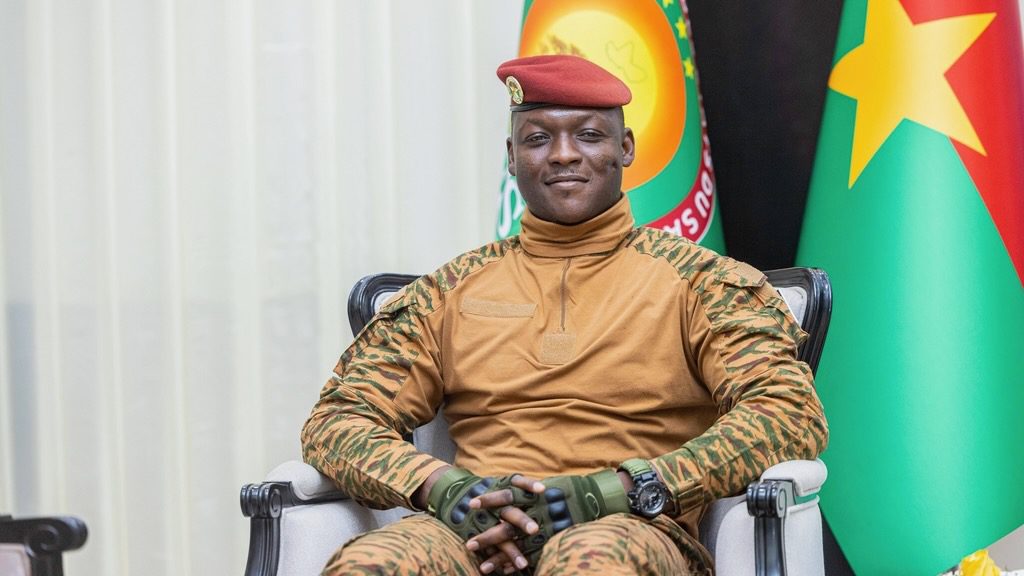
Captain Ibrahim Traoré of Burkina Faso attends the Alliance of Sahel States (AES) second summit on security and development in Bamako, Mali, Tuesday, Dec. 23, 2025. Photo: AP
When Burkina Faso’s transitional President Captain Ibrahim Traoré argued earlier this year that democracy cannot exist without sovereignty, international headlines were quick to conclude that he had rejected democracy altogether.
Across much of the Western media, his remarks were presented as further evidence that the military-led governments of Burkina Faso, Mali, and Niger were abandoning democratic governance in favor of authoritarian rule. But supporters of the Alliance of Sahel States (AES) insisted that Traoré’s intervention was being misunderstood. They argued that he was asking a more fundamental question; can genuine democracy exist in neo-colonial countries whose political and economic decisions remain shaped by external powers?
That debate has intensified further after the European Union adopted a resolution condemning Burkina Faso over alleged human rights violations. Burkina dismissed the resolution as an unacceptable interference in its internal affairs based on misinterpretation.
Read more: Ibrahim Traoré: We do not want a democracy that kills
While much of the international discussion has centered on elections, constitutional rule and human rights, another current of political thought emerging across parts of Africa begins from a different premise; that sovereignty is the necessary precondition for democracy.
Understanding the Sahel’s political context
To analyze the historical context and political trajectory shaping the Sahel, BreakThrough News spoke to Philippe Noudjènoumè, secretary general of the Communist Party of Benin.
Read more: Benin seeks reset with AES as new president visits Niger and Burkina Faso
For Noudjènoumè, the starting point is not whether societies should pursue democracy through elections or revolutionary struggle. Instead, he argues that the first task is to understand the historical conditions in which that struggle unfolds.
“The question that we must ask first of all is where are we coming from in our processes, where are we today, and where are we trying to get? Once you determine where you are in the process of struggle, only then can you answer whether the path is through elections or through armed struggle.”
He situates the contemporary political upheavals in the Sahel within Africa’s longer history of colonial domination.
“Africa is still strongly dominated by imperialist forces. Since the Berlin Conference of 1885, Africa was divided without Africans. Even after national independence, decisions continue to be made for us. That has never fundamentally changed.”
From this historical reading, he contends that many African states remain politically constrained, despite achieving formal independence decades ago. For him, this fundamentally alters how democracy should be understood.
Sovereignty, democracy, and neocolonialism
“Africa has reached a crossroads. We have reached the crossroads of patriotism and sovereignty. We have not yet reached the stage of democracy because democracy is exercised within a sovereign state. When the state is not independent, there is no democracy. When the state is not sovereign, there is no democracy.”
This distinction lies with the growing ideological current associated with the AES.
Rather than rejecting democracy outright, Noudjènoumè argues that democratic institutions cannot function meaningfully while external powers retain decisive influence over political outcomes.
“It is the Western powers that decide who governs many African countries. They rearrange elections through fraud, corruption and manipulation and impose leaders on our countries. If that is the reality, then what is presented as democracy cannot truly be the rule of the people.”
His critique extends particularly to France’s relationship with its former colonies.
Unlike Britain, which largely opened its former colonies to competition among various Western powers after independence, France preserved direct political, economic and military influence through local elites whose interests remained tied to Paris.
According to Noudjènoumè, dismantling that system has become the defining political struggle in French-speaking West Africa.
“The principle is that we need to free ourselves from France. That is the fight that is taking place now. That is why you are witnessing patriotic movements across the Sahel. It is a struggle for freedom from France.”
This explains why many supporters of Burkina Faso, Mali, and Niger view recent developments, including the expulsion of French troops, the withdrawal from ECOWAS, efforts to establish new regional institutions, and increasing emphasis on economic self-reliance not just as military decisions but as steps in a broader process of decolonization.
Noudjènoumè also explains the prominence of military coups across the region in a way that differs from both Western criticism and romantic portrayals of military rule.
He says that coups have emerged largely because of the conditions and disillusionment among the masses.
“In our countries today, we do not yet have revolutionary organizations capable of leading that process. In that vacuum, a popular coup has become the mechanism through which patriotic forces have reached power.”
The European Union and Africa’s sovereignty
On a recent European resolution on Burkina Faso, Noudjènoumè adds that the issue extends beyond the substance of the resolution itself to what he sees as the continued assumption that Europe retains political authority over African affairs.
“The European Union resolution is a gross violation. It shows that they still believe Africa is their possession and that they have the right to speak on matters concerning our countries. It is another expression of the imperialist attitude towards Africa.”
Burkina Faso responded in similar terms, insisting that questions concerning its internal governance belong to its people rather than foreign governments or international institutions.
For European governments and many international organizations, democracy is generally measured through constitutional governance and elections, among others.
For supporters of the AES, the decisive question comes earlier; whether genuine popular sovereignty can exist while external actors continue to exercise decisive influence over political, military, and economic affairs.
That debate now extends well beyond the Sahel. Across the continent, Noudjènoumè believes Africa has entered a historical phase in which sovereignty must precede every other political objective.
“Today Africa is at the crossroads of sovereignty. Democracy as it is taught to us by the West is a false democracy built on manipulation, corruption and money. Before we can speak about democracy, we must first have sovereign states in the continent.”
For decades, the Western liberal democratic yardstick has struggled to grasp Africa’s historical and political realities. Too often, it has served as an instrument for disciplining states that challenge the prevailing international order rather than sustaining the popular will of African peoples.