Hundreds arrested in Kenya during second anniversary of 2024 protests
Tight security measures and road barricades were deployed across Nairobi and other towns, in an attempt to prevent commemorative protests. Police arrested hundreds of Kenyans marking the second anniversary of the 2024 protests that left more than 60 young people dead.
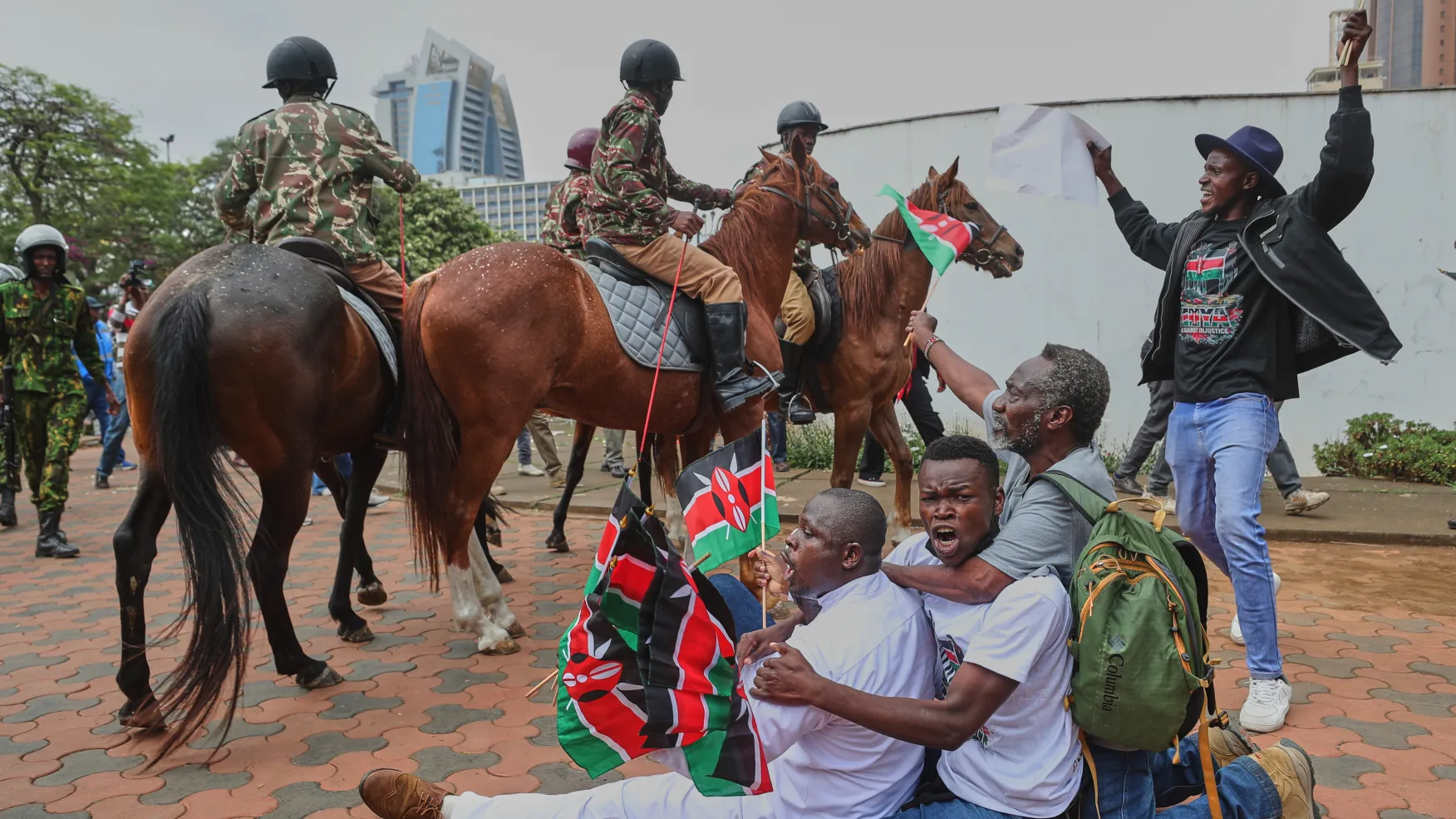
Protesters sing and wave Kenyan flags near Parliament during a demonstration marking two years since the 2024 anti-government protests in Nairobi, Kenya, Thursday, June 25, 2026. Photo: AP
More than 350 people were arrested across Kenya on June 25 as thousands attempted to commemorate the second anniversary of the historic 2024 anti-Finance Bill protests, renewing demands for justice for victims of police violence and an end to state repression.
While the Interior Cabinet Secretary maintained that those arrested were criminals, activists have continued to flood police stations and courts in search of detained protesters and fellow activists. They are demanding the unconditional release of those arrested, the immediate disclosure of the whereabouts of six activists reported missing, and accountability for what they describe as widespread violations of constitutional rights during the commemorative protests.
The demonstrations were organized to honor the more than 60 young Kenyans who were killed, injured, disappeared, or subjected to enforced disappearances during the 2024 and subsequent 2025 protests. What began in June 2024 as nationwide resistance against the Finance Bill evolved into one of the largest youth-led protest movements in Kenya’s recent history, challenging not only punitive taxation but also key questions of governance, corruption, police brutality, unemployment, and the rising cost of living.
Security lockdown
Unlike the massive demonstrations witnessed in 2024 and 2025, this year’s commemoration faced an unprecedented security operation. Major roads leading into Nairobi’s Central Business District were barricaded from the early hours of the morning, security forces established roadblocks across the city, and many businesses remained closed as authorities effectively placed sections of the capital under lockdown to prevent protesters from accessing key gathering points. Despite the restrictions, demonstrations were reported in several parts of the country.
Activists demand release of missing protesters
While some of those arrested were released on June 26 on 1000 cash bail, Activists and social justice movements say several activists remain unaccounted for, raising concerns over arbitrary detention and violations of constitutional rights. The six activists whose whereabouts activists continue to demand are; Davis Lichuma, Elisha Alam, Collins Ochieng, Frederick Odhiambo Ojiro, Muteti Mulinge, Micheal Ngige.
Speaking to BreakThrough News, activist Mutungi wa Mwangi said the commemorative protests sought both to remember those killed and to highlight the continued failure of the state to deliver justice.
“On 25th June 2026, movements, organized fronts and the general population in Kenya held commemorative protests to demand justice for those killed or brutalized by the police force in 2024 and 2025. The youth-led 2024 protests were held across the country against an IMF-imposed Finance Bill that sought to raise taxes on basic commodities for an already overtaxed population, further raising the cost of living which was already high for the majority.
While the Kenyan state has promised compensation for those injured or killed in the 2024 and 2025 protests, it has failed to deal with the structural deficiencies that can end the violent colonial policing tactics and guarantee justice in the long term.
Like in the previous two years, this year’s commemoration was met with state violence and repression. At least 350 protesters were arrested. Six of our comrades are being held incommunicado, and we demand to know their whereabouts.”
Activists have also accused the authorities of allowing armed gangs and criminal groups commonly referred to as “goons” to infiltrate or disrupt demonstrations while targeting peaceful protesters for arrest. They argue that the presence of such groups has repeatedly been used to conflate criminality with legitimate public dissent, undermining constitutionally protected protests and creating fear among citizens seeking to demonstrate peacefully.
Economic and political discontent continues
President William Ruto’s administration continues to face growing dissatisfaction among many young Kenyans, affected by austerity measures, rising taxation, unemployment, and increasing living costs which have disproportionately burdened ordinary citizens while failing to address structural inequalities.
With Kenya expected to head into another general election cycle next year, the political atmosphere remains increasingly tense. For many of those who gathered on June 25, the anniversary was more than remembering those who lost their lives, but also about insisting that their deaths should not be forgotten and that the demands which brought thousands onto the streets two years ago remain unresolved.