



EU’s new migration framework foreshadows dehumanization and human rights violation
Changes to the EU’s migration framework raise human rights concerns, allowing biometric data collection from children and migrant detention in “return hubs.”
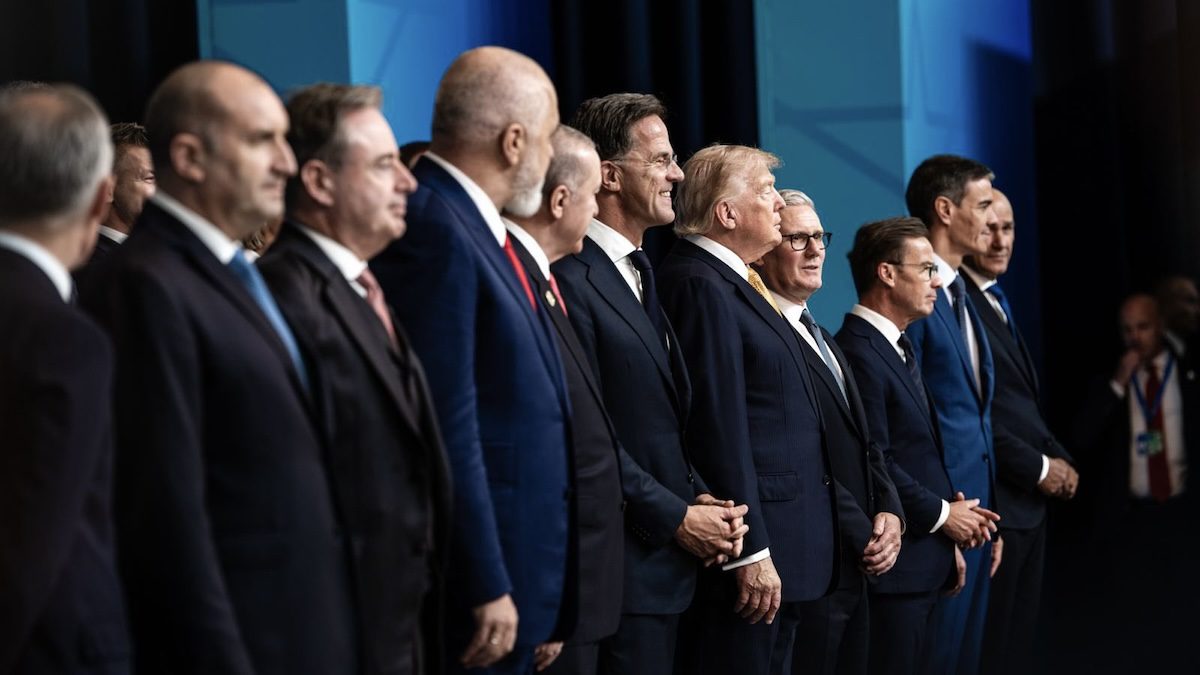
NATO summit promises billions for arms industry
Heads of state and governments from the member states of the North Atlantic Treaty Organization (NATO) met at a summit in Ankara, Turkey, from July 7–8, focusing on progress toward increased defense expenditure pledged in 2025, expansion of the arms industry, and further fueling of the war in Ukraine. Even before the summit began, progressive organizations and activists in Turkey reported strong repression and dozens of arrests as the Erdogan administration moved to minimize counter-mobilizations.
Ahead of the meeting, NATO Secretary General Mark Rutte signaled that “clear, concrete, and credible” national plans to reach the pledged 5% GDP expenditure would take center stage. “And the evidence we see so far is impressive. Just one year into a 10-year project, we see that European Allies and Canada are already investing around 4% of their GDP in defense and security,” Rutte said.
As Rutte praised these rising armament expenditures – contested by thousands across Europe – the summit’s side program suggests the primary beneficiary of the meeting is the arms industry, notably its exponents in the United States. This year’s summit is held back-to-back with the NATO Summit Defense Industry Forum, where Rutte emphasized new large-scale procurement contracts. “Throughout the day, Allies and industry, from both sides of the Atlantic, will reveal new major projects and sign contracts worth billions, literally billions of dollars,” the NATO chief stated.
Significantly, amid the second Trump administration’s displeasure with European allies’ investment in the war alliance and prompts to purchase more (US-made) weapons, Rutte highlighted new transatlantic military industrial partnerships. “I welcome that the United States and several of its leading defense companies, including Anduril, Boeing, General Dynamics Land Systems, Lockheed Martin and Raytheon, have agreed new industrial cooperation initiatives with major European players in the defense sector, like Diehl, PGZ and Rheinmetall,” Rutte announced on Tuesday. “This will allow us to produce or sustain key American capabilities such as the Abrams tank, AMRAAMS [air-to-air missiles], ATACMS [short-range supersonic ballistic missile], the Barracuda-500M, Small Diameter Bombs, and Stingers, here in Europe.”
Throughout the summit’s opening remarks, Rutte argued that more money for NATO will translate into jobs and reinvigoration of Europe’s industrial landscape – a view contested by trade unionists and peace networks. Many of them used the summit to warn about the true cost of expanding the military industry, which comes at the expense of public investments and brings profit only to a few. Catalan-based organizations emphasized that investments in this sector bring far smaller returns than those in sustainable energy, education, or health, and inevitably lead to the continuation or expansion of armed conflicts like the one in Ukraine.

‘They brought me here to kill me,’ Dr. Hussam Abu Safiya tells lawyer
Dr. Hussam Abu Safiya’s life is in imminent danger as after 18 months, he remains imprisoned by the Israeli occupation, his lawyer and several organizations warned recently. The pediatrician’s attorney, Nasser Odeh, reported that during a visit to Dr. Abu Safiya on July 2, he saw visible marks of beatings and torture. Dr. Abu Safiya’s family and health activists have thus renewed appeals to international bodies and Israeli courts for the physician’s urgent release, alongside other doctors illegally detained by Israel.
This alarm follows a court hearing in June, where Dr. Abu Safiya was seen publicly for the first time in a year. Since then, he has apparently been transferred to the notorious underground Rakefet prison facility, where he described intensified abuse. “This is the last time you’ll see me,” Dr. Abu Safiya told Odeh. “They brought me here to kill me.”
“Dr. Abu Safiya’s transfer to the ‘Rakefet’ section – associated with numerous testimonies of severe torture, abuse, humiliation, starvation, solitary confinement, and denial of medical treatment – marks an extremely dangerous escalation in the campaign against him,” the Palestinian Prisoner’s Society remarked.
“According to Dr. Abu Safiya, after a hearing in his appeal at the Israeli Supreme Court, four to five officers entered his cell and beat him across his body with a hammer and batons,” the organization Physicians for Human Rights Israel (PHRI) stated. PHRI added that bruising across his body, including his head and neck, was so severe that Odeh initially struggled to recognize him. “During the meeting, Dr. Abu Safiya had difficulty breathing and speaking, appeared extremely weak, and struggled to remain seated without falling,” the organization emphasized.
This episode has heightened fears for the physician’s safety. The Euro-Med Human Rights Monitor warned that Dr. Abu Safiya “may be killed in Israeli detention facilities, either under torture or as a result of the deliberate denial of treatment.”
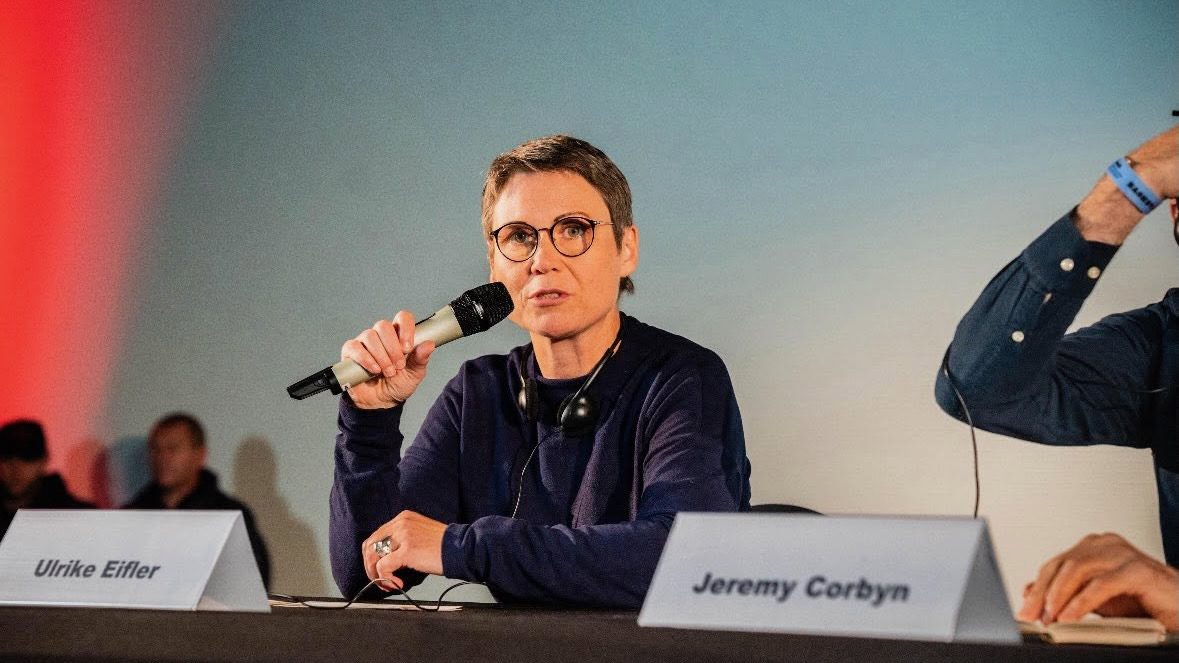
Ulrike Eifler: ‘The workplace is a place where we have to fight against war’
IG Metall’s Ulrike Eifler spoke to BreakThrough News about trade union resistance to militarization and strengthening the international anti-war movement.

Communist Party of Austria wins consecutive term in country’s second-largest city
The Communist Party of Austria (KPÖ) will lead the local government in Graz for a second term.
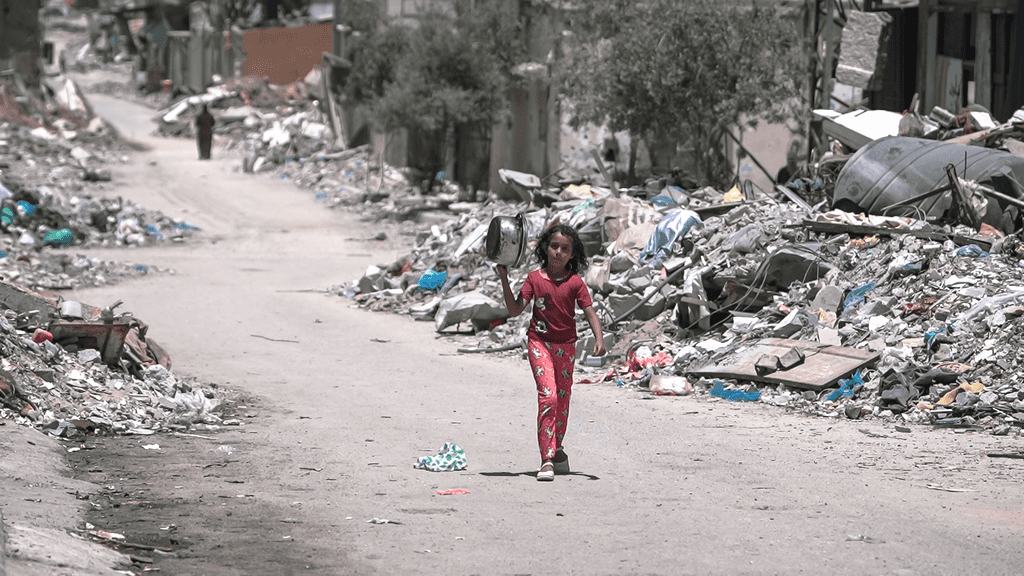
UN report concludes Israel is deliberately targeting Gaza’s children
A recent UN commission report concluded Israeli forces deliberately target Palestinian children in Gaza as part of a strategy to destroy the future of the Palestinian people.

Three years into the genocide in Gaza, Israel remains ‘key partner’ for EU
Several European politicians visited Israel this week, reaffirming support for the occupation’s “security” and signaling continuation of partnership.
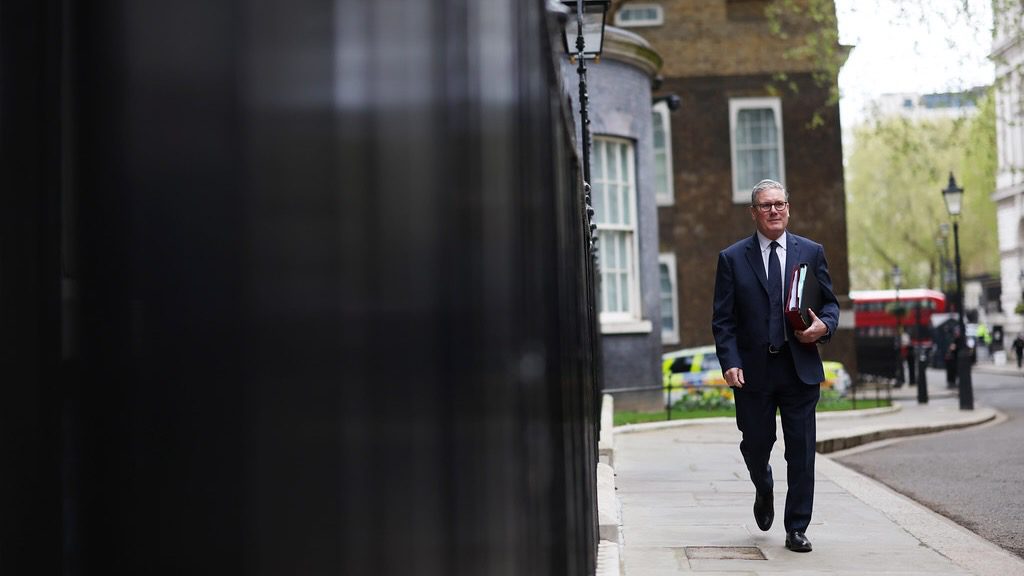
Starmer leaves behind ‘legacy of moral and political bankruptcy’
British Prime Minister Keir Starmer resigned on Monday amid widespread discontent with his policies and mounting calls for him to step down.