Communist Party of Austria wins consecutive term in country’s second-largest city
The Communist Party of Austria (KPÖ) will lead the local government in Graz for a second term.
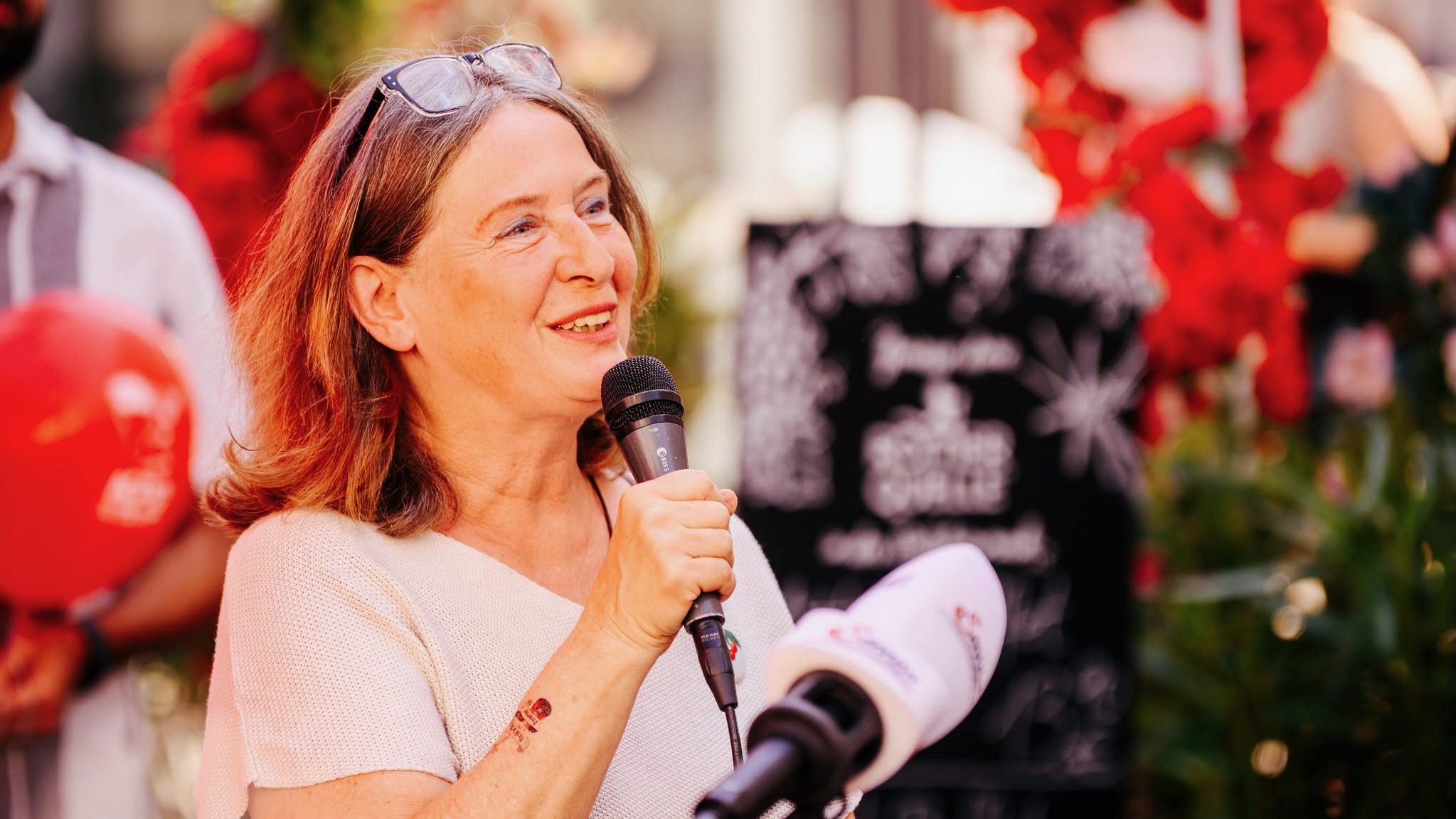
Elke Kahr of the Graz chapter of the KPO claims victory in city elections. Photo: KPO Graz/FB
The Communist Party of Austria (KPÖ) has emerged as the clear victor in the local elections in Graz, the country’s second-largest city, marking a significant milestone for progressive movements in the region.
According to early results, the KPÖ secured 35.6% of the vote – an increase of nearly 7 percentage points from 2021. This places it ahead of the conservative Austrian People’s Party (ÖVP), which received 25.6%, and the far-right Freedom Party (FPÖ), which got 12.1%. The Social Democratic Party (SPÖ) and the Greens, who supported the KPÖ-led administration since 2021, obtained 13.9% and 6.1% respectively. These results will enable a progressive coalition to continue shaping Graz’s policies.
“This result is not something to be taken for granted, but rather a huge vote of confidence that humbles us,” KPO spokesperson Tobias Schweiger said after the election. “It shows that the people of Graz want politics that aren’t dictated from above, but that maintain a perspective from the ground up. We’re following this path in more and more municipalities across the country.”
Read more: Communists emerge as single largest party in Austrian city of Graz
Incumbent mayor Elke Kahr, first elected five years ago, led a local administration focused on housing rights, welfare, and concrete support measures for residents affected – like most around the continent – by austerity. Despite intense pressure from the provincial level, where a right-wing coalition of the FPÖ and ÖVP has been in power since 2024, the KPÖ achieved breakthroughs in the social sector in Graz.
Recently, the provincial government has implemented cuts in culture and civil society while promoting anti-migrant sentiments, mirroring the situation at the national level. This comes on top of obstacles put in place by previous provincial governments, which introduced new fiscal rules limiting the city’s financial autonomy. Nevertheless, the KPÖ obviously managed to address key population needs. Looking ahead, party figures announced they would continue along this path, focusing on building social justice from the ground up not only in Graz but also in Salzburg, Innsbruck, Vienna, and other cities where the party has secured good notable results.
“For me and my colleagues in the city council,” Elke Kahr wrote, “it has always been important that politics serve the common good and social cohesion. That is how I understood the mandate from the voters five years ago, and that will remain our guiding principle in the years to come.”