Slovenia’s government flips position on Gaza genocide in first weeks in office, ratifying support to Israel
Far-right Janez Janša’s new administration announced policies that overhaul Slovenia’s position on Palestine and normalize relations with Israel.
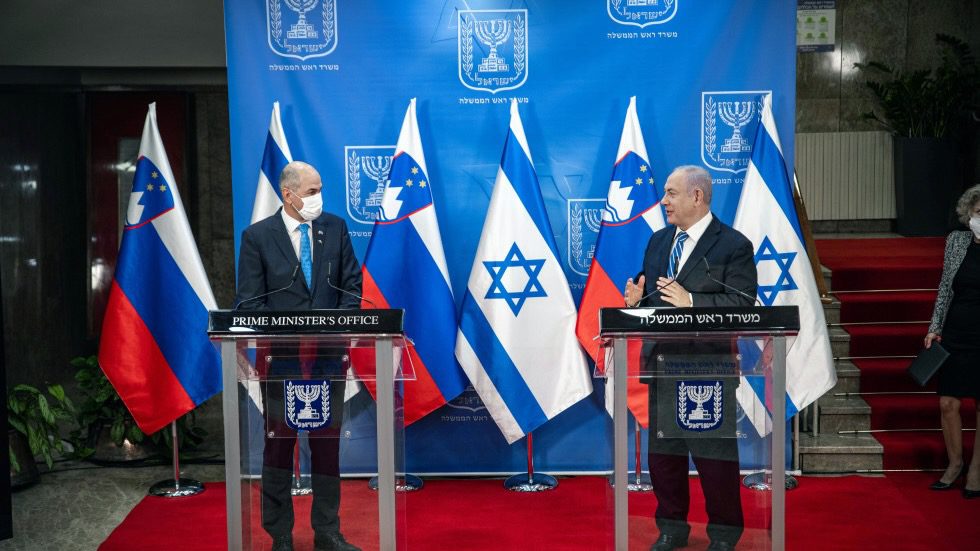
Prime Minister of Slovenia Janez Janša on official visit to Israel. Photo: Government of Slovenia
Removing the Palestinian flag from the government building, announcing the relocation of the Slovenian embassy in Israel to Jerusalem, opening the first Israeli embassy in Ljubljana, and “freezing” the recognition of Palestine – these were among the first moves announced by far-right veteran Janez Janša as his administration took office in Slovenia. The list marks a radical reversal of the policy line adopted by the former Golob government, which had positioned the country as one of Europe’s more outspoken critics of the Israeli occupation at this level of politics.
Considering Janša’s long-standing friendly relations with Israeli officials, the turn did not surprise activists – but the swiftness of implementation was in part unexpected, Barbara Vodopivec and Nada Pretnar from Gibanje za pravice Palestincev (Movement for the Rights of Palestinians) told BreakThrough News. At the same time, they note significant uncertainties regarding the practical implementation of these measures: the embassy move has encountered resistance within the governing coalition, and legal experts expressed serious doubts about “freezing” the recognition process.
Nevertheless, the narrative shift quickly permeated the public sphere and parts of the media establishment, reproducing claims that partnership with Israel is important for Slovenia’s international standing.
“What this is doing is normalizing the relations with genocidal and apartheid Israel, and it’s sending the message that cooperation with Israel is like any other diplomatic relation, where we need to strengthen economic and political connections,” Vodopivec says. “The previous government – although we were of course very critical because they were a lot about talking and less about doing – at least created this context that relations with Israel should be, as a minimum, questioned.”
Read more: Activists urge continued mobilization to ensure Slovenia’s arms embargo on Israel
Under Prime Minister Robert Golob, Slovenia declared an arms embargo on Israel that restricted the transit of military equipment, banned imports from illegal settlements, and imposed a travel ban on Israeli Prime Minister Benjamin Netanyahu. While activists continuously monitored the government to ensure the implementation of these measures and the adoption of more progressive policies to hold Israel accountable for violations of international and humanitarian law, Slovenia remained one of Europe’s most progressive voices amid a broader climate of impunity for the occupation entity.
Public maintains pro-Palestine sentiment
Vodopivec and Pretnar argue that the process launched by Janša’s government could end up normalizing violations of international law in the eyes of society, though they note the new narrative has not yet fully taken hold. Slovenian President Nataša Pirc Musar continues to express solidarity with Palestine, signaling little alignment with the new government’s plans. “When Janša removed the Palestinian flag from the government building, she was immediately vocal about it,” Pretnar says, adding that Pirc Musar maintained a coherent stance in other public occasions as well.
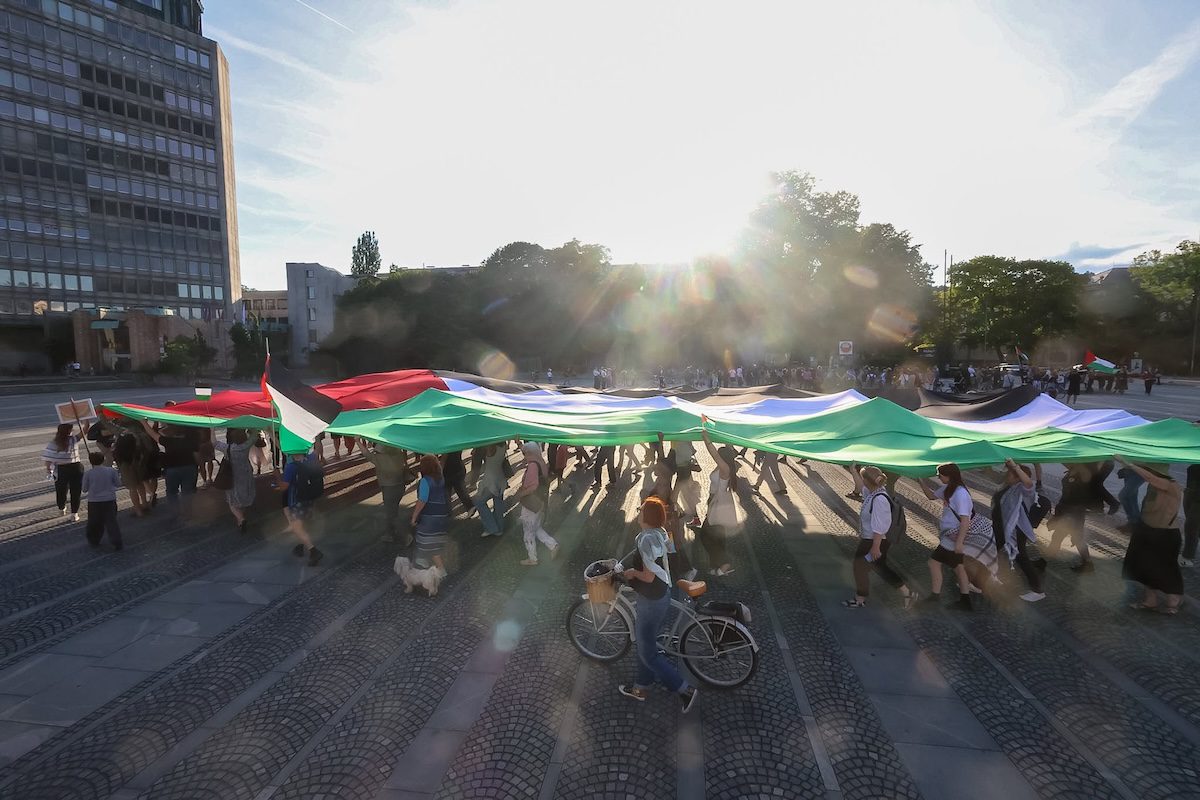
The airbrushing Janša’s administration is attempting for Israel has not been accepted uncritically by the public either. “I would still say the Slovenian public is very sensitive towards the issue of Palestine; we can feel there is a pro-Palestine sentiment,” Vodopivec says, pointing to academic and media interventions opposing the government’s views, as well as protests denouncing the inauguration of the Israeli embassy. She links part of this resentment to the Black Cube scandal, which broke out shortly before the election and implicated Israeli intelligence mercenaries in alleged right-wing attempts to sabotage the process.
“The Black Cube affair and the potential meddling of Israel in the elections has brought the issue of Israel really strongly out in the public and in the media. There is a lot of negative sentiment towards it,” Vodopivec adds. Frustration is also fueled by the slow investigation into the incident. “There’s a lot still up in the air, and people are waiting for answers. There are many questions about the responsibility of institutions to bring conclusions and actually punish those responsible.”
Palestine solidarity to continue as government cracks down on civil society
At the same time, Janša’s administration has moved quickly to undermine cultural organizations and civil society, marking a return to policies from his past mandates. “The new government has already started an attack on civil society,” Pretnar says. “Just recently, they stopped funding cultural institutions and organizations, just like that. And the demonization of NGOs has been very clear in the weeks that they have been in power.”
“For now, we have not seen any kind of concrete indication that there will be mounting pressure on pro-Palestine movements,” the activists say. However, they expect the government’s approach to social mobilizations to be radically different from those of the past four years. “Up to now, the police has always been, after all, extremely non-violent,” Pretnar points out, comparing this to violent crackdowns on Palestine solidarity in other European countries. “This could change, in the previous Janša government it was different.”
“When it comes to the Palestine solidarity movement, I have to say that I’m not sure what will happen,” Vodopivec adds.
Read more: Women warn European governments on March 8: “We won’t work for your wars”
Despite uncertainties, Palestine solidarity groups in Slovenia plan to continue their work. Over the past years, the movement grew significantly, including by linking demands for Palestinian liberation to other pressing issues such as militarization. “At every progressive protest, you will see a Palestinian flag,” Vodopivec says. “It doesn’t have to be a pro-Palestinian protest, but you will always see Palestinian flags because people who come out are very supportive. They understand what is going on, and they know they have to speak about it. I hope we will continue this way.”