NATO summit promises billions for arms industry
NATO members discussed progress on increased military spending at Ankara Summit while progressives faced repression for counter-mobilizations.
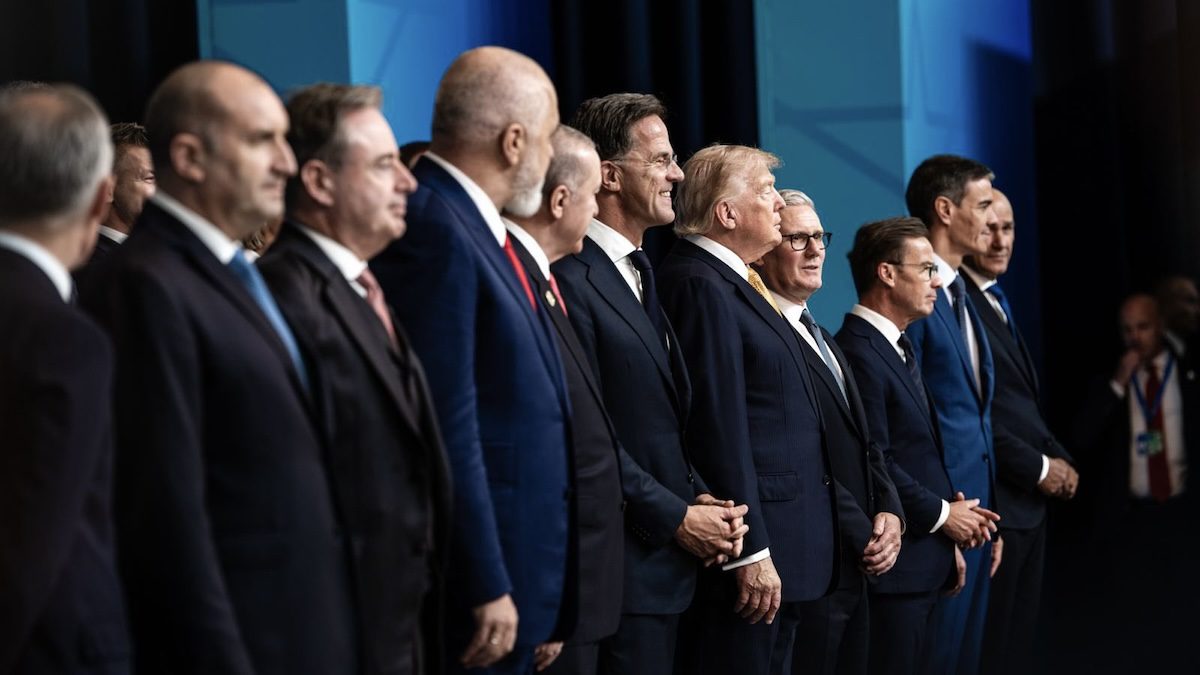
NATO Summit Ankara. Photo: NATO
Heads of state and governments from the member states of the North Atlantic Treaty Organization (NATO) met at a summit in Ankara, Turkey, from July 7–8, focusing on progress toward increased defense expenditure pledged in 2025, expansion of the arms industry, and further fueling of the war in Ukraine. Even before the summit began, progressive organizations and activists in Turkey reported strong repression and dozens of arrests as the Erdogan administration moved to minimize counter-mobilizations.
Ahead of the meeting, NATO Secretary General Mark Rutte signaled that “clear, concrete, and credible” national plans to reach the pledged 5% GDP expenditure would take center stage. “And the evidence we see so far is impressive. Just one year into a 10-year project, we see that European Allies and Canada are already investing around 4% of their GDP in defense and security,” Rutte said.
As Rutte praised these rising armament expenditures – contested by thousands across Europe – the summit’s side program suggests the primary beneficiary of the meeting is the arms industry, notably its exponents in the United States. This year’s summit is held back-to-back with the NATO Summit Defense Industry Forum, where Rutte emphasized new large-scale procurement contracts. “Throughout the day, Allies and industry, from both sides of the Atlantic, will reveal new major projects and sign contracts worth billions, literally billions of dollars,” the NATO chief stated.
Significantly, amid the second Trump administration’s displeasure with European allies’ investment in the war alliance and prompts to purchase more (US-made) weapons, Rutte highlighted new transatlantic military industrial partnerships. “I welcome that the United States and several of its leading defense companies, including Anduril, Boeing, General Dynamics Land Systems, Lockheed Martin and Raytheon, have agreed new industrial cooperation initiatives with major European players in the defense sector, like Diehl, PGZ and Rheinmetall,” Rutte announced on Tuesday. “This will allow us to produce or sustain key American capabilities such as the Abrams tank, AMRAAMS [air-to-air missiles], ATACMS [short-range supersonic ballistic missile], the Barracuda-500M, Small Diameter Bombs, and Stingers, here in Europe.”
Throughout the summit’s opening remarks, Rutte argued that more money for NATO will translate into jobs and reinvigoration of Europe’s industrial landscape – a view contested by trade unionists and peace networks. Many of them used the summit to warn about the true cost of expanding the military industry, which comes at the expense of public investments and brings profit only to a few. Catalan-based organizations emphasized that investments in this sector bring far smaller returns than those in sustainable energy, education, or health, and inevitably lead to the continuation or expansion of armed conflicts like the one in Ukraine.