From declaration to action: building working-class power and completing South Africa’s democratic revolution
The Conference of the Left reaffirmed that the present period requires a renewed struggle for economic emancipation to address the structural crisis in South Africa.
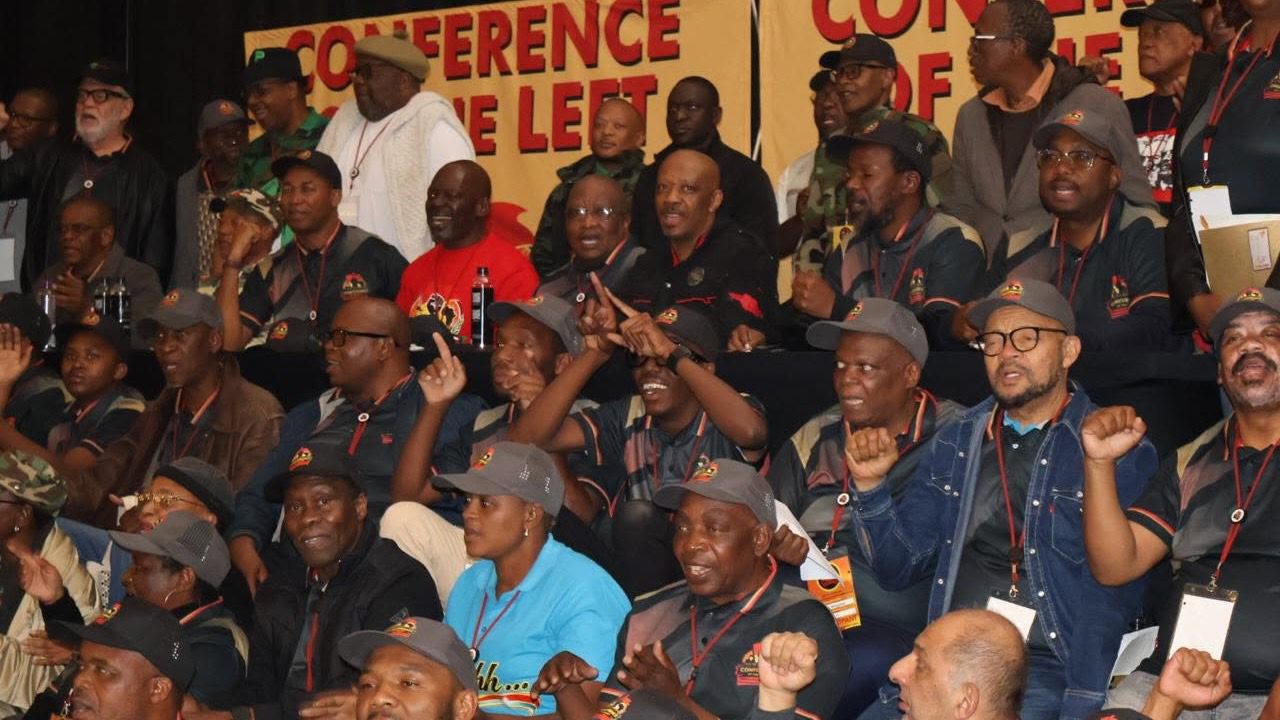
South Africa's Conference of the Left. Photo: SACP/FB
South Africa witnessed a historic Conference of the Left, convened by the South African Communist Party (SACP), from May 29–31, 2026. The gathering brought together communist parties, socialist organizations, trade unions, community formations, women’s organizations, youth movements, progressive intellectuals and academics, progressive traditional leadership, faith-based organizations and international solidarity partners in what can confidently be described as the most significant gathering of the South African Left in the democratic era.
For more than three decades, after the democratic breakthrough of 1994, progressive forces often engaged each other through fragmented campaigns, issue-based coalitions, and sectoral struggles. Never before had such a broad spectrum of left and progressive forces met collectively to deliberate on a common program of action aimed at rebuilding working-class and popular power. For this reason alone, the Conference of the Left represents a historic turning point.
Yet the conference was not a ceremonial gathering. It was convened at a time when global and South African capitalism is experiencing a profound structural crisis. Mass unemployment, deepening poverty, worsening inequality, gender-based violence, de-industrialization, corruption and growing social despair continue to shape the lives of millions. South Africa’s official unemployment rate stood at 32.7% in the first quarter of 2026, while the expanded unemployment rate remained above 43%. Poverty continues to affect more than half of the population using upper-bound poverty measures, while South Africa remains one of the world’s most unequal societies, with a Gini coefficient of approximately 0.67. These realities have reinforced a fundamental conclusion: political freedom alone is insufficient without economic emancipation. The Marxist tools of analysis remain critical, ownership and control of the means of production in South Africa cannot remain in the hands of capital.
From a Marxist-Leninist perspective, the central contradiction remains the concentration of ownership and control of the economy in the hands of monopoly capital which is significantly white in the South African context. The democratic breakthrough of 1994 was a major victory over apartheid and the colonial project, but the negotiated settlement at CODESA did not fundamentally alter economic relations to benefit the majority of the previously oppressed black South Africans. Political rights were secured, but economic power remained largely intact in the hands of established capitalist interests. The transition averted what could have been a blood bath or civil war, albeit that the period was marred by orchestrated violence. However, the land question and the economic question remain fundamental and critical to complete the Revolution.
Evidence of this structural continuity is reflected in ownership patterns, financial concentration, and industrial decline. Manufacturing contributed approximately 23.7% of GDP in 1990 but had fallen to about 12.8% by 2024–2026. At the same time, finance, insurance, real estate, and business services expanded substantially as a share of economic activity. This process of financialization increasingly shifted economic accumulation towards financial markets and speculative activities rather than productive investment, job creation, and industrial development.
This reality does not diminish the achievements of democracy. Rather, it highlights the unfinished tasks of the National Democratic Revolution. The struggle for national liberation must be advanced towards economic liberation. Land ownership patterns, financial power, industrial ownership, and control of strategic resources remain largely concentrated in monopoly capital and its agents. Consequently, the National Democratic Revolution remains incomplete and remains as lip service if this structural crisis is ignored. The Conference of the Left therefore basically reaffirmed that the present period requires a renewed struggle for economic emancipation.
Importantly, the conference also undertook a process of self-criticism. Delegates acknowledged that while women constitute some of the most militant and capable organizers within progressive movements, they have not been adequately represented at the center of leadership and organizational processes of the Conference of the Left. The conference resolved that this reality must change fundamentally. The gender question cannot be treated as an afterthought. The Marxist-Leninist understanding of South African society recognizes the persistence of triple oppression: class exploitation, national oppression, and gender oppression. These three dimensions continue to interact and reinforce each other. Working-class women continue to bear the heaviest burden of unemployment, unpaid care work, violence, and economic exclusion whilst they remain at the center of social reproduction, subsidizing capital. The commitment to greater representation of women is therefore not about tokenism or favor. It is about recognizing leadership capacity, political experience, and revolutionary potential. The Council of the Left, established by the conference, must embody this principle in practice.
The international character of the conference also deserves special recognition. Progressive leaders and solidarity representatives from Zambia, Ghana, India, Brazil, Mexico, the United States, and Venezuela participated in discussions and shared experiences from their own struggles against imperialism, neoliberalism and exploitation. Their contributions enriched the conference and reminded participants that the struggle for socialism remains international in character.
The resolutions are contained in the Final Declaration. The conference program was organized around eight strategic clusters that provide a framework for implementation. These include economic transformation, social protection, land reform, public health, community safety, climate justice, international solidarity, and democratic transformation. The intention is to move beyond declarations towards measurable action.
A stronger Marxist-Leninist perspective emerged throughout discussions. Delegates emphasized that capitalism cannot be reformed into serving the interests of the majority. While immediate reforms remain necessary, they must form part of a broader strategic project aimed at transformation and building the foundations for socialism.
The conference rejected the notion that austerity, privatization and financialization can resolve South Africa’s crisis. Instead, delegates called for democratic planning, industrial policy, developmental finance, public ownership and strategic state intervention. The conference further stressed that socialism cannot be reduced merely to state ownership. It must include worker participation, democratic accountability, social ownership and popular power.
International solidarity formed a major pillar of the conference. Participants reaffirmed their support for the people of Palestine and welcomed South Africa’s efforts to hold Israel accountable before international institutions. The conference called for intensified mobilization, boycott campaigns, and solidarity actions in support of Palestinian self-determination.
Equally strong solidarity was expressed with Cuba. Delegates condemned the decades-long blockade imposed against the Cuban people and reiterated support for Cuba’s sovereign right to determine its own future free from imperialist interference, also calling for urgent humanitarian support (food, medicines, energy) for Cuba in this period of induced regime change where countries are even barred from supplying oil to the island. Cuba’s achievements in healthcare, education, and international solidarity continue to inspire progressive movements in Africa and across the world.
Support was also reaffirmed for the Bolivarian process in Venezuela and the right of the Venezuelan people to determine their own future without external intervention. The conference rejected sanctions, destabilization campaigns and attempts at regime change and called for the release of President Nicolás Maduro and his wife Cilia Flores.
The liberation struggle of Western Sahara was similarly highlighted. Delegates reaffirmed support for the Sahrawi people’s right to self-determination and independence and deemed it unfortunate that the most recent UN Security Council Resolution 2797 seeks to water down this right to self-determination. The conference further extended solidarity to anti-imperialist struggles across Africa and the Global South.
The conference also emphasized the importance of Pan-Africanism. Genuine African integration must serve workers, peasants, women, and youth rather than multinational corporations. Continental integration should be based on industrialization, food sovereignty, regional value chains, technological cooperation and economic sovereignty. Intra Africa trade and Pan African Payment System was emphasized in the discussions that ensued.
One of the most significant outcomes of the gathering was the establishment of the Council of the Left. The Council is not a political party and does not replace participating organizations. Rather, it provides a mechanism for coordination, political education, campaigning and collective intervention. If effectively implemented, it could become one of the most important instruments for rebuilding Left unity in South Africa.
The conference repeatedly returned to a central lesson from Marx, Engels and Lenin: organization is decisive. The working class cannot simply resist exploitation. It must organize to exercise power.
The success of the Conference of the Left will therefore not be measured by speeches or declarations. It will be measured by whether workers become better organized, whether communities become more mobilized, whether women occupy leadership positions, whether youth become active agents of transformation, and whether the Left succeeds in rebuilding popular power to solidify freedoms.
The conference has opened a new chapter in South African politics. It has demonstrated that unity remains possible without sacrificing ideological diversity. It has reminded progressive forces that the struggle against capitalism, patriarchy, racism, and imperialism requires coordinated action.
The Conference of the Left has issued a challenge to all progressive forces: move beyond fragmentation, deepen organization, strengthen working-class leadership, and advance the unfinished struggle for economic liberation.
Molly Dhlamini is a member of the Central Committee and Deputy International Secretary (15th Congress) of the South African Communist Party.
This article was produced by Globetrotter.