Mozambique expands state ownership of mines; bans raw material exports
Mozambique's president signed a new law granting the National Mining Company (ENM) a free 15% stake across the stages of the mining value chain.
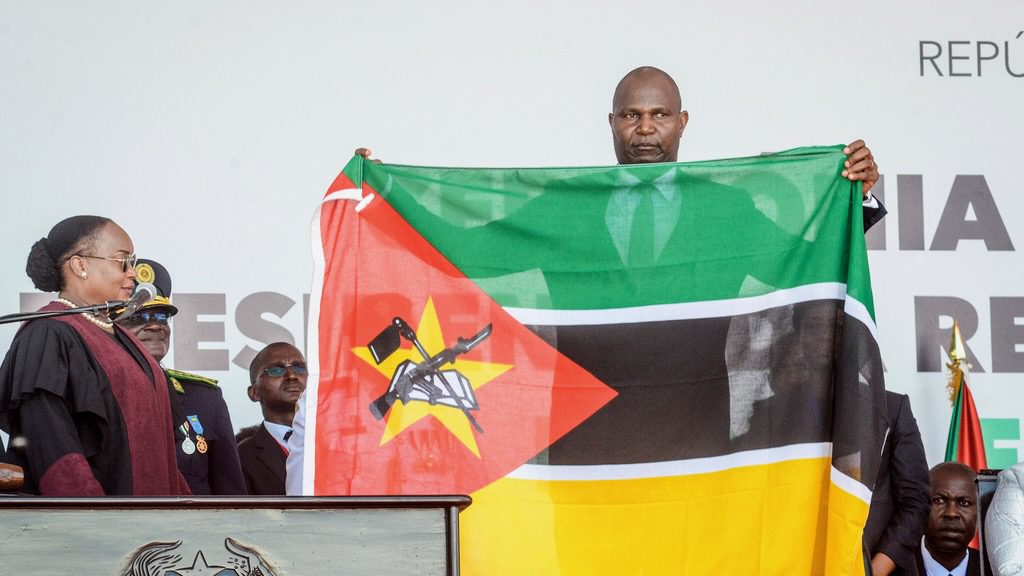
Mozambique President Daniel Chapo raises national flag. Photo: AP
To transform mineral wealth into “lasting engines of economic and social development,” Mozambique revamped its mining laws, mandating local processing and expanding state ownership of its mineral wealth.
The reforms, taking effect with President Daniel Chapo’s signature on June 3, were passed by parliament in May, granting the National Mining Company (ENM) a free 15% stake across the stages of the mining value chain, with an option to further expand its ownership.
To break free from the southern African country’s historical status as a raw-material exporter, the legislation also mandated domestic processing and banned the export of raw or semi-processed minerals unless permitted by government approval.
The approval, however, is temporary and requires the mining companies to present a plan for future local processing, Ecofin Agency reported.
Mozambique is the world’s third-largest producer of graphite, an essential component in batteries for electric vehicles, growing in demand globally. The country also has significant rare earth deposits.
Only two days after the new laws were signed, on June 5, Altona Rare Earths, headquartered in London, announced the discovery of a deposit of xenotime, which is processed to extract many heavy rare earth elements, at its Monte Muambe concession in Tete Province.
The new rules, positioning the state to better leverage this mineral wealth for developmental needs, also require that 10% of mining revenues be transferred to a dedicated local development fund, reported Africa Business Insider.
“With the enactment of these laws, the Mozambican government strengthens the management of strategic resources in the national interest, while promoting employment, domestic investment, wealth retention, and … sustainable development,” the president’s office said in a statement.
The Sahelian precedent
The mining reforms in Mozambique come amid a growing resource nationalism in the continent, after the sovereigntist governments of the Alliance of Sahel States (AES) set a precedent.
Through a combination of nationalizing selected foreign-owned mines, increasing state and domestic private ownership, and mandating local processing, states have successfully secured a greater share of the mining revenues.
Using the increased revenues, the government of Burkina Faso has repaid almost a quarter of its domestic debt. It also established the Sovereign Mining Investment Fund (FSMIB) on May 21 to finance long-term infrastructure development and industrialization.
Read more: Burkina Faso asserts financial independence from the West with mineral-backed sovereign fund
Earlier in March, Mali redistributed USD 33 million from mining revenue to mining-affected communities and other underdeveloped regions. A third of this redistributed revenue is to be used by the local government to lay roads, and supply water and electricity, a quarter for healthcare, another quarter for schools, and 15-20% for supporting small businesses and agriculture.
Read more: Mali delivers 33 million dollars of mining revenue to local communities
Their successes, despite numerous conflicts with multinational giants, appear to have started a trend in Africa, as more countries seek to leverage mineral wealth for national benefit.
On May 22, Zimbabwe announced a regulatory overhaul of its mining sector, banning the export of raw materials to capture a greater share of the global value addition, while increasing state and domestic private ownership. Ghana is also tightening domestic control over its mining.