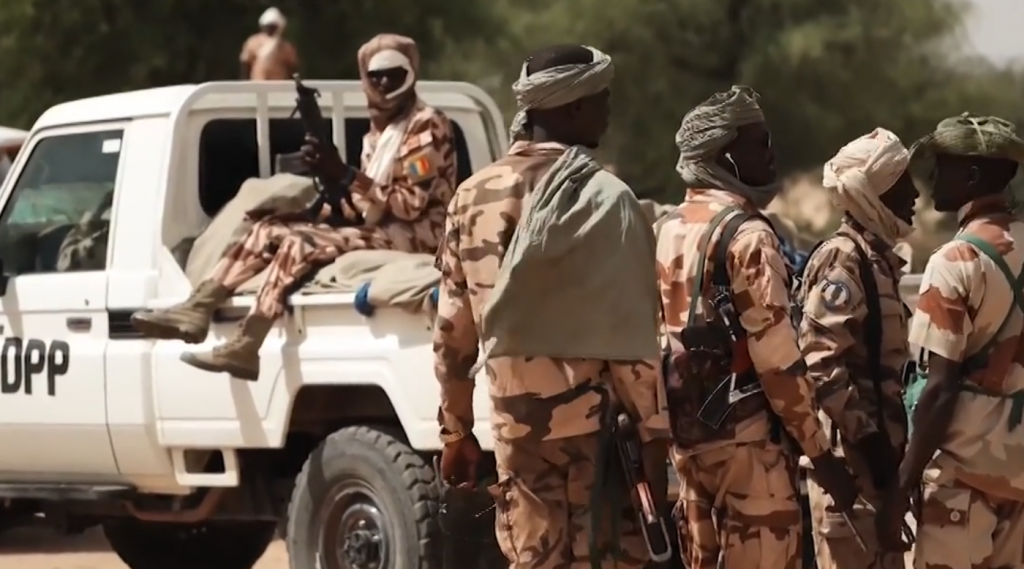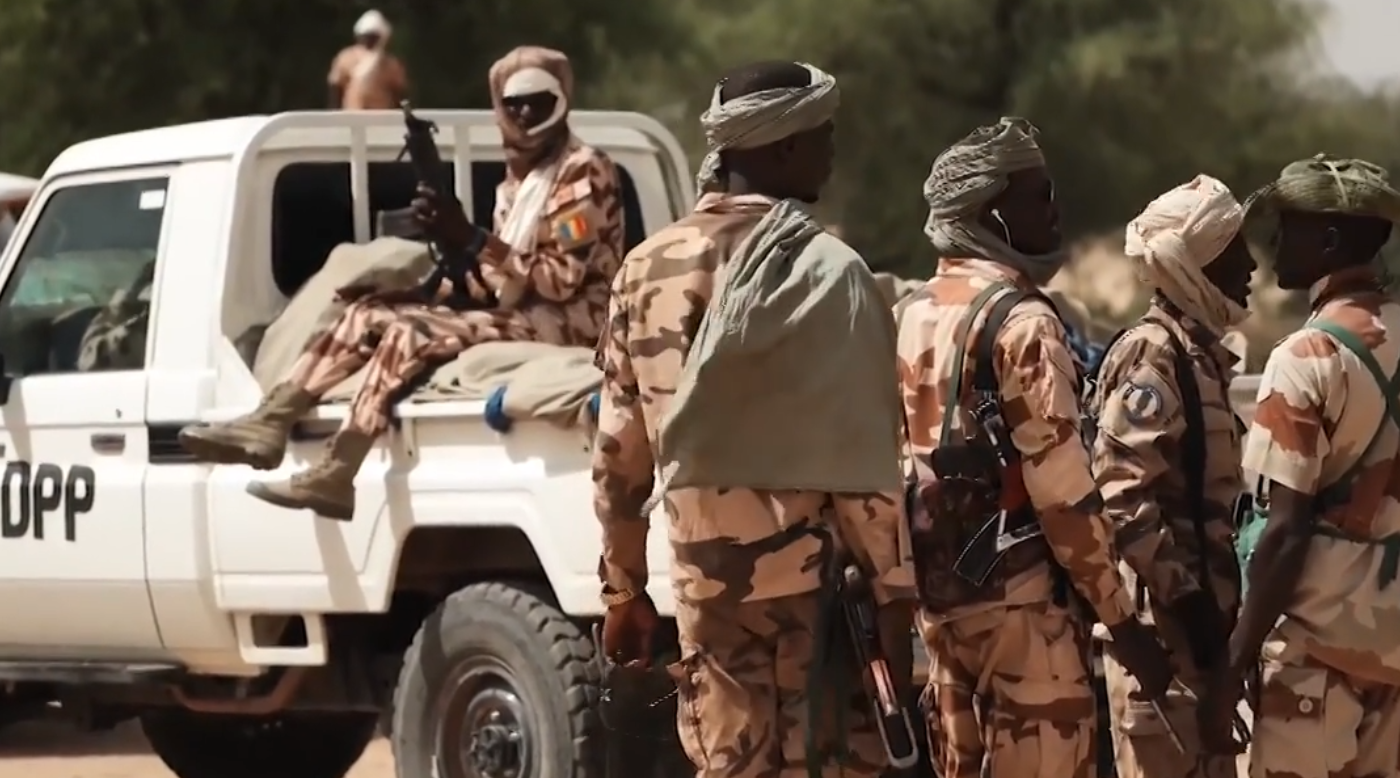
Chadian soldiers at the Chad-Sudan border oversee the crossing of refugees fleeing the civil war in Sudan. Photo by Henry Wilkins and Arzouma Kompaoré (VOA)
After the recent massacre in El Fasher, the eyes of the world have shifted to Sudan, but the conflict remains little-understood by outsiders. The country’s civil war, between the internationally recognized Sudanese Armed Forces (SAF) and UAE-backed Rapid Support Forces (RSF), has directly killed over 150,000, displaced 10 million people, and starved half a million children to death. Although both sides have been credibly shown to have engaged in war crimes, only the RSF has committed genocide against the people of Darfur.
After facing setbacks, the SAF over the last year has made gains over the RSF. But the recent defeat and massacre in El Fasher—the last major city held by the SAF in Darfur—spells trouble. The war has become internationalized, with Western allies backing the RSF, and many states that oppose Western hegemony backing the SAF, the country risks facing more conflict and a split, impacting it and the whole region.
On December 18, 2018, protests erupted in Atbara, Sudan and soon spread across the country, including the capital, Khartoum. Western news sources and institutions framed it as a struggle for electoral democracy against the thirty year tyranny of Omar al-Bashir. Al-Bashir was indeed a tyrant, with his Janjaweed militias (that now make up the RSF) engaging in genocide against the Fur, Masalit and Zaghawa people in Darfur.
But while democracy was important to protestors, more critical was the cost of living, which Sudan has struggled with since the oil-rich region of South Sudan became independent in 2011. This only worsened as the Sudanese government privatized public assets at the behest of the IMF. When the price of bread increased fivefold, the Sudanese Professionals’ Association, which represents 17 trade unions, and the Sudanese Communist Party of Sennar called for people to take to the streets. Along with elections and human rights, protesters demanded a higher minimum wage and the confiscation of property owned by the ruling National Congress Party.
But on June 3, 2019, the RSF opened fire, killing over 100 people and engaging in mass rape in what became known as the Khartoum Massacre.
In response, Sudanese security forces (which includes both the SAF and RSF) shot protesters dead. On April 11, 2019, the SAF formed the Transitional Military Council (TMC) and overthrew Al-Bashir. The next day, Lieutenant-General Abdel Fattah al-Burhan became head of the TMC and Mohamed Hamdan Dagalo (hereafter known as Hemedti) of the RSF became deputy. Things were hopeful. Despite being in the military, al-Burhan seemed to have no connection to the Darfur genocide and was engaging in talks with protestors.
But on June 3, 2019, the RSF opened fire, killing over 100 people and engaging in mass rape in what became known as the Khartoum Massacre. The violent repression was done at the behest of Egypt, Saudi Arabia and the UAE. Apparently, their fear was that democratic demands could inspire similar movements in their country. Perhaps the bigger threat was the demand for a more just economic system.
Negotiations resumed between the TMC and protesters. On August 20, 2019, Abdalla Hamdok became the civilian prime minister. On October 25, 2021, one month before the government fully transitioned to civilian rule, the SAF and RSF took control in a coup. Hamdok was reinstated as Prime Minister in November 2021, but resigned in January 2022 amid failures to form a civilian government. Negotiations with civilian groups resumed and in April 2023 progress was allegedly made for reforms and eventual power sharing. More radical groups rejected the negotiations, instead seeking to form a united front against the military.
As tensions between civilians and the military continued, another battle was brewing. The SAF was installing officials from the previous Al-Bashir government, cementing power among the elite in Khartoum. In contrast, the RSF, with its origin in the Darfur genocide, is composed of Baggara Arabs from the Western part of the country. Because of the RSF’s greater brutality, activists wanted the RSF to be disarmed and integrated into the military, rather than stand as a separate militia. The RSF worried they would soon become irrelevant.
Both the SAF and RSF are counter-revolutionary. They were central to Al-Bashir’s regime, massacred protesters, and eliminated civilian rule. But there are differences. Emerging from the Darfur genocide, the RSF acts with greater brutality, and subscribes to an Arab supremacist ideology. As noted previously, they were responsible for the Khartoum Massacre. Under Al-Bashir, it was involved in migration control at the behest of the European Union and the UK. Beginning in 2015, RSF soldiers were deployed to Yemen to support UAE proxies against the anti-imperialist Ansar Allah. Starting in 2019, it fought in Libya against the internationally recognised Government of National Accord. As people were massacred, Hemedti took control of Darfur’s gold mines, becoming one of the richest people in Sudan—wealth he did not want the SAF to take away from him.
A power struggle was inevitable. In February 2023 the RSF began recruiting across the country. On April 11, 2023, they were deployed in Khartoum and clashes broke out. This was the beginning of the civil war.
The conflict only worsened as foreign countries saw it not as a tragedy, but as an opportunity. Sudan is the 15th largest country in the world and borders seven others, including key regional actors such as Egypt and Ethiopia. It has vast amounts of oil and is the third largest producer of gold in Africa. It also controls most of the Nile River, which has produced a large agricultural industry.
Sudan’s position on the Red Sea is also critical. 12 percent of all global trade and a third of all container traffic passes by Sudan’s coast en route to the Suez Canal. Yemen’s blockade of the Red Sea in protest of Israel’s genocide in Gaza has demonstrated the significance of this passageway to the world economy, and also transformed it into a battlefield. Sudan is critical for any country wanting access to resources and a base of operations in the wider region.
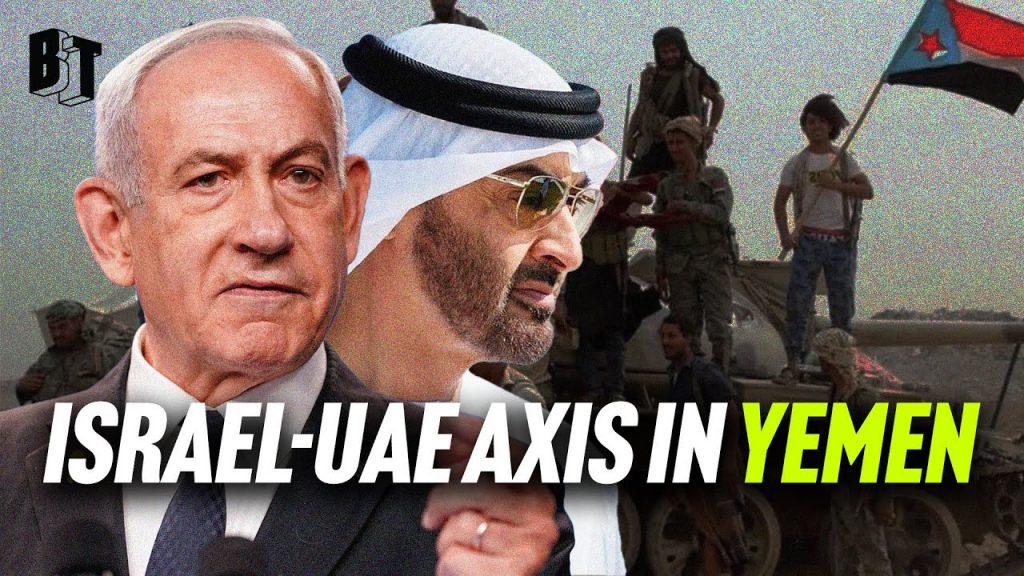
One of the largest actors in Sudan is the UAE, which backs the RSF. The relationship predates the conflict, when Al-Bashir sent RSF soldiers beginning in 2015 to help UAE proxies in Yemen. Since 2023, the UAE has sent 86 cargo planes of weapons to the RSF via an airstrip in neighboring Chad. It has also used the Somali region of Puntland (which operates autonomously given its ongoing dispute with the federal government) as a stopover for mercenaries heading to Sudan. In return, the UAE receives $16 billion in gold from Sudan each year and a steady supply of agricultural goods.
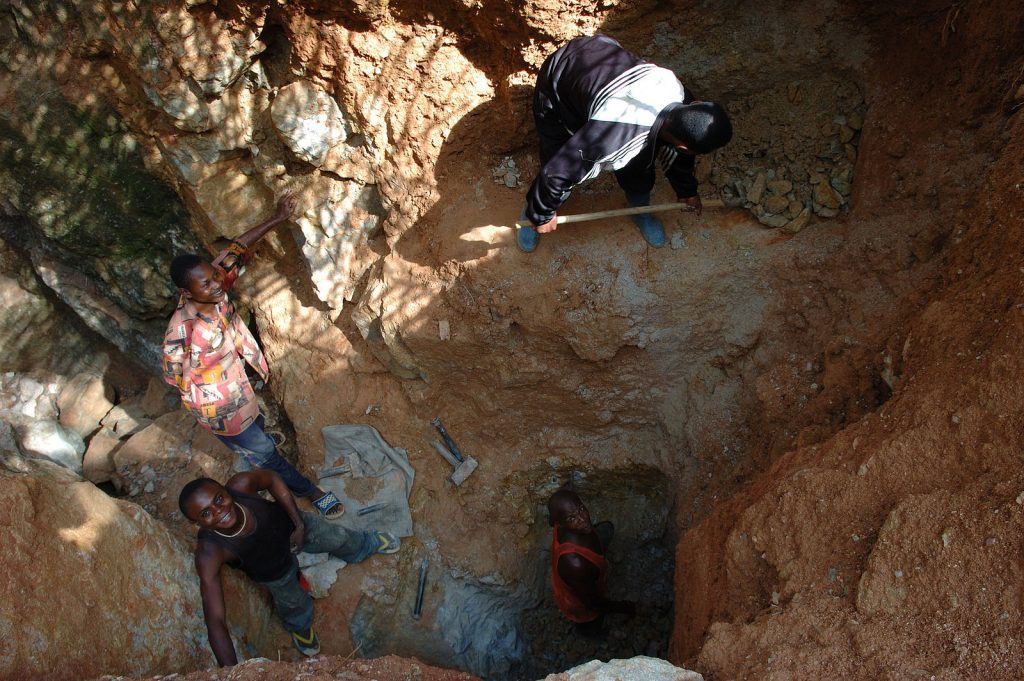
The economic basis of the genocide is competition over land. By removing indigenous people, the RSF can consolidate control and exploit resources, especially gold.
Many African countries have also backed the RSF. Chad lends its territory for drone strikes; the Libyan National Army (LNA) has attacked the SAF along Libya’s eastern border with Sudan, and Kenya has sent weapons and let the RSF form a parallel government in its territory. Chad and the LNA are motivated by a stake in the gold trade with the UAE, while Kenya’s stance may be encouraged by growing trade with the UAE and a $1.5 billion loan to fund the government’s deficit.
The United Kingdom had secret talks with the RSF and indirectly supplied weapons. As mentioned previously, the UK along with the EU relied on the RSF for migration control. The Central African Republic (CAR) and Ethiopia are suspected of providing support. However, the CAR may have switched sides and like South Sudan any ongoing support for the RSF may be instead coming from rebels. Ethiopia seeks to counter Egypt, which backs the SAF and opposes the construction of the Grand Ethiopian Renaissance Dam.
The United States claims to be neutral, having sanctioned both the SAF and RSF. But how can the U.S. be neutral when so many of its allies back the RSF? The U.S. is the UAE’s top ally, with five military bases in the country. It also backs the Libyan National Army and provides billions in aid to Kenya and Uganda to fight in Somalia. Its failure to reign in these allies is convenient given many of its enemies back the SAF.
None of the countries seem troubled at the RSF’s genocide of non-Arabs in Darfur, including the Fur, Masalit and Zaghawa people. Tactics have included house to house searches for men and boys to execute, mass rape, burning villages, denying food aid, attacks on shelters and hospitals, and killing of journalists reporting these atrocities.
As mentioned previously, the RSF emerged from the janjaweed that previously engaged in genocide in Darfur. The economic basis of the genocide is competition over land. By removing indigenous people, the RSF can consolidate control and exploit resources, especially gold. Unless the movement to boycott the UAE grows, the benefits for the UAE are greater than the condemnation it receives.
Opposing the RSF is the SAF. While also engaging in war crimes, it has not engaged in genocide. In fact, it was thanks to the SAF that El Fasher was able to stop the RSF for 18 months. For many people in Sudan, an SAF victory would provide a clearer path to a more just future.
Russia, which is expanding in Africa, first supported the RSF, with the hopes of getting gold. In response, Ukraine sent special forces to support the SAF. As the SAF faced setbacks, it sought Iranian drones, which were crucial for helping them take back the capital Khartoum. As Iran-Russia cooperation in the Ukraine War increased, Russia switched sides in Sudan, creating an odd situation where both Moscow and Kiev backed the SAF, although Ukraine may have recently switched sides. In return for its support, the SAF let Russia open a naval base in Port Said.
Egypt is another major player, being the only country to allegedly send troops into Sudan and conduct airstrikes on the RSF. It hopes that the SAF will create stability along its border. It also wants to counter Ethiopia, which it accused of building dams that siphon water from the Nile River. The largest one, the Grand Ethiopian Renaissance Dam (GERD), is only 18 kilometers away from the Sudanese border.
Nothing is inevitable about this conflict. The RSF would not exist without the UAE’s support. Since the El Fasher massacre, calls are growing to boycott the UAE.
Following the same logic, Eritrea, which borders Sudan and is often at odds with Ethiopia, has supported militias aligned with the SAF and hosted SAF warplanes. This aligns with its growing alliance with Egypt, Iran and Russia, and its acrimony with Western nations such as Israel and the United States. Somalia, which almost went to war with Ethiopia last year, has trained SAF soldiers.
Turkey, which is quickly expanding its military presence in Africa, initially sold weapons to both the SAF and RSF, but then backed the SAF with the delivery of $120 million in Bayraktar TB2 drones. This is part of Turkey’s strategy in Libya, where it backs the Government of National Accord against the Libyan National Army (LNA). Were the SAF to gain control of the Libyan border, Turkey would then be able to attack the LNA to both the West and East.
The war in Sudan is not simply a power struggle between two generals, but a proxy war. It is internationalized, with Western allies backing the RSF and countries that challenge Western hegemony, such as Iran and Russia, backing the SAF. This dichotomy is further complicated by regional ambitions. Turkey supports the SAF as part of its broader foreign policy in Africa. Egypt and Eritrea are backing the SAF to counter Ethiopia, while Ethiopia supports the RSF.
Until recently, it seemed that the SAF was going to win, capturing territory as recently as September. But the fall of El Fasher has struck a major blow, being the last city controlled by the SAF in the Western part of the country. With their territory consolidated, the RSF can free resources to expand control and launch drone attacks. The RSF’s role in Sudan is like Israel’s role in the Middle East: a genocidal army, backed by a foreign power, that launches attacks across the region.
What happens next is anyone’s guess—whether either side will gain the upper hand, or whether Sudan will become fragmented like Libya. Unfortunately, the fall of Al Fasher means more suffering for Sudanese people. With Darfur nearly fully under the RSF’s control, there will be more massacres to clear its indigenous people and exploit the land for gold. The RSF will continue to launch drone strikes against civilians (most recently it struck a shelter, killing seven). Fighting between the RSF and SAF will intensify.
But nothing is inevitable about this conflict. The RSF would not exist without the UAE’s support. Since the El Fasher massacre, calls are growing to boycott the UAE. The only reason the UAE supports the RSF is because of its profits from its gold. If the costs of the boycott are greater than the gains, the UAE will abandon the RSF.
Without the RSF, the war will end. While the SAF is not an ideal victor, its previous negotiations with protesters makes it the preferred side. After all, while activists were calling for the dismantling of the RSF, the same demand was not being made for the SAF. It would be a long journey to democracy and economic equality, but the prospects are far better than under the RSF.
BreakThrough News is building the media arm of the movement. We tell the untold stories of resistance from poor and working-class communities — because out of these stories we will construct a different narrative of the world, as it is and in real time.
Think to yourself, is this article something that would be published anywhere other than BreakThrough?
Five mega-corporations dominate the media landscape — controlling 90% of what we read, watch and listen to. People’s movements in every corner of the globe are changing history and shifting consciousness. But these movements barely receive any coverage from the corporate media. They need visibility. They need amplification. They need a media arm to break through.
Working-class people deserve better, we deserve media for and by us. We are not funded by billionaires or corporations – we are funded by you. Without you, BreakThrough would not be possible, so become a member and build the media arm of the movement with us.
To send a check to BreakThrough News, please make it out to BreakThrough / BT Media Inc. and send to 320 W. 37th Street, NY, NY 10018. Donations are tax-deductible in accordance with the law.
Aidan is an immigration lawyer & writer and has a master’s degree in Global Affairs.