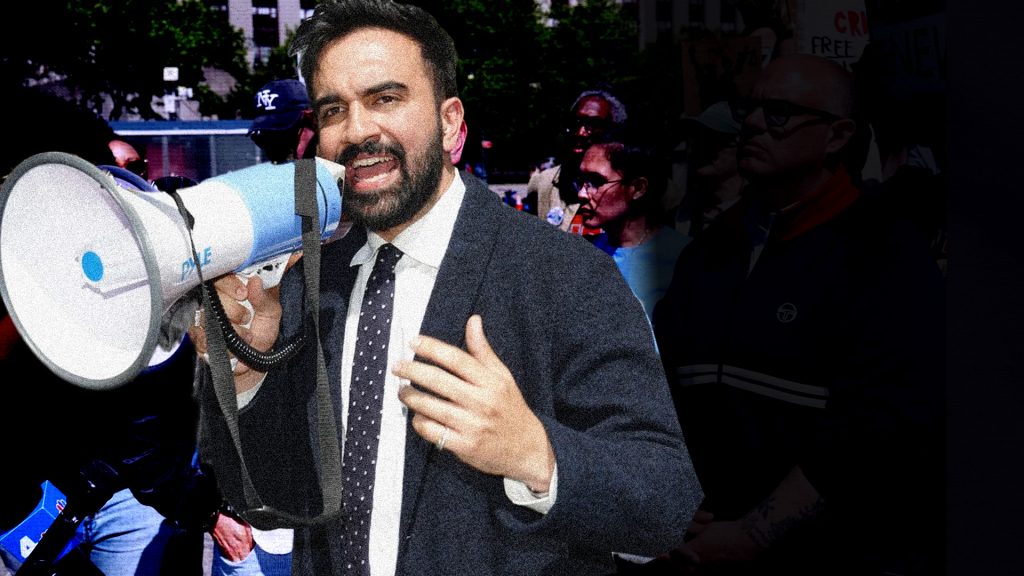
As the New York City mayoral race intensifies, bail reform has become a defining issue for some of the city’s most influential donors. A network of billionaires and corporate figures has rallied behind former governor Andrew Cuomo, now running as an independent, while portraying his opponent, Democrat Zohran Mamdani, as “soft on crime.”
Among Cuomo’s prominent backers is billionaire hedge fund manager Bill Ackman, who has been an outspoken critic of New York’s 2020 bail reform law. In an X (formerly Twitter) post Ackman argued that the reforms created a “revolving door” justice system in which “those arrested for all but the most serious crimes are released almost immediately back onto the streets,” leaving Rikers Island populated only by “the most hardened criminals.”
Records show Ackman donated $1 million to an anti-Mamdani super PAC called Defend NYC and another $500,000 to the main pro-Cuomo committee, Fix the City. Former Mayor Michael Bloomberg has given $8.3 million, oil heir John Hess $1 million, cosmetics executive Ronald Lauder $750,000, and casino developer Steve Wynn $500,000. Real estate and construction firms have also joined in, including Suffolk Construction with $250,000 and Vornado Realty Trust with $150,000. In total, Fix the City has raised about $25 million, much of it spent on ads portraying Mamdani as a danger to public safety.
Advertisements supporting Cuomo have repeatedly argued that Mamdani and other progressive candidates are endangering New Yorkers by supporting policies that release “criminals” before trial.
One ad highlighted Mamdani’s past support for defunding the police and suggested he would not keep the city safe. The messaging often links the 2019-2020 bail reform law, which eliminated cash bail for most non-violent offenses to claims of rising crime, warning that Mamdani’s proposals to reduce jail populations would worsen the problem.
On October 22, Cuomo’s campaign briefly posted a 2-minute AI-generated video on his official account during the mayoral debate. Though it was deleted within 20 minutes, the clip had already been downloaded and widely reshared.
The video opens with an AI-generated depiction of Mamdani walking through New York streets, eating with his hands, before cutting to a series of fabricated characters, including a Black man shoplifting while wearing a keffiyeh, a pimp, a drunk driver, a domestic abuser, and a drug dealer—all offering their support for Mamdani’s candidacy.
The ad’s use of anti-Black and anti-Muslim racial stereotypes sparked criticism and ridicule online. Government watchdog Common Cause New York said the ad’s undisclosed use of artificial intelligence could run afoul of state election law – calling it “offensive” and “a blatant attempt to stoke fear.”
According to Cuomo’s spokesperson Rich Azzopardi, the ad was a draft proposal which was neither finished nor approved. Azzopardi added the video had not been reviewed by the campaign legal team, and that it was posted by a junior staffer in error.
Sumathy Kumar of New York State Tenant Bloc, said the framing exposes the priorities of wealthy landlords and business donors who view Mamdani’s platform as a challenge to their economic interests. By emphasizing crime and public safety, Kumar said, these donors are working to steer the election conversation away from issues like housing affordability and economic inequality.
Yet while major donors cast bail reform as a public-safety risk, recent research points in a different direction.
Public Safety Claims Vs. Real Data
Bail reform may be a convenient scapegoat in political ads, but empirical research consistently finds no link between bail reform and rising crime. A broad analysis of 33 major cities by the Brennan Center for Justice found “no statistically significant relationship between bail reform and crime rates,” concluding that reforms have not made communities less safe.
In New York City, the most experimental evidence now comes from the October 2025 report by John Jay College’s Data Collaborative for Justice (DCJ), which tracked cases for more than four years. The study found that people released under the 2020 bail law were less likely to be re-arrested than similar defendants pre-reform – 57% versus 66% for overall re-arrests, 33% versus 40% for felonies, and 20% versus 25% for violent felonies, with no measurable change in firearm-related arrests. The strongest public safety gains were among defendants with no prior records, while a small high-risk subgroup – people with recent violent felony arrests – did show higher re-offending, a pattern researchers flagged for targeted policy attention.
Taken together, these findings show that New York’s bail changes did not drive a citywide crime increase and are associated with modestly lower re-arrest rates across most groups. This aligns with outcomes in other jurisdictions – New Jersey’s near-abolition of cash bail in 2017 coincided with declining crime, and Illinois, the first state to fully eliminate cash bail in 2023, reported a 11% drop in violent and property crime in its first year.
New Jersey largely replaced cash bail with a risk-based system allowing preventive detention; Illinois ended cash bail statewide in 2023, New York’s 2020 law removed cash bail for most misdemeanours and non-violent felonies but kept it for many violent charges and was amended in 2022-2023 to expand judicial discretion.
Alana Sivin, Director of Greater Justice New York (GJNY) initiative at Vera Action said that New York’s bail reform has been “widely successful,” reducing unnecessary jail stays, saving millions in bail costs, and showing no link to rising crime.
She added that focussing on rollbacks distracts from “the things that actually keep people safe,” like housing and community investment.
Sivin also noted that analyses have shown re-arrest rates stable or lower, with return-to-court rates steady or improving.
Jeremy Cherson, director of communications at the Bail Project told BreakThrough News that crime is widely misunderstood, but it speaks to and can be utilized politically as a weapon to motivate people to oppose candidates or take certain political positions.”
“Often the way bail reform has been discussed is devoid of the evidence that shows bail reform doesn’t lead to crime increases after it’s implemented,” Cherson added.
Human Costs of Cash Bail
One case that drew national attention was that of Kalief Browder, a Bronx teenager whose death put a spotlight on the flaws in New York’s justice system.
In 2010, Browder was sixteen when he was accused of stealing a backpack. His family couldn’t afford the $3,000 bail, and he was sent to Rikers Island. He spent three years there awaiting trial, about two of them in solitary confinement. Browder maintained his innocence throughout. The charges were eventually dropped, but in 2015, two years after his release, he died by suicide.
“Browder was stuck behind bars because he couldn’t pay a small amount of bail that was set after he was arrested for stealing a backpack. And so another example was someone who, if he was the son of a billionaire, he would be alive today. Because he would have been able to pay his bail,” Sivin said.
“We have to remember that the impetus for bail reform in New York City was Kalief Browder’s death,” Cherson said.
Prior to New York’s bail reforms, thousands of people, mostly Black and brown New Yorkers, were languishing at Rikers Island every year awaiting trial simply because they could not afford bail. Many, like Browder, were accused of minor offenses.
‘We have to remember that the impetus for bail reform in New York City was Kalief Browder’s death,’ Cherson said.
“Research shows that even a few days behind bars pretrial can have really devastating impacts,” Sivin noted, from loss of employment to missed medical appointments to housing instability. These disruptions make communities less safe, Sivin explained, because they uproot people’s lives and increase poverty – all for individuals who are legally presumed innocent.
Advocates note that even a day of pretrial detention can destabilize lives through job loss, missed medical care, or housing insecurity. That human toll remains visible today. Amanda, a middle-aged woman from Arizona, was jailed pretrial after defending her husband from violent neighbors. Though she never fired a shot, her bail was set at $10,000 — money she did not have. Disabled and suffering from chronic conditions, she was denied a wheelchair, forced to crawl onto transport buses, and went without medication for days. She remained in jail until The Bail Project posted her bail.
While people like Amanda and Browder suffer under cash bail, the commercial bail industry maintains significant financial interests in the current pretrial system, which has informed organized opposition to reform.
Bail Bond Industry – Profit Over People
Behind the pushback is a powerful financial network that depends on the old cash bail system – the for-profit bail bond industry. Defendants who can’t afford bail often turn to bail bondsmen, paying a nonrefundable fee, typically 10% of the bail amount, and sometimes putting up collateral like homes or cars. The business model relies on pretrial detention – every person held on unaffordable bail is a potential client, every person released without bail is a lost sale.
The American Bail Coalition (ABC), a trade group representing bail insurance corporations, has been the leading national force opposing reform. Its members are large insurance firms that underwrite bail nationwide.
A 2017 ACLU investigation found that some ABC member companies were owned by major corporations, including Tokyo-based conglomerate Tokio Marine, which manages more than $40 billion in assets. These global investors finance a system that extracts money from mostly low-income defendants and their families while lobbying heavily to block reform.
In New York, bondsmen joined the police unions and politicians to weaken the 2019 bail law and later push for amendments. The Bail Project, a nonprofit that pays bail for those who can’t afford it, has reported that industry-aligned groups often help amplify high-profile crimes committed by people released pretrial to fuel public fear.
The American Bail Coalition (ABC), a trade group representing bail insurance corporations, has been the leading national force opposing reform. Its members are large insurance firms that underwrite bail nationwide.
“There’s no evidence that bail bondsmen prevent crime,” said Cherson.
Now, the industry is backing an effort in Congress to restrict charitable bail funds.
Nationally, bail lobbyists have advanced legislation to hobble charitable bail funds, while President Donald Trump has denounced “cashless bail” and signed an order directing the Justice Department to consider withholding funds from jurisdictions that ended money bail.
The move may score political points, but it amplifies fear and drains resources from programs that prevent crime.