Iran suspends strikes after ‘painful response’ to Israeli attacks in Lebanon
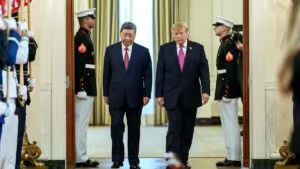
US President Trump urged both sides to cease further strikes, denying his country’s involvement and reiterating his earlier claims of a peace deal with Iran being “very close.”
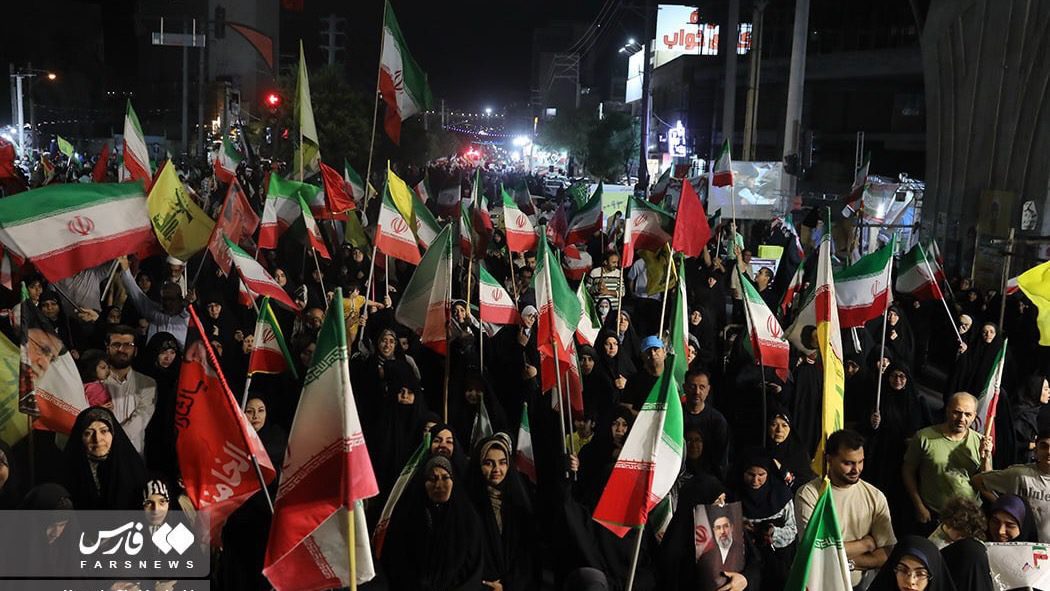
Iranians rally in support of retaliatory strikes against Israel
Iran announced the suspension of its military operation against Israel after stating it delivered a “painful response” to the “atrocities and mischief” of the Zionist regime in southern Lebanon and the Dahiyeh district.
US President Donald Trump had told both sides to “immediately stop shooting” in posts on Truth Social, claiming that Israel and Iran are seeking an “immediate CEASEFIRE” and that a final peace deal between the US and Iran is proceeding.
Iran launched missile and drone strikes on Israel, in what it claimed to be retaliatory strikes in response to Israeli attacks “against several radar sites in three locations across” the country and attacks on its petrochemical complex in Bandar-e Mahshahr, in southwestern Iran.
“The fake Zionist regime and its supporters must learn a lesson from this response,” Iran’s Khatam al-Anbiya Central Headquarters said in a statement issued in the afternoon of Monday, June 8.
The Islamic Revolutionary Guard Corps (IRGC) named the Monday morning attacks “Operation Nasr” (Arabic for victory), claiming it targeted Israeli airbases in Nevatim and Tel Nof.
Israel, however, claimed it intercepted all Iranian missiles with no reported casualties, warning of retaliation. Monday, June 8.
Iranian strikes on Sunday
On Sunday evening, for the first time since the ceasefire on April 8, Iran launched missile and drone strikes towards Israel against its “persistent attacks on Lebanon in breach of the ceasefire,” Press TV reported.
The Iranian strikes targeted various locations in Israel’s north and western parts.
Israel retaliated to Iran’s strikes, despite US President Donald Trump reportedly cautioning against any escalation.
Trump claimed on Monday he had warned Israeli Prime Minister Benjamin Netanyahu to refrain from responding to Iran’s strikes. He also denied US involvement in the Israeli response.
He was also reported urging Iran to come back to the negotiating table and finalize the deal to end the war.
Trump claimed he does not want to “blow up” the possibility of a “good deal” with Iran, reiterating they were “very close” to achieving it.
He repeated his calls for the immediate end of hostilities in a brief social media post as well.
However, Iran accused the US of coordinating Israeli strikes inside the country, arguing that, contrary to the public displays of defiance, it is impossible for Israel to act alone.
Extreme distrust between US and Iran
Addressing a weekly press conference on Monday in Tehran, Esmail Baghaei, official spokesperson of the Iranian Ministry of Foreign Affairs admitted that the events in the last 24 hours have further increased the “distrust and suspicions” between his country and the US.
As a part of the ceasefire, the US bears clear responsibility for all violations by Israel, Baghaei said, underlining that the consequences of escalating tensions in the region will ultimately fall on it, Tasnim News Agency reported.
Iran “will take action whenever necessary to safeguard our national interests and security” Baghaei asserted, asking Israel and the US to refrain from “daily aggressions.”
No deal without ceasefire in Lebanon
Iran has been insisting that the ceasefire on April 8, which ended the US-Israeli aggressions against it first launched on February 28, includes a ceasefire in Lebanon as well.
Iran had delayed its delegation to Pakistan for the first round of peace talks, despite the announcement of the ceasefire, demanding its comprehensive implementation “on all fronts,” including Lebanon.
The talks in April began only after Trump announced an end to hostilities in Lebanon.
However, Israel soon refused to adhere to the ceasefire norms, launching large-scale attacks in Lebanon and pressing for the complete disarmament of Hezbollah.
Its repeated attacks in the last two months since the ceasefire have killed over a thousand people and displaced hundreds of thousands others in Lebanon.
Israel has also occupied a large part of the southern Lebanese territory.
This Israeli war in Lebanon continued despite Trump’s repeated assurances and warnings issued in response to pressure from Iran.
Iran has reportedly delayed the finalization of the peace deal due to the lack of peace in Lebanon.
Read more: Iran: No deal with US unless Israeli attacks on Lebanon stop
Last week, Iran warned that any further attacks on Lebanon would be considered a violation of the ceasefire and would invite retaliation by its armed forces.
Under fresh pressure, Israel and the Lebanese government signed a “conditional ceasefire agreement” on June 4. However, Hezbollah rejected the deal, citing Israel’s de facto occupation of parts of the southern Lebanese territories.
Israel ignored both the agreement and Iran’s warnings and launched fresh attacks in Lebanon over the weekend. At least two people were killed and over a dozen others were injured in one such strike in Dahiyeh on Sunday, prompting Iranian retaliation.
Resistance welcomes Iranian actions
Thousands of Iranians gathered in Tehran and other parts of the country on Sunday night after the news of Iran’s first missile strikes against Israel since the ceasefire became public. People waved Iranian and Hezbollah flags and chanted slogans against Israel and the US.
Claiming Israel only understands the language of force, Yemen’s foreign ministry welcomed Iranian strikes, calling them “heroic” and a declaration that “the era of the Zionist entity’s rampage [in the region] is over.”
On Monday, Yemen also launched missile strikes targeting southern Israel, apart from declaring a ban on any Israeli vessels navigating in the Red Sea.
Palestinian resistance group Hamas also welcomed the Iranian response to Israeli violations of the ceasefire, calling it “a manifestation of genuine solidarity” and a sign of “new equations” in the region which will lead to the end of the era of “Zionist arrogance and tyranny.”