Iran: No deal with US unless Israeli attacks on Lebanon stop
Iran also responded to US attacks over the weekend on its Hormozgan province by launching airstrikes on a US air base in Kuwait on Monday and warning of stronger retaliation.
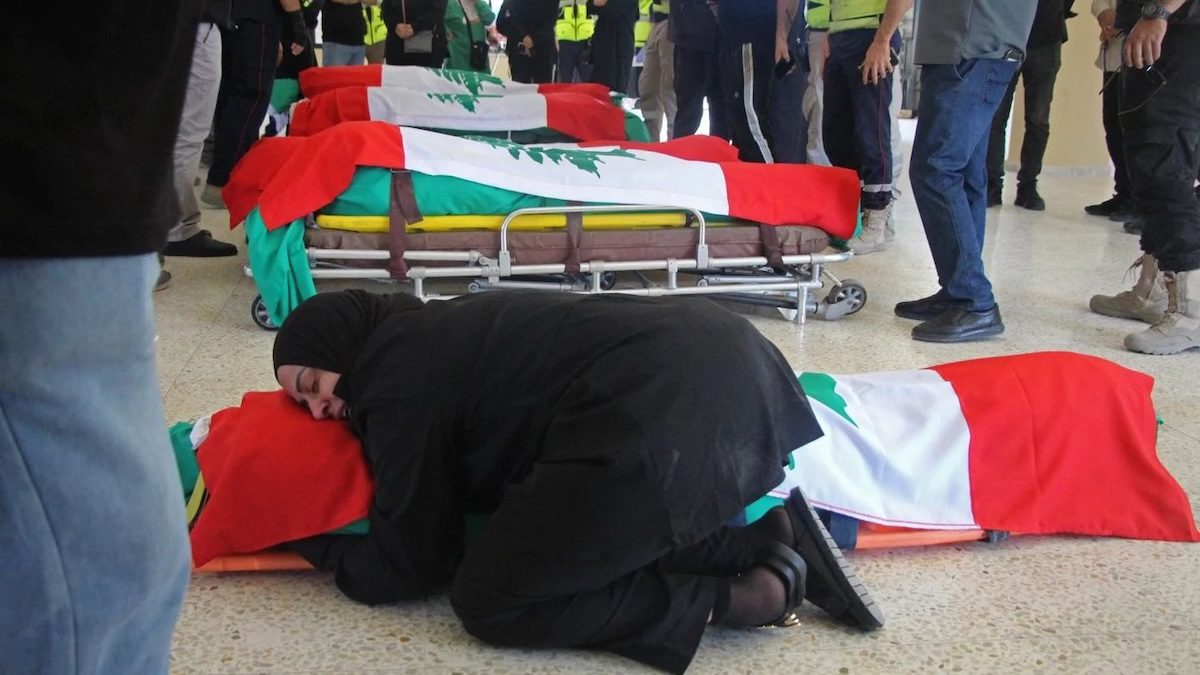
At least eight people have been reportedly killed in southern Lebanon by Israeli attacks since US President Donald Trump announced a ceasefire between Israel and Hezbollah. Photo: Tasnim News Agency
US President Donald Trump announced the end of Israeli attacks in Lebanon hours after Iran defined it as a red line in its peace deal with the US. Iran stated there can be no agreement without an end to the Israeli war in Lebanon and full respect for the ceasefire.
The assertion was made by Esmail Baghaei, official spokesperson of Iran’s Ministry of Foreign Affairs, in a regular press conference in Tehran on Monday, June 1.
The position was later confirmed by Iranian Foreign Minister Abbas Araghchi, in a post on X saying, “the ceasefire between Iran and the US is unequivocally a ceasefire on all fronts, including in Lebanon and its violation on one front is a violation of the ceasefire on all fronts.”
Following Iran’s refusal to move forward with any deal without a ceasefire in Lebanon, Trump told the media that he talked to both Israel and Hezbollah and they both have agreed to “stop all shooting.”
Trump’s phone conversation with Israeli Prime Minister Benjamin Netanyahu was apparently heated.
Trump wrote on his social media that during the call Netanyahu assured him no Israeli troops will march towards Beirut, “and any troops that are on their way, have already turned back.”
However, Netanyahu was reported making a contradictory statement immediately after the phone call with Trump, claiming his country’s forces will keep striking Lebanon.
Israel has been bombing different parts of Lebanon for months now, apart from occupying areas around the Litani River in the south. The Israeli aggression has continued despite a ceasefire agreement announced by Trump in April.
Thousands of Lebanese citizens have been killed in Israeli attacks, including over a thousand since the announcement of the ceasefire. Hundreds of thousands have also been displaced due to the Israeli bombings and land invasion.
“We have emphasized and continue to emphasize that a ceasefire in Lebanon is an integral part of any ceasefire and any final agreement to end the war,” Baghaei said.
Baghaei claimed that Iran will take all necessary actions to help and protect the resistance in Lebanon against continued Israeli aggressions.
According to reports, Israel has launched the deepest invasion inside the Lebanese territories since its forces withdrew in the year 2000, after over nearly two decades of occupation.
On Monday, before the phone call with Trump, Netanyahu had asked his forces to launch fresh attacks on Southern Beirut, causing the fresh displacement of thousands of Lebanese.
“Our region is facing continuous warmongering by the Zionist regime. This is not just about today or yesterday. Over the past 80 years, the Zionist regime, with US support, has waged a permanent and endless war against the countries of the region,” Baghaei said.
US is primarily responsible for the lack of a deal
Answering a question about the US-Iranian talks in Qatar, Baghaei called them productive, also claiming that the exchange of messages continues despite mistrust and suspicion between the parties.
He blamed the US for any delay in the finalization of the deal, citing Trump’s failures to stick to the basic agreements reached during the talks.
“In a situation where the other side constantly changes its views, raises new or contradictory demands and sends different and inconsistent media messages, it is natural that the situation prolongs the negotiation process,” Baghaei responded.
There were speculations of an MoU (memorandum of understanding) being finalized between the two countries negotiating under Pakistani mediation in Qatar last week.
Reportedly, Trump delayed his signature on a text of the MoU finalized on Thursday. He sought modifications related to Iran’s nuclear program and the arrangements over the Strait of Hormuz.
The Iranians have described any interim agreement as a settlement to end the war and the beginning of a confidence-building process. They have repeatedly denied any negotiations on the issue of their nuclear program, claiming it can only be done after the successful implementation of the conditions of the MoU, once signed.
Meanwhile, both countries have accused each other of violations of the existing ceasefire.
Over the weekend, the US launched yet another attack in southern Iran, targeting a telecom post and other infrastructure in the city of Goruk and on the island of Sirik, claiming they were drone launch sites and radar centers.
These were the second such attacks in a week, after the attacks last Monday on the southern Iranian city of Bandar Abbas.
The US also imposed fresh sanctions on Iranian vessels, entities, and individuals involved in its oil trade last week.
Iran retaliated to US strikes by downing a drone on Sunday and targeting its airbase in Kuwait on early Monday morning.
The Islamic Revolutionary Guards’ Corp (IRGC) claimed on Monday that its air force launched attacks on the air base from which Sunday’s attacks originated and “predetermined targets were destroyed” without identifying the location.
Kuwait claimed it was the target of the Iranian attacks and condemned them, without addressing the Iranian allegations of Kuwait allowing the use of its land and airspace for attacks on Iran.