In Minneapolis and Saint Paul, the Power of Community Confronts the Terror of ICE
Amid the escalations by federal agents and the fear that looms heavy in the air in the Twin Cities, Minnesotans are showing up for their immigrant neighbors and each other in a multitude of ways, some old and some newfound.
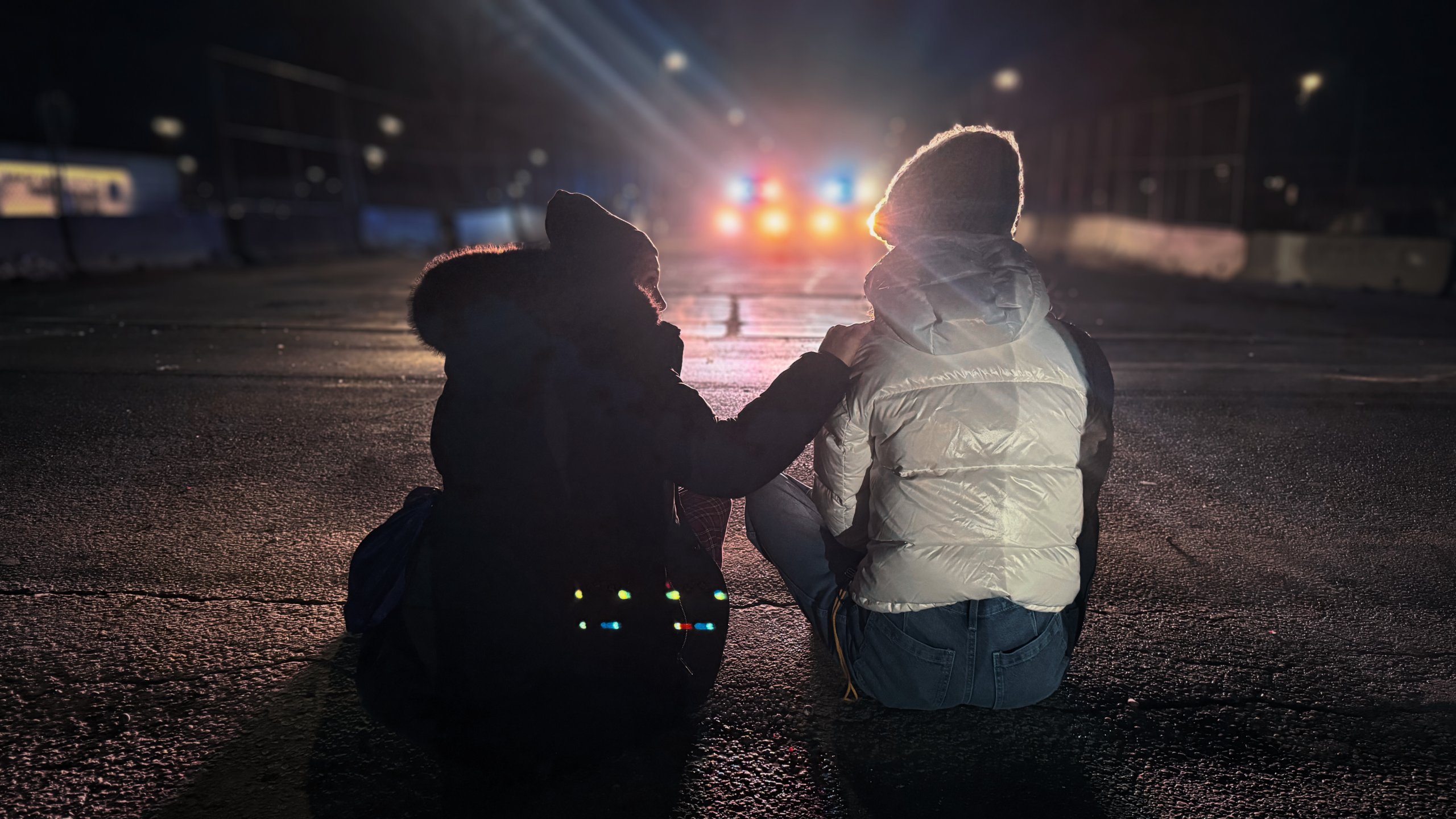
Two protesters sit outside the ICE facility at the Bishop Henry Whipple Federal Building in Minnesota, with vehicles of federal agents facing them with their lights on. Photo: Meghnad Bose
On the streets and in the neighborhoods of Minneapolis and Saint Paul, the escalating terror of Immigration and Customs Enforcement hangs heavy in the air.
The streets of the Twin Cities are emptier than usual, and shops in immigrant-heavy neighborhoods are mostly deserted. Malls and restaurants bear an abandoned look, largely vacant even on a Sunday afternoon. Of the establishments that are open, many are operating almost furtively — a young Latino barber in south Minneapolis is ready to cut your hair, but has kept his salon’s door locked. If you knock and don’t seem like a federal agent, the door will be opened for you.
“Many of us, for weeks now, have felt the fear of leaving our home or going back to our businesses, for fear of being harassed and detained by ICE,” said Abdi Mohamed, a Somali American filmmaker who moved to the U.S. when he was two months old. Yet, despite being fearful, Mohamed showed up at a vigil in Minneapolis for Renee Nicole Good, at the site where her car crashed after she was fatally shot by ICE officer Jonathan Ross on January 7th.
Not just at protests and vigils, but also by protecting their immigrant neighbors and one another, Minnesotans are showing up for each other—rising against the federal siege with the power of community.
Whistles and Salutes
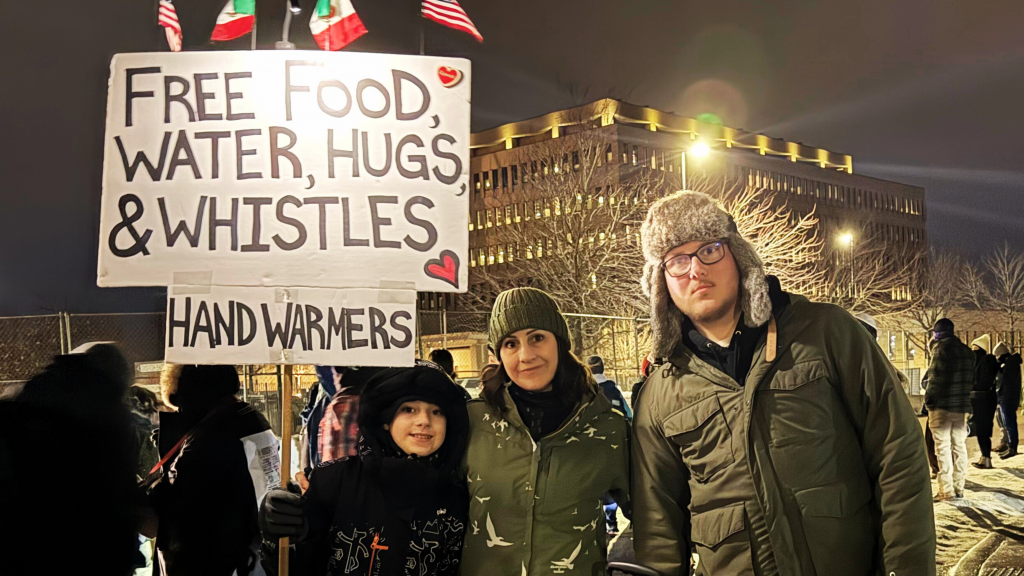
On Monday night, Natalie Ehret, an attorney and local resident, rolled a small wagon outside the ICE facility at the Bishop Henry Whipple Federal Building near Minneapolis, distributing 3D–printed whistles to the protestors gathered there.
Ehret was joined by her two sons, aged 11 and 21. The younger one walked next to her with a large sign that read ‘Free food, water, hugs and whistles’. A smaller sign attached to it added that they had handwarmers to give out too. Ehret told BreakThrough, “Even my kids can see the parallels. We watched a Netflix special, ‘Hitler and the Nazis: Evil on Trial’ — my 11-year-old paused it to tell me the parallels he sees.”
She added, “Violence in the street, the Brownshirts pulling people out of their homes, creating chaos on the streets, which is what we’re seeing now.”
“My grandpa fought the actual Nazis,” said Ehret. “So it’s personal to my family, the people that put their lives on the line, to see it at home.”
The whistles Ehret was distributing have become a near-ubiquitous sight in the Twin Cities. At protests and vigils, it has become increasingly common to see them being handed out — not necessarily for use then, but later. Blowing the whistle with short notes is code to alert the neighborhood that ICE agents are nearby, and blowing long, continuous notes are to signal that ICE is attempting to detain someone. In lieu of whistles, drivers have used their car horns to call attention to the presence of ICE or federal agents.
‘My grandpa fought the actual Nazis,’ said Ehret. ‘So it’s personal to my family, the people that put their lives on the line, to see it at home.’
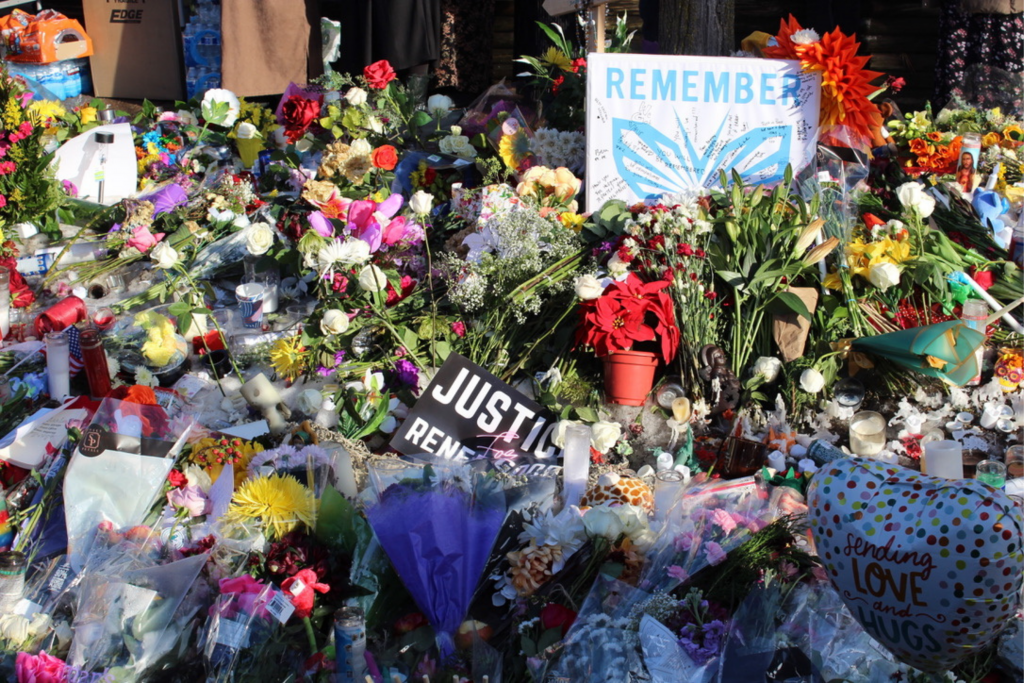
In front of the memorial for Good, a man handing out whistles on Monday afternoon said, “Keep a whistle with you at all times, please”. Just minutes earlier, those gathered in front of the memorial had suddenly heard loud and repeated honking nearby. Soon, a vehicle suspected to have federal agents inside rapidly drove past, and the honks followed suit.
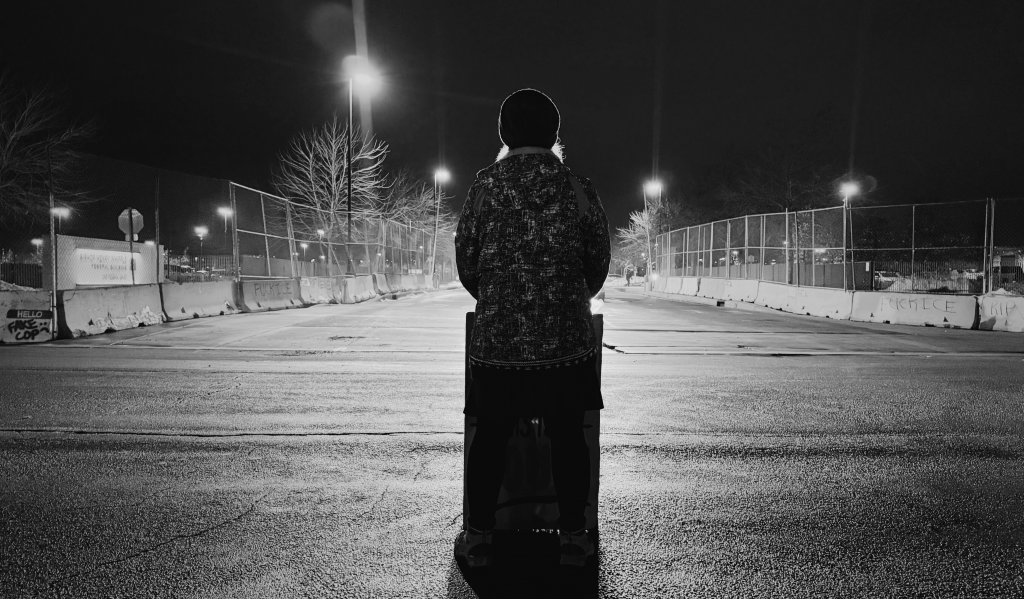
That night outside the ICE facility at Whipple, a protester scribbled away on a yellow notepad every time a car with federal agents, who were usually masked, drove past. She was noting down the license plates for as many of their vehicles as she could. “There is a database of highly suspected or confirmed ICE [vehicles] that is distributed,” she explained.
She would later add the details of the cars she was noting down to the database—community members could then look out for the same number plates in their neighborhoods.
These cogs of the ICE watch wheel work day and night to protect their communities. As thousands of federal agents swarm the Twin Cities, new rapid response networks are forming to fight back.
The day after Good was killed, the Immigrant Law Center of Minnesota released a circular that said, “ILCM encourages neighbors to connect, mobilize, and stand together. If you personally witness ICE activity, you should report to any of these three rapid response lines.” The statement provided contact details for the Immigrant Defense Network, the Monarca Rapid Response Line and the Minnesota Immigrant Rights Action Committee (MIRAC). In recent weeks, vulnerable immigrant communities have turned towards these helplines.
Countless shops and restaurants are also publicly displaying signs made by these rapid response groups. The signs declare the shops to be private property where ICE is not welcome. “We have the right to deny ICE and CBP access to private spaces without a judicial warrant,” reads a sign by the Monarca Rapid Response Line pasted outside a restaurant.
Alfredo, a Mexican American owner of a meat shop in Minneapolis, has them on the door of his store too. Even though he is a U.S. citizen, Alfredo told BreakThrough, “I’m just crossing my fingers that they don’t come here.” He had considered keeping the door locked as well, but decided against it. His sales have dried up anyway, as many of his immigrant customers are no longer venturing out to buy their groceries.
The situation has only worsened since the killing of Good.
The protests against ICE have amplified and gained momentum across the country in the wake of the shooting. In Minnesota, however, that has come with the Trump administration doubling down on its immigration enforcement operations, sending hundreds of additional federal agents to the state.
ICE’s tactics are growing in hostility as more agents flood the state and raids multiply. The agency has begun doing door-to-door operations, and have even been seen breaking in the door of a home.
The Immigrant Law Center also listed instructions on what to do when documenting ICE activity. The mnemonic to remember, they said, was SALUTE — those documenting should note the Size (how many people and vehicles are present), Activity (what specifically the agents are doing), Location (the address and landmarks where the incident is occuring), Uniform (what the federal agents are wearing or what identification they have), Time (exact time of the incident), and Equipment (the weapons or devices the agents are carrying).
Pick-ups and Drop-offs
With more and more immigrant families withdrawing into their homes out of fear of ICE agents, parents in the community have been coming together to find ways to support their neighbors.
Amanda Otero, a mother of two and the co-executive director of Take Action Minnesota, recently witnessed ICE agents deploying tear gas and attempting to arrest someone outside of her son’s pre-school. “I am very aware that our streets are not safe right now,” Otero said.
“We’re parents. We all know the best place for our kids is at school and they know that too…but [immigrant families] are worried. They can’t leave their homes. They’re fearful of getting abducted,” Otero said.
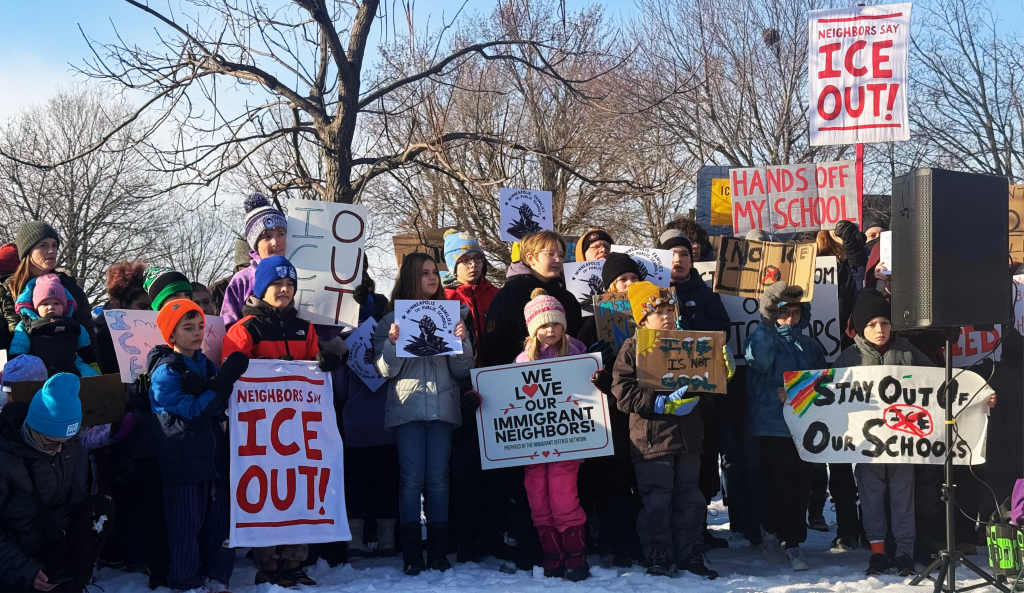
In response to this, Otero and other parents have organized sanctuary school teams in 35 Minneapolis schools to coordinate ride support for families that are too afraid to take their children to school. Since the beginning of December, they have been organizing rides for immigrant school kids, picking them up from their homes and dropping them off after school. There are also those who have run patrols at school pick-ups and drop-offs, with volunteers shielding the children.
‘We’re parents. We all know the best place for our kids is at school and they know that too…but [immigrant families] are worried. They can’t leave their homes. They’re fearful of getting abducted.’
Grocery stores in several neighborhoods have also emptied due to fear of ICE.
When Alfredo saw his customers weren’t showing up at his store, he in turn, began going to them. He started free deliveries two to three weeks ago. “I deliver their orders to their home. People are really, really afraid. So, I’m helping them and they also help me.”
Emily Wagner, a pediatric physician, has been involved in the effort to deliver basic supplies like baby formula and diapers to immigrant neighbors who are too scared to leave their homes. “We are keeping our community safe right now,” said Wagner.
“It is on the rest of us, those of us that are ally families, to take care of those neighbors and make sure that they can keep surviving,” said Otero.
That support is felt by many in the immigrant community. Alfredo said, “We really appreciate what the people are doing.”
Together in Grief and Resistance
Evan Friis had only recently moved into a house on East 34th Street and Portland Avenue when he saw ICE agents outside his house and heard people honking on the morning of January 7th. Like several of his neighbors, Friis went out to observe what was happening.
When he stepped back into the house to take a call, he suddenly heard gunshots. Renee Nicole Good had just been killed on the street outside his house.
Friis rushed out. Shocked at what he had just heard and then seen, he said he began yelling, “What have you done?” and screaming at ICE to leave.
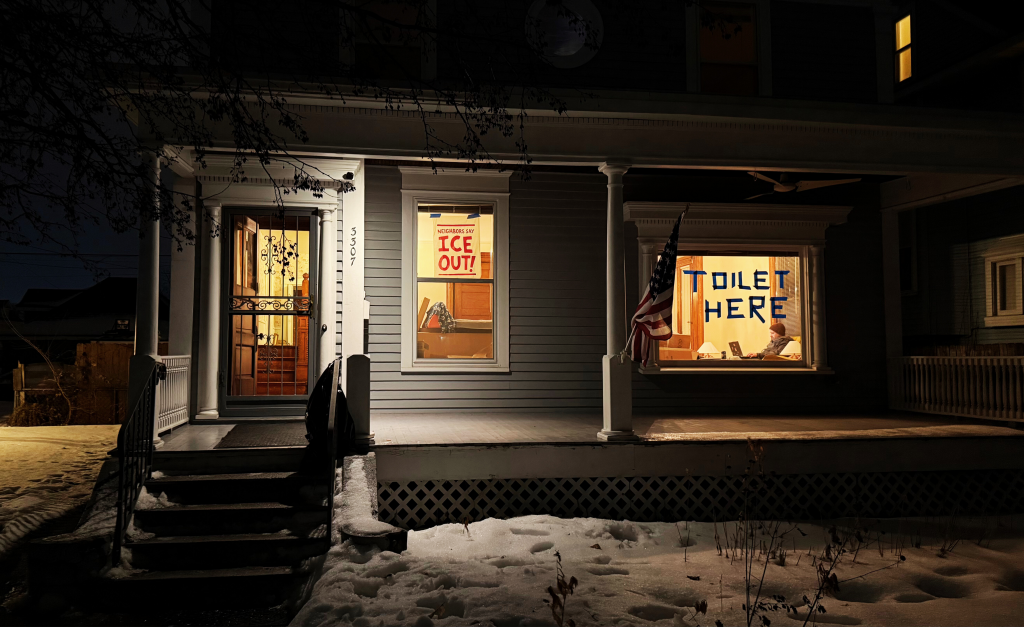
When BreakThrough met him on Friday night, he had two signs up on the windows of his house. One of them said, “Neighbors say ICE out!”
The other read “Toilet here”. Seeing the steady stream of people who were coming to the memorial for Good, and that many of them were staying long hours, Friis unlocked his door and offered his bathroom to the protesters.
The night after Good was killed, dozens of people stayed at her impromptu memorial site past midnight. Some planned to stay the night there. The protesters had built barricades on either side of the street, and converted the site of the shooting into a memorial zone.
‘Our translator at school who translates Spanish to English was thrown to the ground just because of the way he looks.’
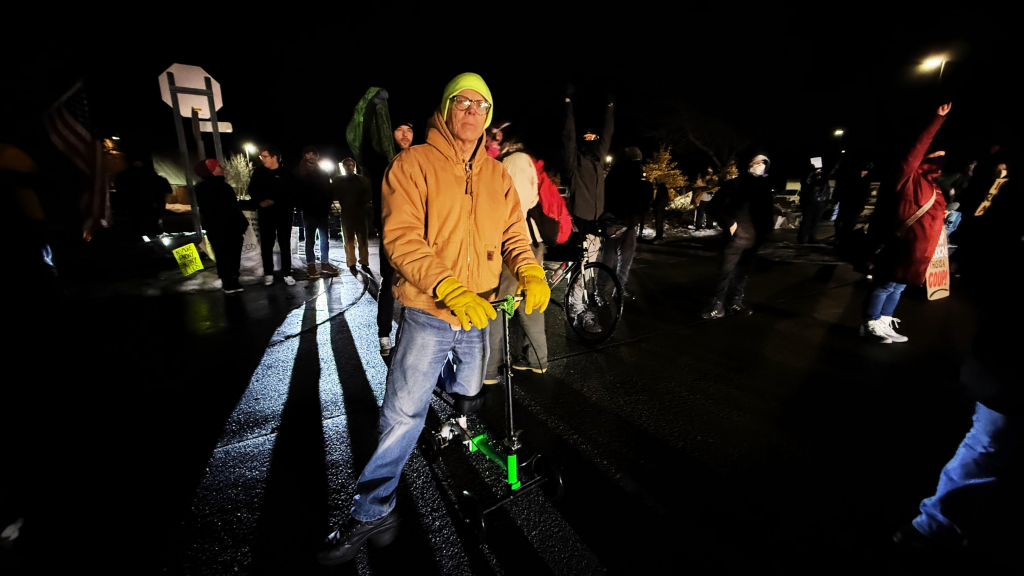
Protesters volunteered and distributed hot chocolate and food. People came by and stopped to pay their respects to Good, leaving handwritten notes and signs, flowers, candles, and photos. Some just stood quietly and grieved.
The barricades were removed the next day, but the memorial remains.
Each day since, scores of people have gathered in front of the memorial in grief, rage and remembrance. Two days after her death, there was a vigil hosted at the site by the Somali American Leadership Table (SALT), a local group that came together less than a month ago in response to increased ICE enforcement. The acronym for the collective is a nod to a substance that melts ice.
At the vigil held by SALT, volunteers passed around warm sambusas, a Somali savory pastry, and hot tea, as gatherers honored Good, listened to speeches, and joined together in chants.
Violet Wilson, a senior at Roosevelt High School, was in attendance at the vigil. Hours after Good was killed by ICE officer Jonathan Ross, federal agents swarmed Wilson’s high school, located less than three miles away. “Our translator at school who translates Spanish to English was thrown to the ground just because of the way he looks.”
The incident left Wilson terrified, but she said she recognized her role in showing up for those too fearful to do so. At the vigil, she held up a sign that read ‘We speak for those who can’t’.
The Siege Continues
The Trump administration has repeatedly aimed to mischaracterize the killing of Good, and the actions of federal immigration enforcement.
Senior members of the administration have baselessly described Good as a “domestic terrorist” who sought to hit ICE agent Ross with her car. Despite visual evidence from the scene showing the agent was not about to be run over, the administration continues to brazenly defend a federal agent who killed a U.S. citizen and called her a “fucking bitch.”
On Tuesday, President Trump wrote in a post on Truth Social, “Do the people of Minnesota really want to live in a community in which there are thousands of already convicted murderers, drug dealers and addicts, rapists, violent released and escaped prisoners, dangerous people from foreign mental institutions and insane asylums, and other deadly criminals too dangerous to even mention. All the patriots of ICE want to do is remove them from your neighborhood and send them back to the prisons and mental institutions from where they came…”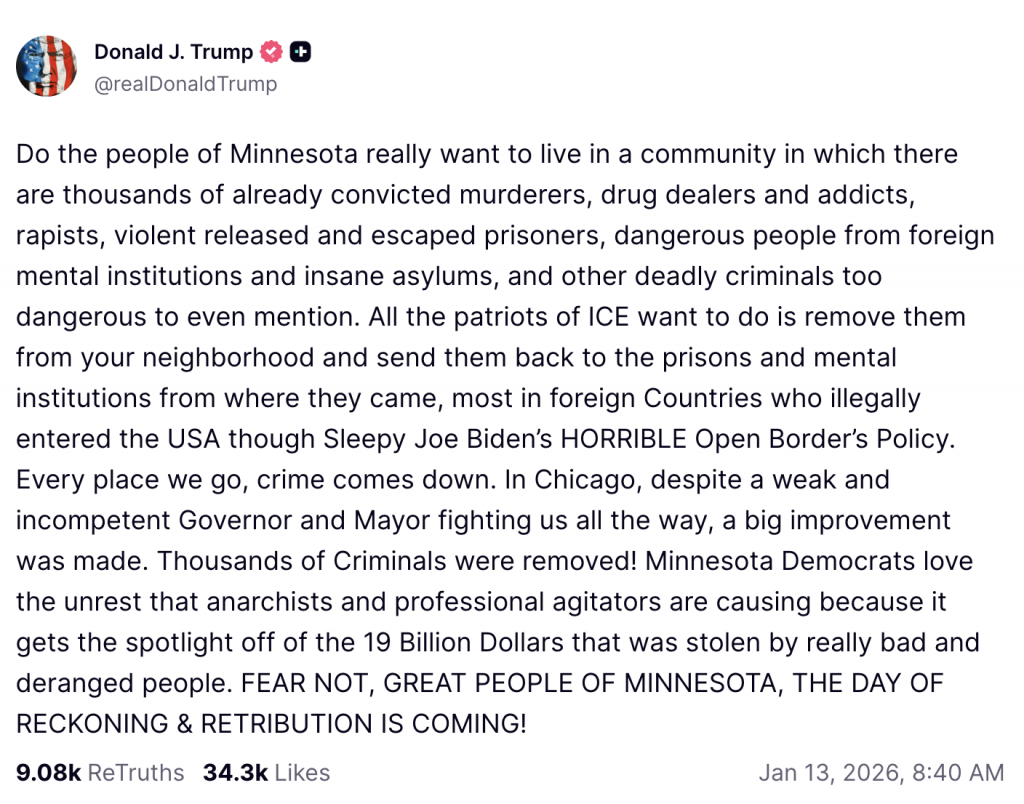
This claim, too, does not hold up to scrutiny, according to the federal government’s own data.
Of the 1,677 ICE arrests in Minnesota from the time Trump took office in January 2025 till mid-October, 743, or 44% of the arrests, were of individuals with no criminal record—no convictions, and no pending criminal charges—according to BreakThrough’s analysis of government data provided by ICE in response to a public records request by the Deportation Data Project. Further, 63% of the arrests were of individuals with no convictions.
Still, the administration’s escalation of force in the Twin Cities continues.
In response, Minnesotans are taking to the streets, blowing whistles, honking horns, tracking plates, delivering essentials, dropping off schoolchildren — and resisting ICE.
A scene of attempted federal repression of protesters outside Whipple on Monday night was oddly emblematic of the situation in the Twin Cities. As protesters continued their chants and slogans across the road from the ICE facility, federal agents suddenly lined up and began advancing towards them in riot gear. Gas canisters sailed towards the picket.
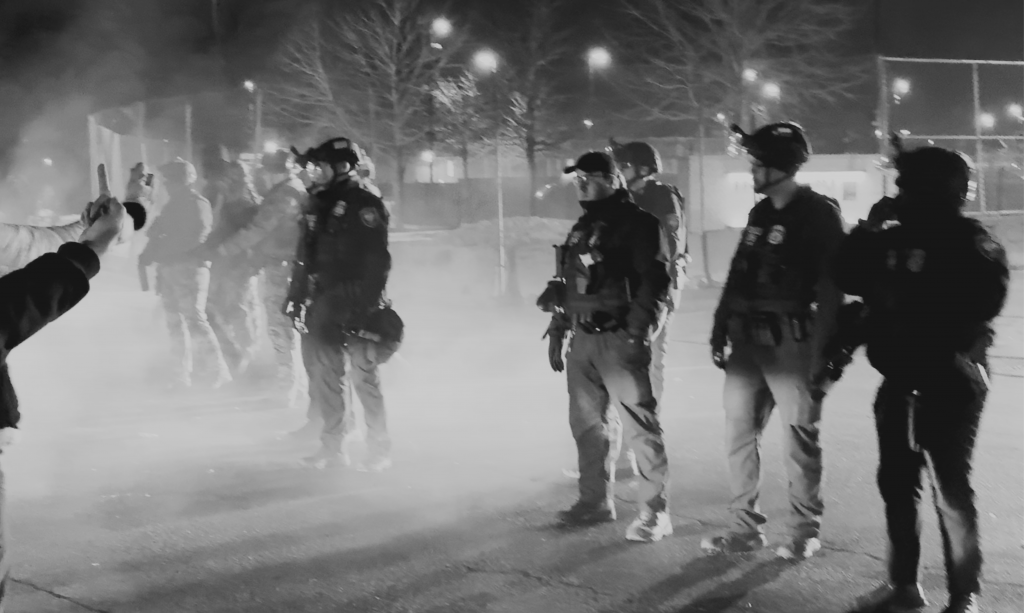
The show of force, designed to intimidate and disperse the protesters, backfired.
The wind blew the gas right back at the federal agents who fired it. The protesters marched back to where they were. The agents retreated.
Labor, faith and community leaders in Minnesota have called for an economic blackout and total shutdown of the state on January 23, urging everyone across the state to not attend school, go to work, or shop.
How the ongoing federal escalation in the Twin Cities will end remains unknown, but the community’s determination to confront the siege continues.