US sanctions top Chinese universities and research institutes, citing national security threat
Last week, the Pentagon banned research collaborations with 88 Chinese institutions, including top universities Fudan and Shanghai Jiao Tong, calling their work a threat to its national security.
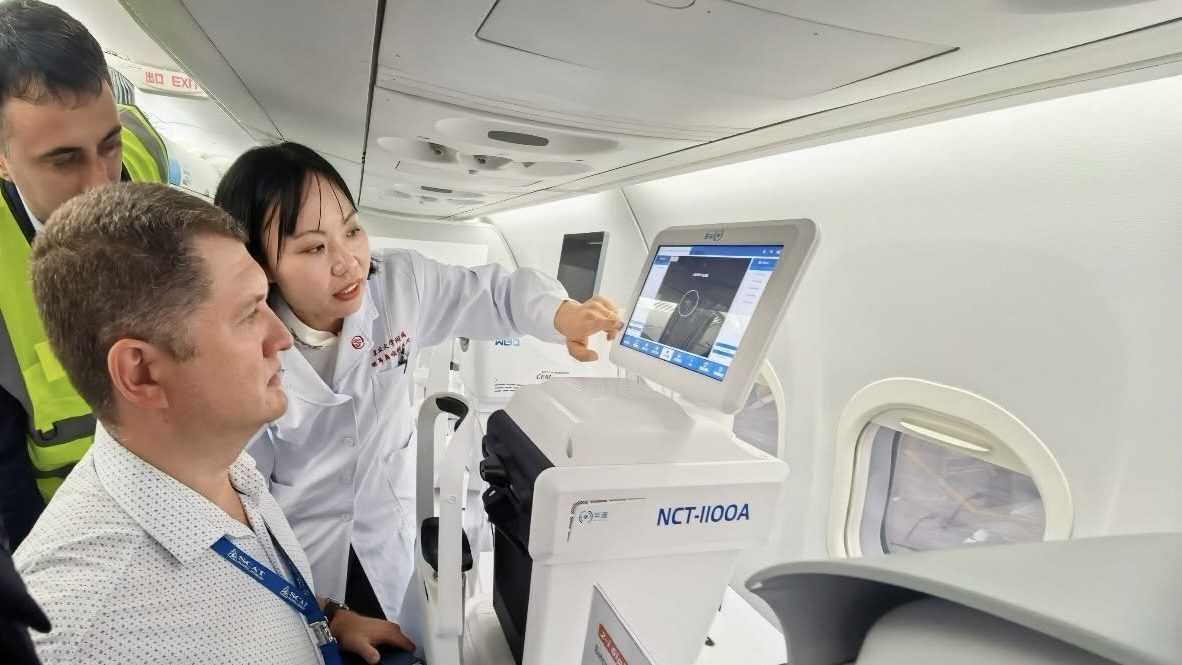
Eye & ENT Hospital of Fudan University in Kazakhstan. Photo: Fudan University / Facebook
Last week, the US Department of “War” added China’s leading universities and dozens of other research organizations into a list of foreign institutions considered to be a potential “threat to its national security” over their alleged links with the Chinese armed forces.
China has voiced strong opposition to the latest US sanctions, claiming the US is weaponizing its research for political reasons and argued that such moves ultimately harm global collaboration in scientific and technological developments.
The list, released on July 23, includes a total of 130 institutions, 88 of which are Chinese, including top universities Fudan and Shanghai Jiao Tong, and other entities located in Russia and Iran.
“These institutions have been confirmed to engage in activities that increase the likelihood of US government funded research and development efforts being misappropriated,” the Pentagon claimed in the release.
It further claimed that such “misappropriation” enables adverse external interventions in science and technology “that directly threatens America’s national security and scientific integrity.”
Their inclusion on the list means that no US institution can have collaborative research or technological exchanges with these institutions.
The Section 1286 list, as it is formally known, was created under the 2019 National Defense Authorization Act to curb the transfer of “sensitive technologies” or collaboration with institutes linked with foreign military or intelligence agencies.
The US has long accused China of “stealing” its technological innovations. Similar allegations were repeated by Trump’s science and technology advisor Michael Kratsios last week when he alleged a Chinese AI company was stealing US AI models.
A reflection of Cold war mentality
Last week’s sanctions and repeated allegations of stealing are widely seen as a part of Washington’s attempts to curb China’s advances in science and technology and undermine its achievements.
China has rejected such allegations and maintained that such moves are part of the US plan to block its economic development and a reflection of the Cold War mentality of its ruling class.
The list is part of a series of anti-China steps taken by successive US administrations in the last decade. The first Trump administration started a trade war while the Joe Biden administration tried to restrict Chinese access to advanced semiconductors. Trump in his second term has reenergized economic warfare.
Last month China reciprocated US attempts to restrict the operations of dozens of its top companies, including BYD, Alibaba, and Baidu, by adding 10 US firms to its export ban list.
Earlier this month, the US National Science Foundation (NSF) expressed its intention to ban all future collaboration with any research institute or their employees included in any restricted entity lists issued by the government mostly impacting the Chinese institutes.
In response to last week’s sanctions, the Chinese Ministry of Commerce issued a statement on Wednesday, July 29, expressing its strong dissatisfaction and firm opposition.
“The US has continuously overstretched the concept of national security, erected discriminatory barriers, and politicized, weaponized and instrumentalized scientific research cooperation,” Chinese Ministry of Commerce said in a statement.
It asserted that China will take all necessary measures to “safeguard the legitimate rights and interests of Chinese research institutions and ensure a sound environment for normal scientific and technological exchanges and cooperation.
However, it warned that the US move “undermines the exchange and cooperation between the two countries’ scientific communities and runs counter to the global trend of international collaboration in scientific and technological innovations.”