Four migrant farmworkers burned alive in Italy for demanding labor rights
Four farmhands were burned alive in a car for demanding work regularization in Italy, exposing the brutal exploitation of migrant workers.
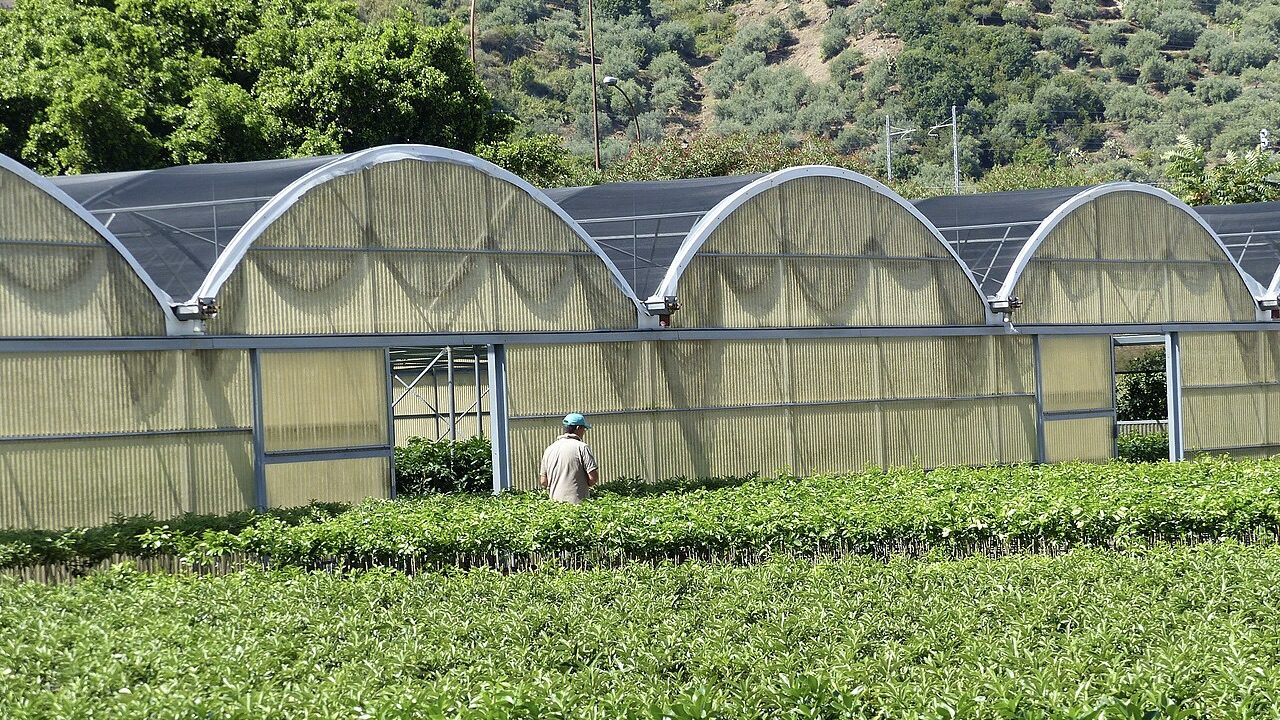
Agriculture in Sicily. Photo: Wikimedia Commons
Four migrant workers – Ullah Ismat Qiemi, Safi Iayjad, Amin Fazal Khogjani, and Waseem Khan – were burned alive in a car for demanding the regularization of their work at the beginning of June in Amendolara, Italy. “They were farmhands working in our fruit and vegetable harvests, exploited like slaves,” the Calabria chapter of left party Potere al Popolo stated. “When they found the courage to rebel and demand a proper contract, they were punished in a horrific manner: the gangmasters trapped them inside a car at a rest stop near Cosenza and set it on fire.”
The event was caught on camera and expanded upon by Mohammad Taj Alamyar, a fifth worker who survived the attack. In his testimony, he described the coercive conditions in which he and his comrades were forced to live, including unstable housing, delayed payments, and the absence of working contracts. According to the trade union confederation CGIL, up to 12,000 farm workers in the region of Calabria alone might be exposed to similar treatment – which allows large companies to save on labor costs and increase profits.
Read more: Outrage in Ireland after Congolese man Yves Sakila killed as guards kneel on his neck
The five workers operated under the caporalato system, an illegal form of labor organization where intermediaries (caporali) hire temporary laborers on behalf of employers, often gaining control over all aspects of their lives. These gangmasters can deduct rent and transportation costs from the workers’ already low daily wage, keeping them in a constant state of need, CGIL warned.
Potere al Popolo’s Giuliano Granato emphasizes the model is present not only in agriculture, where it is perhaps most notorious, but also in sectors like construction and textile production, spanning across the whole country. While the workforce used to comprise Italian workers, it now consists largely of migrants from countries including India, Bangladesh, and Afghanistan.
While technically workers arrive in Italy legally, Granato told BreakThrough News, they are exploited from their very first moments there. “To reach Italy in the first place, workers and their families are forced to take on debts. When they arrive here, they have to pay off these debts – only to often discover that the companies they were told about may not even exist or do not want to employ them, and they end up in a slavery-like situation.”
The caporalato system is illegal in Italy, but trade unions warn that the implementation of legislation remains lacking. And when cases of extreme violence turn public attention to specific workers exploited under this model, rarely does the discussion address responsibility beyond the gangmaster level. Potere al Popolo insists it is crucial to move beyond this as the investigation of Qiemi, Iayjad, Khogjani, and Khan’s murder unfolds. “The two men who murdered the four farmhands were gangmasters who profited at the expense of these workers, but they were the second-to-last link in the chain,” Granato says. “Who is above them? Which companies did they work for? Which farms did they harvest strawberries on? We need to go all the way up the chain.”
Read more: Thousands protest against war and cost of living crisis in Italy
The response to the murder has also unmasked institutional duplicity, Granato points out. “I’m comparing the institutional reaction to the one we observed in Modena, when a 31-year-old man, an Italian citizen born to a Moroccan family, drove his car into a crowd, sending several people to the hospital. Both Prime Minister Giorgia Meloni and President Sergio Mattarella rushed to the city.”
“In the case of Amendolara, no one went. These four murdered farmworkers clearly do not deserve institutional outrage.”
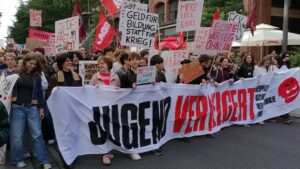
The popular response differed from the institutional one, although anti-migrant narratives and the short time allocated to organizing a local demonstration on June 6 likely impacted participation. However, in the general population “there was a great deal of outrage over this murder, over this barbarity – because not only were four people killed, but they were killed in a barbaric manner, burned alive and locked up,” Granato says.
In the aftermath of the workers’ murder, Potere al Popolo and other progressive organizations are demanding a comprehensive response to the system enabling this type of crime. “Calabria cannot continue to be plagued by these atrocities as if they were natural, inevitable occurrences unrelated to politics,” Potere al Popolo Calabria wrote ahead of the protest. “They are not. They have a name: caporalato, institutional racism, class exploitation.”