Palestine solidarity activist’s health at risk in pre-trial detention
Progressive movements and politicians in Britain have expressed concern about the health and wellbeing of Umer Khalid, a Palestine solidarity activist held in pre-trial detention.
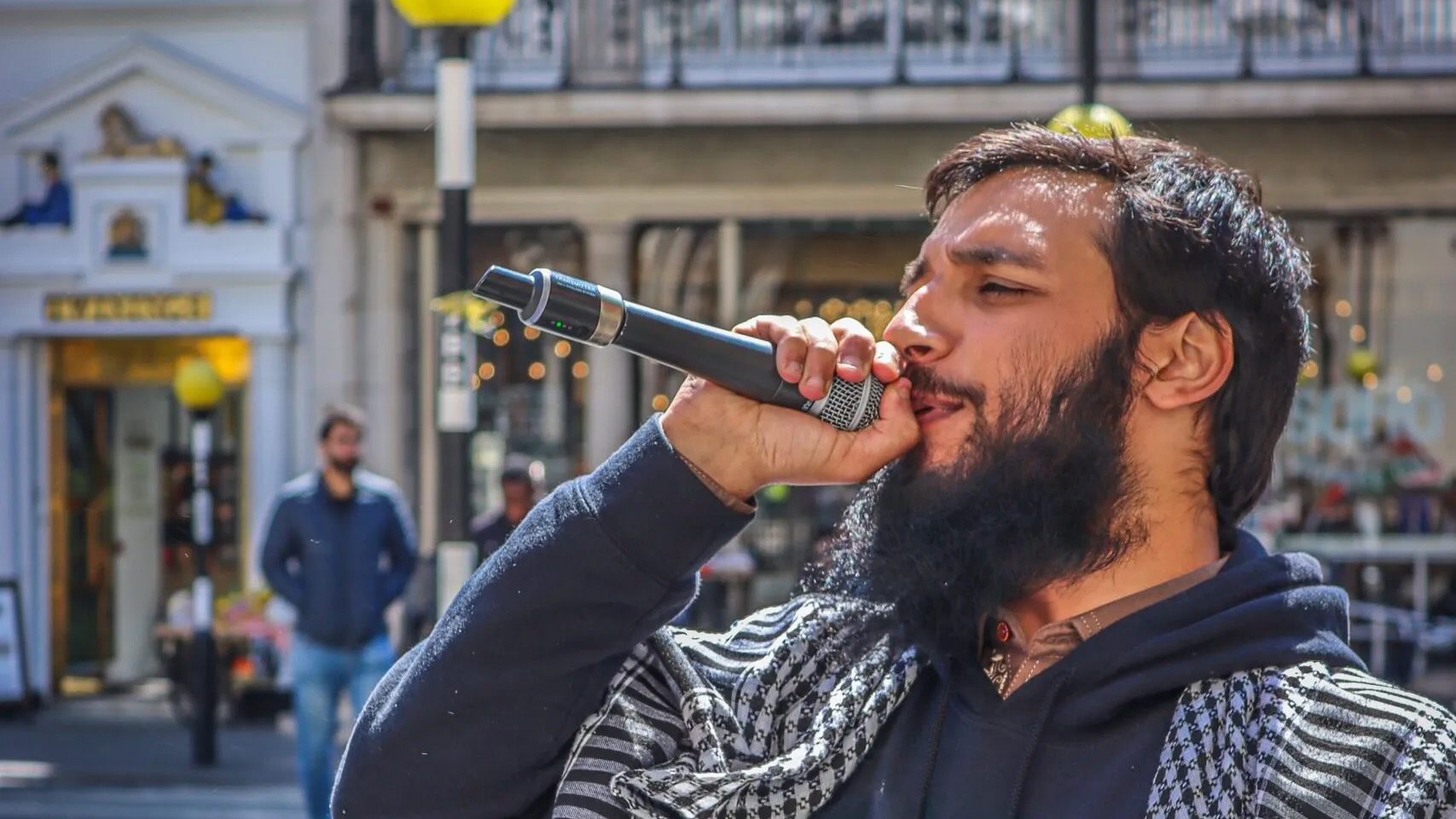
Palestine solidarity activist Umer Khalid. Photo: Prisoners for Palestine
Progressive movements and politicians in Britain have expressed serious concern about the conditions Umer Khalid, a Palestine solidarity activist, is currently facing in pre-trial detention. Khalid is facing charges for taking direct action against the genocide in Gaza. Khalid and his family have repeatedly warned that he has been denied essential care for a rare neuromuscular condition and is experiencing significant health impairments as a result.
“Pro-Palestine prisoner Umer Khalid, a 22-year-old with muscular dystrophy, has been dragging himself across his prison cell floor because he has been denied a wheelchair,” Your Party MP Zarah Sultana wrote on social media. In a letter to Justice Secretary David Lammy, Sultana warned that Khalid was not receiving adequate pain relief and was forced to wait weeks not only for a neurologist but also for basic tasks like a shower. “Given that his trial is not scheduled to begin until January 2027, there is a grave and mounting risk that Mr Khalid’s condition will continue to deteriorate significantly if these matters are not addressed without delay,” she wrote.
“Detention cannot be justified where custody is directly contributing to severe and avoidable physical deterioration and where the state is manifestly failing to provide care consistent with minimum standards of dignity and humanity.”
Read more: Medical students in Gaza and Netherlands describe finding hope in activism
In 2025, Khalid was among the Palestine solidarity activists who launched what has been described as Britain’s longest hunger strike since the 1980s Irish political prisoners’ hunger strikes, protesting harsh conditions including censorship of communications with family and long remand periods. As a result of his 17-day hunger and three-day thirst strike, Khalid was hospitalized due to organ failure.
His underlying condition makes recovery from such actions extremely sensitive, and ensuring proper conditions for this process is paramount. Yet recent updates about Khalid’s prison conditions – including a reported episode where he was left behind during a fire alarm – indicate the opposite is happening, further jeopardizing his wellbeing and life.
“The Israelization of our societies is already happening: posturing democracies where human rights can be suspended for people that those in power consider a disturbance,” UN Special Rapporteur Francesca Albanese commented on the most recent reports about Khalid’s treatment.
Read more: The quiet that kills: beyond awareness to action
Additionally, activists warn that Khalid’s experience should be understood within a broader framework of growing repression of movements for justice and liberation in the country. “A new report reveals that since 2019, the British courts have increasingly been using remand detention, contempt proceedings and lengthy custodial sentences to lock up those taking direct action against climate breakdown and the destruction of Gaza,” the group Defend Our Juries stated.
Together with the Center for Climate Crime and Climate Justice at Queen Mary University, Defend Our Juries recently launched the report “Britain’s Political Prisoners,” examining how court action in these cases has developed over the past seven years.
“Researchers documented 286 cases involving climate and Palestine solidarity protestors imprisoned since 2019,” the organizations said. “In the 256 cases where sentencing and remand data could be verified, the total amount of jail time imposed amounted to 136 years.”
“Remand is used abundantly and recklessly,” the report insists, emphasizing that for a majority of those held on remand, the final sentence was actually more lenient than the time already spent in jail. “Palestine solidarity protestors faced particularly harsh periods on remand, with 60% held over six months. This exceeds typical custody time limits raising serious concerns about the disproportionate use of pre-trial detention.”
While concerns about prolonged pre-trial detention and conditions of political prisoners in Britain circulate, Keir Starmer’s administration continues to pursue a repressive agenda against the Palestine solidarity movement, including terrorism charges for activists. Later this month, the Court of Appeal is expected to deliver a ruling on the legality of the ban on direct action group Palestine Action, contested by the organization’s co-founder Huda Ammori. Following the proscription of Palestine Action in 2025, record-breaking numbers of people have taken part in peaceful actions by holding signs reading “I Oppose Genocide, I Support Palestine Action,” with many arrested.