PAIGC marks 70 years as Guinea-Bissau faces deep political uncertainty
70 years after it was founded to lead Guinea-Bissau’s struggle for independence, the PAIGC is marking its anniversary under renewed political pressure and repression.
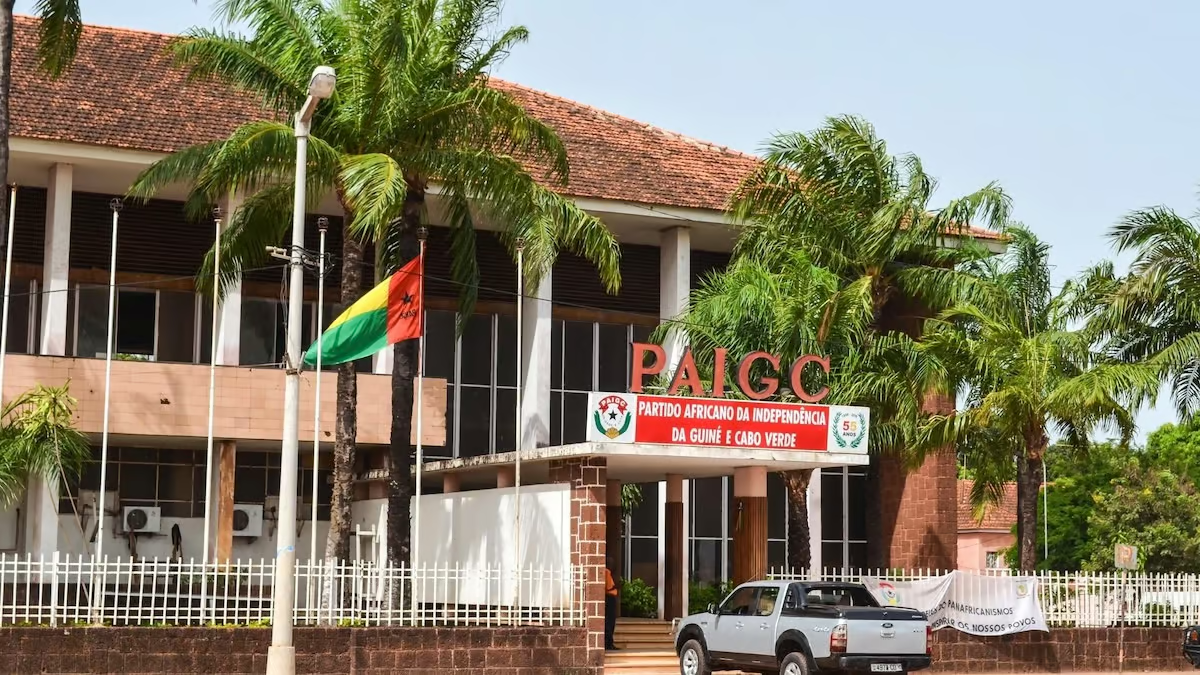
Headquarters of PAIGC in Guinea-Bissau. Photo: PAIGC
The African Party for the Independence of Guinea and Cape Verde (PAIGC) marked its 70th anniversary with commemorations around the world.
Founded on September 19, 1956, under the leadership of Amílcar Cabral and other figures, the PAIGC became the principal movement in the struggle against Portuguese colonial rule in Guinea-Bissau and Cape Verde. After 11 years of armed struggle, Guinea-Bissau declared independence in 1973, with Portugal formally recognizing independence in 1974.
The anniversary celebrations have taken place against a particularly unsettled political reality in Guinea-Bissau. The PAIGC was excluded from the country’s 2025 presidential election, after the Supreme Court rejected the candidacy of party leader Domingos Simões Pereira. The party subsequently supported opposition candidate Fernando Dias in the election.
The election process was interrupted on November 26, 2025, when military officers seized power, just as authorities were preparing to announce the results of the disputed presidential vote.
The political crisis has continued into 2026. A constitutional referendum held on August 30 approved a new constitution that significantly increases presidential powers, including authority over the appointment and dismissal of the prime minister and cabinet. The changes also reduce the number of parliamentary seats from 102 to 65 and alter the country’s electoral constituencies. The PAIGC had called for a boycott, arguing that the referendum lacked adequate democratic safeguards.