Puerto Rico faces major water crisis
The island has been experiencing a prolonged water crisis since early June. The neoliberal economic model imposed on Puerto Rico has made it very difficult to modernize the water supply system.
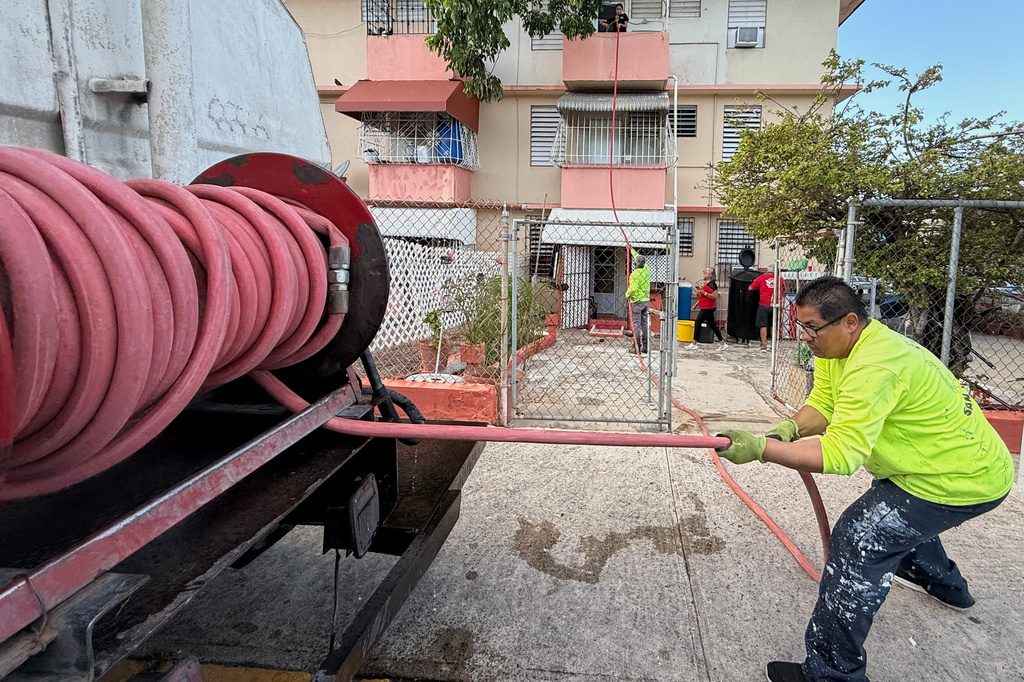
Juan Lugo, a driver with San Juan's special projects department, delivers free, non-potable water to residents in the Villa Kennedy public housing complex in San Juan, Puerto Rico, Wednesday, June 10, 2026. Photo: AP
Puerto Rico continues to endure a prolonged water supply crisis that has caused enormous hardship and difficulties for the local population. The situation has affected hundreds of thousands of people on an island with a population of just 3.2 million.
The crisis began in mid-June when authorities reported a serious leak in one of the pipes of the Superaqueduct, one of the island’s most important water distribution systems.
While repair work was underway, two additional outages were identified, affecting more than 100,000 people in San Juan, Bayamón, Guaynabo, Caguas, Juncos, Loíza, and other surrounding areas.
Authorities promptly began dispatching water tanker trucks through the National Guard and other agencies, as well as initiating water storage in private homes and supplying temporary distribution centers. In addition, to prevent price speculation, prices for essential goods were frozen.
These measures, however, did not prevent local businesses and institutions from being affected. Restaurants, museums, hotels, stores, and other establishments reported recurring difficulties in operating without drinking water. Furthermore, in several parts of the capital, San Juan, there have been reports of a strong odor resulting from toilets that cannot be flushed normally due to the lack of water.
The fact that the crisis has dragged on for several weeks indicates that this is more than just a one-time outage. In July of last year, a major water shortage was reported in several areas of Puerto Rico, which made headlines due to its impact on tourism and several planned concerts.
At that time, authorities also reported the rupture of a 54-inch water main, which left nearly 200,000 people without water. At that time, the measures taken were very similar to those taken today: mobilization of the National Guard, declaration of a state of emergency, and distribution of water via water trucks.
And the same criticisms have been repeated: the water system has not been maintained, modernized, or repaired in over ten years due to a lack of government investment in some pipes that are up to 30 years old.
Experts seem to agree that the crisis is the result of issues that have gone unaddressed for decades, such as aging infrastructure, poor maintenance, and severe budget constraints. Furthermore, they have warned of the gravity of the situation, given that one of the hottest summers in several years is expected as a result of climate change, which could dry up some water sources, further exacerbating a crisis that is unbearable for many Puerto Ricans.
Jeannette Mercado, a 52-year-old woman who has suffered from the ongoing water shortage, told Telemundo: “This is really exhausting; it’s exasperating … There are elderly people here [who are suffering], bedridden people.”
For her part, Luz Laborde, another Puerto Rican woman without water, said: “It’s been a disaster … That’s inhumane. It’s destroying the emotional well-being of a people.”
The truth is that the economic model imposed on Puerto Rico does not seem overly concerned with these kinds of problems, as long as foreign investment is guaranteed. This was noted in a United Nations report on the situation on the island.
“The development model imposed on Puerto Rico is geared toward foreign investors, leading to the displacement of communities, the privatization of natural resources, and threats to protected ecosystems,” denounced a UN Special Committee.
Thus, unless the state’s investment model for water supply infrastructure undergoes a radical change, it is highly likely that pipe breaks will occur again, potentially causing far more damage than has already been caused. However, this will be difficult given the neoliberal model, which prioritizes the creation of legal mechanisms for foreign investment while promoting restrictions on the allocation of public resources to ensure that people have access to something as basic as water in their homes.
This situation has become even more pronounced since Washington imposed the Financial Oversight and Management Board for Puerto Rico in 2016. The board, commonly known as the Fiscal Control Board, seeks to restructure the island’s public debt and restore its fiscal balance.
To this end, it has implemented a rather severe austerity policy, which has hindered the investment required, for example, by the water supply system. On June 30, hundreds of Puerto Ricans took to the streets to march, demanding an end to the Fiscal Control Board, which they view as a colonial entity that exacerbates the social and economic problems of the poorest.
In this regard, Nairobi Hernández, a member of the Combative Student Collective, said: “The imposition of the Fiscal Control Board is the stark contradiction between democracy and colonialism. The Board … governs above all elected authorities in Puerto Rico. This is a form of double colonization … We denounce the framework being created to plunder our natural resources solely to benefit the wealthy, who threaten our access to drinking water, beaches, and housing for the working class.”