Ecuador touts improved security as eight dead bodies are found in bags
The relatives of eight missing young people are waiting for confirmation as to whether the eight bodies discovered are their loved ones.
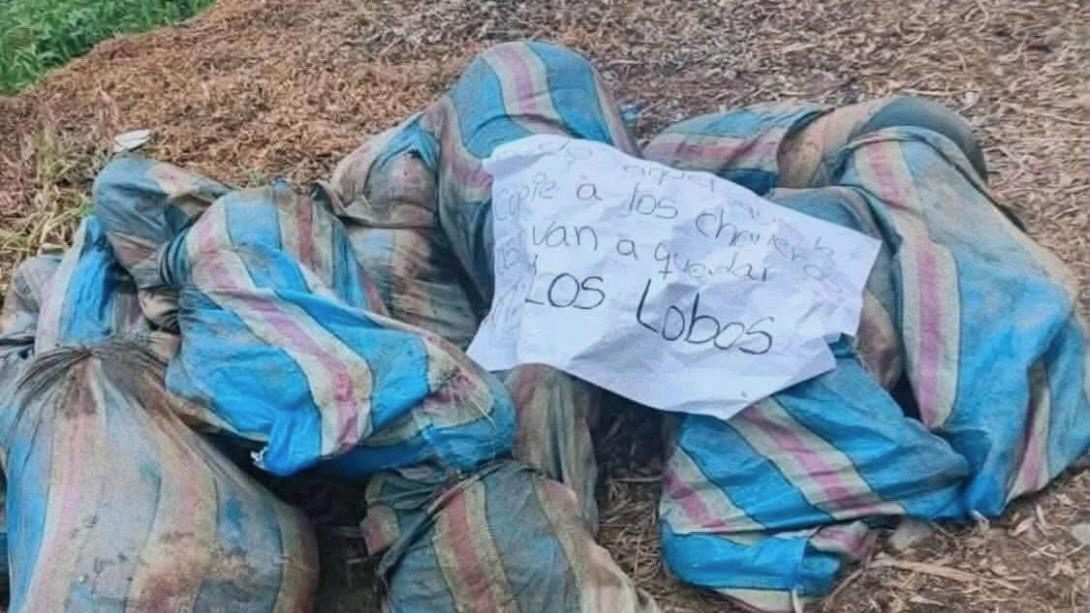
Eight bodies found in bags in Ecuador. Photo: X/radiolimontv
Ecuador’s spiral of violence continues. On June 3, eight bodies were found in bags along the Babahoyo-Juján highway. The incident has shaken a country already severely ravaged by violence that, despite the government’s promises, refuses to subside.
The eight bodies were transferred to a morgue in Guayaquil for analysis and identification, according to the Attorney General’s Office.
Since May 31, a group of eight young people had been reported missing, however, authorities have not yet dared to confirm the identities of the eight bodies found in bags.
The news prompted the families of the missing to travel from Daule to Guayaquil to potentially identify the victims of a crime that has shocked the public.
Family members say they have viewed footage showing the eight missing young people being intercepted by several individuals riding motorcycles.
“We cannot verify who they are. The bodies are bagged and wrapped,” said the prosecutor in charge. “They will be transferred to the forensic center in Babahoyo, where the identification process will take place.”
Still, relatives are insisting on more information.
“That’s what we want to know – whether or not it’s them. What if they’re other people and my whole family is imagining things they shouldn’t? We’ve traveled from far away and we want answers too,” said relatives of the missing.
On the bodies was a message that read, “Anyone who copies Los Choneros will end up like this. Sincerely: Los Lobos,” which has sparked even greater fear among the families who do not understand how their children could be involved in the terrible security situation Ecuador is currently facing.
Rampant crime
Since the beginning of this decade, various drug trafficking groups, such as Los Choneros, Los Lobos, Los Águilas, and others, have been embroiled in a bloody territorial dispute. They have fought over control of the main routes used to transport drugs that typically arrive from Colombia and Peru (the world’s leading cocaine producers) and are illegally exported through Ecuadorian ports.
In 2024, Ecuador’s right-wing president, Daniel Noboa, declared an “internal armed conflict” due to the worst security crisis the country had ever faced, asserting that the measure – along with a series of new rules granted by popular mandate to the central government to better implement its security plan – could resolve the problem.
However, 2025 ended up being the most violent year in the country’s history, with 9,216 violent deaths. That total is more than 50 deaths per 100,000 inhabitants, one of the highest rates in the world.
Currently, the government is celebrating improvements in certain metrics, according to its own data, like a decrease in the number of highway robberies. On the other hand, several analysts report that 2026, with nearly 3,000 deaths already, could become the second-worst year in the country’s history in terms of violent deaths.
In Ecuador, one person is murdered every 62 minutes, and the fear that a son or daughter might be found murdered and bagged on the side of a road is growing alongside the unpopularity of a government that, for now, has the highest disapproval rating of its term, around 57%.