Brazil activates Reciprocity Law in response to 25% US tariffs
The government called the decision a "lamentable milestone" in relations with the US.
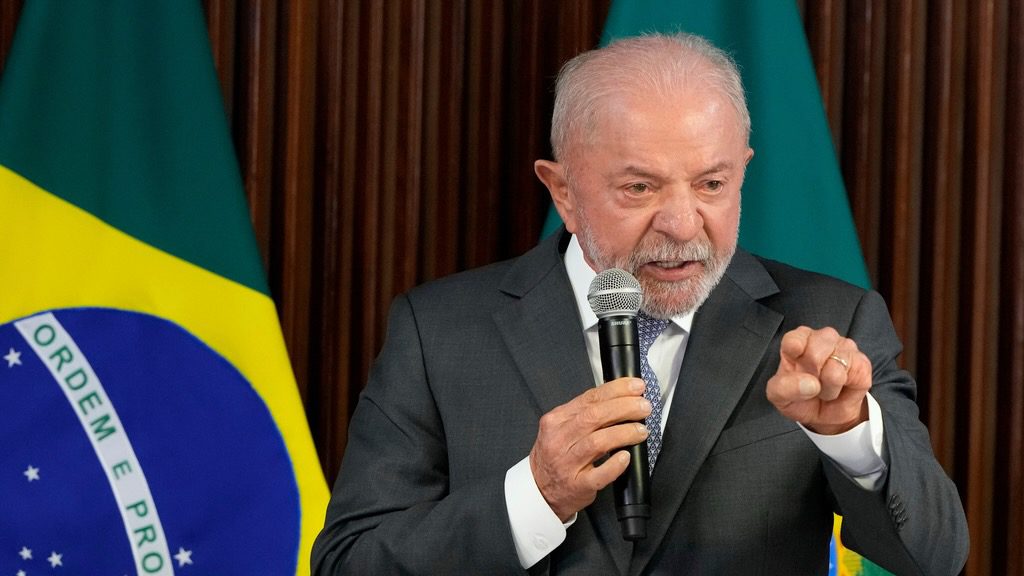
Brazilian President Luiz Inacio Lula da Silva speaks during a cabinet meeting at Planalto presidential palace in Brasilia, Brazil, Wednesday, June 3, 2026. Photo: AP
In response to the decision of the United States to impose a 25% tariff on Brazilian products, the Brazilian government announced that it will immediately activate the instruments provided for in the Economic Reciprocity Law. In a statement released on Thursday, July 16, Lula’s office called the measure as a “lamentable milestone” in relations with the US, stating “there is no justification for unilateral measures against our country” and informed that it will resort to the dispute settlement mechanism of the World Trade Organization (WTO).
“Brazil will immediately begin the procedures to activate the instruments foreseen in the Reciprocity Law, unanimously approved by the National Congress, and will resume the discussion within the framework of the WTO dispute settlement mechanism,” the statement said. According to the government, these measures are part of a strategy to defend national sovereignty, protect sectors affected by the tariff increase, and reduce the impacts on the Brazilian economy.
According to the government, the imposition of the tariffs marks a deterioration in relations between the two countries.
“July 15, 2026 will go down in the history of relations between Brazil and the US as a regrettable milestone. The Brazilian government repudiates the decision announced today by the US government regarding the imposition of 25% tariffs on Brazilian products,” states the communiqué signed by the Secretariat of Communication of the Presidency of the Republic. The note adds that “there is no justification for unilateral measures against our country.”
According to the Brazilian government, the decision ignores the trade balance figures between the two countries. “According to statistics from the US government itself, the US has accumulated a surplus of $424.5 billion in goods and services with Brazil over the last 15 years,” the text states. The statement also highlights that, in 2025, “76% of imports originating from the US entered the country without paying import tax” and that the average rate effectively applied to US products was only 3.1%.
The tariff was announced following the conclusion of an investigation conducted by the Office of the United States Trade Representative (USTR), based on Section 301 of the Trade Act of 1974. In the statement released with the decision, the Donald Trump administration states that “unreasonable acts, policies and practices by Brazil have harmed U.S. trade” and cites as justifications policies related to Pix (Brazil’s rapid payment system), decisions by the Brazilian courts regarding digital platforms, environmental oversight, intellectual property, the ethanol market, and the fight against corruption.
In its response, the Brazilian government states that it never abandoned negotiations and spent the last year working with the USTR to try to end the investigation. According to the statement, “evidence was presented that refutes each of the allegations about supposed unfair trade practices adopted by Brazil.”
The statement directly refutes some of the main arguments presented by the United States. “We have demonstrated that the allegations against Pix and the regulation of digital platforms are unfounded, as are the accusations about deforestation,” the text states.
In another excerpt, the government reiterates its defense of the instant payment system and the regulation of digital platforms. “Pix is an asset of our people and an international benchmark for public digital infrastructure. In Brazil, we will not abdicate our responsibility to protect our families and our children from the greed of a handful of techno-oligarchs. Freedom of expression is not a carte blanche for crime,” the statement says.
The Brazilian government also rejects criticism related to Brazilian environmental policy. In response to the USTR, which claims that illegal deforestation in the Amazon harms the competitiveness of the US timber industry, the government maintains that “the whole world knows that, starting in 2023, we have been decisively combating environmental crimes and drastically reducing deforestation in all Brazilian biomes.”
The statement also affirms that the public consultation promoted by the USTR itself demonstrated resistance to the adoption of the tariffs. According to the government, “63 of the 78 interventions made by representatives of the Brazilian and American private sectors were against the tariff hike.” For the Planalto, the result reinforces that the measure tends to increase costs for companies and consumers in both countries.
In addition to contesting the decision, the government announced response measures. The statement affirms that the country will continue seeking new markets for its products and that, through the Sovereign Brazil Plan, it will maintain actions to protect the sectors affected by the tariffs.
“Brazil will immediately begin the procedures to activate the instruments foreseen in the Reciprocity Law, unanimously approved by the National Congress, and will resume the discussion of the issue within the framework of the WTO dispute settlement mechanism,” the statement says. The government also classifies the tariffs as “illegal and arbitrarily imposed by the US government.”
“False patriots”
In the final paragraphs, the government attributes the escalation of the trade crisis to the Bolsonaro family’s actions with the US government.
“It is sad to note that the regrettable outcome of the investigations based on Section 301 is part of a plot constructed with the active collaboration of the Bolsonaro family. They are false patriots who orchestrated and publicly defended actions against our country, driven by electoral objectives,” the statement said.
The reference comes after a series of initiatives by members of the Bolsonaro family during the commercial investigation. Senator Flávio Bolsonaro (PL-RJ), a pre-candidate for the Presidency of the Republic, participated in the public hearing promoted by the USTR and, subsequently, sent an official letter to the agency requesting a 180-day postponement of the 25% tariff.
In the document, he argued that the measure should only take effect after the presidential elections, an initiative criticized by President Luiz Inácio Lula da Silva, who described the proposal as yet another example of “selling out” and stated that there is no justification for postponing a measure considered unjustified by the Brazilian government.
Meanwhile, Congressman Eduardo Bolsonaro (PL-SP), currently on leave from his position, intensified his coordination with members of the Trump administration throughout the investigation and publicly advocated for the use of economic sanctions against Brazil. In social media posts and interviews given in the United States, he conditioned the end of tariffs and other sanctions on the approval of amnesty for those convicted for the coup attempts of January 8th, and stated that the measures could serve as a tool to pressure Brazilian authorities.
This year, Eduardo was sentenced by the Supreme Federal Court (STF) to four years and two months in prison for coercion during the course of the coup plot. Among the facts considered by the Court is his actions with US authorities to encourage sanctions against Brazil and to try to interfere in the trial of the criminal case that resulted in the conviction of former President Jair Bolsonaro for attempted coup d’état.
The government statement further affirms that “protecting our sovereignty is an obligation that transcends all parties and all tendencies” and assures that “the Brazilian government will not waver in its duty to preserve it.”
First published by Brasil de Fato in Portuguese.