Farmers accuse Indian government of sacrificing their future under US pressure and call for mass resistance
The Narendra Modi-led government withdrew tariffs on cotton imports. The decision is expected to affect millions of cotton growers in the country who have already been struggling for fair prices for decades now.
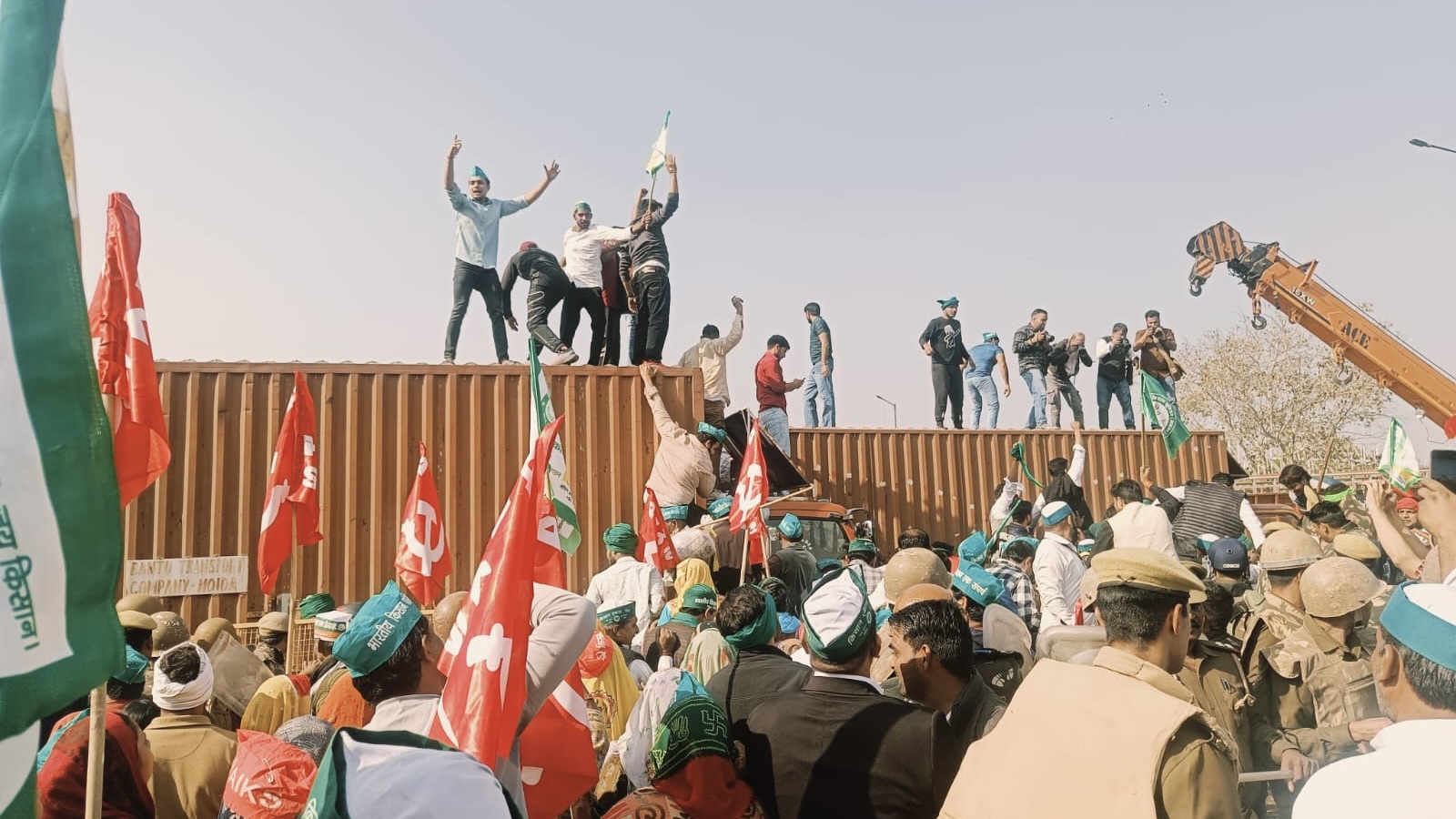
Farmers at the borders of New Delhi. Photo: AIKS
Samyukta Kisan Morcha (SKM), a coalition of dozens of Indian farmers’ organizations, accused the far-right Narendra Modi-led government of folding under US pressure and compromising the interests of millions of farmers by withdrawing tariffs on cotton imports.
In a press conference in Delhi on Monday, August 25, SKM warned that if the government fails to withdraw the decision and does not declare a Minimum Support Price (MSP) of at least Rs 10,075 (around 115 US dollars) per quintal it will call for mass public action in the coming days.
India’s Ministry of Finance announced the withdrawal of an 11% duty on cotton imports on August 19, claiming the decision was taken for the “public interest”. It also “temporarily” withdrew an Agricultural Infrastructure Development Cess, a special tax for the development of agricultural infrastructure, imposed on imported cotton.
Farmers fear the move will push Indian cotton out of the market and threaten the livelihoods of millions involved in its cultivation.
“It is ironic that this anti-farmer decision was followed by prime minister [Narendra] Modi’s Independence day speech in which he said that he is standing like a wall against any adverse policy that could impact Indian farmers, fisherfolks and cattle keepers,” SKM said during the press conference.
SKM denounced the sudden decision, arguing that it was taken under US pressure to open the Indian market for US agricultural products.
“Modi’s consistent pro imperialist policies couldn’t ensure the protection of India’s interests in the tariff war initiated by [US President Donald] Trump. To manage the situation emerging from the US declaration of a 50% tariff on India’s textile exports, PM Modi has decided to punish Indian cotton farmers who are the weakest links in the global supply chain.”
In the absence of the trade deal sought by Trump, the US has imposed a 50% tariff on Indian imports, accusing India of failing to open its market for US goods as well as importing oil from Russia.
Tariff suspension will intensify agrarian distress
The cheaper imported cotton “will push prices of domestic cotton downwards,” SKM claimed in the press release. Pointing out that “small cotton producers in India cannot compete with large, industrial-scale cotton farmers of the US who have historically received massive government subsidies,” SKM claimed that the decision to reduce tariffs will further intensify the agricultural distress in the cotton producing regions of the country.
India is the world’s second largest cotton producer, after China, with an annual production of more than 5.50 million metric tons in 2023-24. According to the government’s own sources, there are more than 6 million farmers who are directly involved in cotton cultivation and over 40 million people involved in related industries.
In the absence of a legal MSP, government control over the buyers and better access to the market most of the farmers in India are often forced to sell their products at prices below the cost of production incurring massive losses.
The inability to yield any profit from their farm produce makes most of the farmers unable to pay back their loans on time or fulfill the basic needs of their families.
Since the governments have been reluctant to help the farmers and provide them adequate subsidies or timely debt relief, most of them lose ownership of their small plots of land or other valuables, forcing them to live in prolonged destitution.
Thousands of farmers have committed suicide to avoid facing prolonged humiliation and many others have left farming altogether to look for alternative employment in the cities.
According to government data, over 400,000 farmers have died from suicide since the 1990s. In just March and April of this year, more than 479 farmers ended their lives in the Indian state of Maharashtra.
The tariff suspension on cotton will only exacerbate people’s concerns, as India is already recording a fall in cotton production in the last decade due to the unprofitability of cotton cultivation, SKM underlined in the press release.
Farmers threaten large agitation
SKM reiterated that the government must implement the legal MSP for all farm produce on the basis of C2+50% (total cost of production+50%) as per the formula suggested by the MS Swaminathan Commission decades ago.
SKM has also called all village committees in India to hold meetings and pass resolutions reiterating the demand: withdraw the decision to remove the tariff by September 10. It also asked them to burn their copies of the announcement.
SKM has warned that if the decision is not withdrawn by September 10, large-scale protest meetings will be held across the region and local members of the parliament will be held accountable.