Knesset’s approval of West Bank annexation advances key goals of Zionist project
Israel has already exercised de facto control over the West Bank since 1967. Yet, the move is perceived as a green light for legalizing the ethnic cleansing of Palestinians by forcibly displacing them and annexing the remainder of their home land.
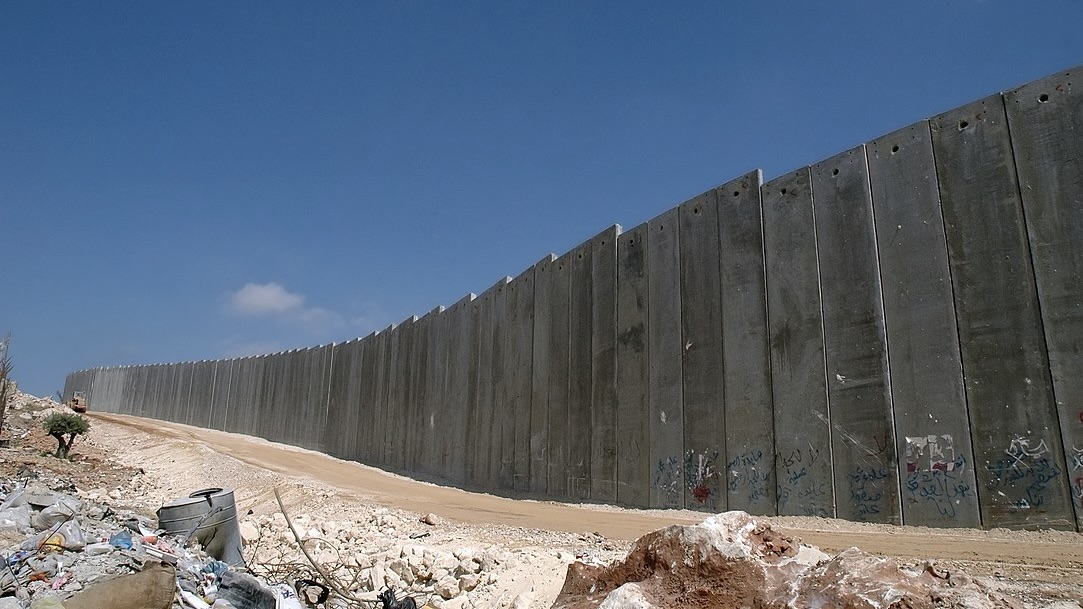
Israeli wall in the West Bank. Photo: Wikimedia Commons
Israel has taken a step further in its plan to control the West Bank. The Israeli parliament (known as Knesset) voted with an overwhelming majority, on Wednesday July 23, in favor of a non-binding motion, which allows Israel’s annexation of the occupied West Bank.
As per the proposal, Israel will claim sovereignty on the territories, which it has already occupied since 1967, while imposing full military control and continuously expanding settlement projects.
Israel has even controlled the only border crossing between the West Bank and Jordan, which allows Palestinians to travel abroad, and has not permitted Palestinians to establish or operate an airport within the occupied territories.
The annexation of the West Bank is not a new dream, it is at the very heart of the Zionist project and Israel has made numerous attempts over the past decades to achieve this goal.
Timeline of the annexation plan
The Allon Plan (1967-1974)
The plan was initially presented on July 26, 1967 by Israel’s Labor Minister Yigal Allon, less than two months after Israel defeated the armies of Egypt, Jordan and Syria in the six-day Arab-Israeli war.
After the war, Israel occupied the West Bank, East Jerusalem, the Gaza Strip and the Syrian Golan, and displaced hundreds of thousands of Palestinians and Syrians.
The Allon Plan consists of two versions; the first was brought forward in July 1967, calling for the establishment of Palestinian autonomy in the newly-occupied West Bank, while binding it economically, culturally, and militarily to Israel.
Meanwhile, the second version was introduced in February 1968, proposing the partition of the West Bank between Israel and Jordan as a substitute for Palestinian autonomy.
Based on that, Israel would retain control over the Jordan Valley, along with a corridor linking it to Jerusalem, while Jordan would gain control over two non-adjacent areas in the western areas of the West Bank.
Although the plan was not officially adopted by Israel, it constituted a guideline for Israeli policy in the West Bank for the next few years.
In 1974, the Jericho Plan which emanated from the Allon Plan suggested returning the Jericho area to Jordan as part of a disengagement plan. However, the role of Jordan was sidelined that same year when Arab leaders recognized the Palestinian Liberation Organization (PLO) as the sole legitimate representative of the Palestinian people.
Nevertheless, the Allon Plan as a whole continued to inspire subsequent plans proposed by Israeli officials, who succeeded Allon with an emphasis on the strategic importance of the Jordan Valley.
The Sharon Plan (1977-1984)
As of 1977, the Israeli government shifted its annexation policy from establishing settlements on dispersedly populated areas such as the Jordan Valley, to the central and western areas of the occupied West Bank in what was known as the Sharon Plan.
The settlements encircled the Palestinian population in the West Bank and separated them from their compatriots living in the territories occupied by Israel in 1948.
The goal of constructing these settlements in areas densely populated by Palestinians was to impede the establishment of a Palestinian state.
1990s: the Oslo Accords and the division of the West Bank into areas A, B, and C
Even after Israel signed the Oslo Accords with the PLO in the first half of the 1990s, which allegedly intended to pave the way for a peace process and establish an interim Palestinian self-government (known today as the Palestinian Authority) until achieving a purported independence in five years, Israel continued to impose de facto sovereignty over the West Bank and expand settlement projects.
The Oslo Accords contributed to further fragmenting the West Bank by dividing its territories into three administrative areas (A, B, and C) without leading to any actual control by the Palestinian Authority.
The articles related to this division stipulated that Area “A” would be administered by the Palestinian Authority, Area “C” would be administered by Israel, while Area “B” would be under joint control.
Nevertheless, realities on the ground confirm that for over three decades, all three areas have been under the complete control of Israel. Across the West Bank there is a heavy presence of the Israeli Occupation Forces (IOF) and persistent absorption of Palestinian lands in favor of establishing more illegal Israeli settlements.
2012: The recognition of Palestine as a non-member observe state; a desperate attempt towards a Palestinian statehood
In November 2012, the United Nations General Assembly recognized Palestine as a non-member observer state after an overwhelming majority of member states voted in favor of the resolution.
Although the Palestinian Authority considered the recognition as the “last chance to save the two-state solution”, the move was slammed by Israel as a bid that “pushed the peace process backwards”, while the United States said it was “unfortunate”.
This recognition is viewed as a symbolic victory that boosted Palestine’s international standing and allowed the Palestinian Authority to participate in UN activities and provided it with access to certain international bodies. However, it did not alter the status quo in the occupied Palestinian territories.
On the contrary, settler violence and human rights violations perpetrated by the IOF increased in the following years, while the number of settlements proliferated.
According to a report published by Human Rights Watch in 2014, at least 15 Palestinian civilians were unlawfully killed by the IOF in the occupied West Bank in 2013. The same year saw 361 settler violence incidents that included attacking Palestinians and damaging their properties.
The Palestinians’ right to freedom of movement in the West Bank was further restricted by Israel in 2013, and arbitrary arrest campaigns were launched against Palestinians including children and peaceful protesters.
The first half of 2013 marked a 70% increase in the construction of settlement housing units in comparison to the same period of 2012.
2020: partial annexation plan as part of Netanyahu-Gantz coalition government
In 2020, Israeli Prime Minister Benjamin Netanyahu and his rival, then Israel’s military chief Benny Gantz, reached an agreement to form an “emergency” coalition government, which set a timeline for potential annexation of parts of the West Bank as of July the same year.
The Knesset’s decision is an attempt to legalize a de facto annexation, says Omar Assaf
Peoples Dispatch spoke to Palestinian political activist, analyst, and writer Mr. Omar Assaf to discuss more about the repercussions of the Knesset’s decision on the political situation in the West Bank.
Assaf argues that the endorsement of the annexation by Israeli lawmakers is part of the age-old Zionist colonial project, which is based on the concept of “a land without a people for a people without a land”, and therefore entails the extermination of the Palestinian people to seize their homeland.
The Palestinian political writer, indicated that Theodor Herzl, who is widely recognized as the founder of political Zionism, entrenched this concept by linking it to biblical narratives, which promotes Joshua’s perpetual servitude of the Indigenous people of Canaan, who chose to stay in their lands as “hewers of wood and carriers of water”, in order not to be otherwise “banished or exterminated”.
“Israeli historians Ilan Pappé and Tom Segev also suggested that forced displacement and ethnic cleansing represent the essence of the Zionist Project,” Assaf added.
He added that the forced displacement of the people of his home village Bayt Nabala by the Israeli military on July 13, 1948, is a clear example of the ethnic cleansing policy, which Israel has implemented since it was established. The entire population of his village was forcibly displaced, although Bayt Nabala was under the sovereign control of the Arab State in accordance with the United Nations Partition Plan for Palestine (known as Resolution 181) adopted in 1947.
This in turn, confirms that the Knesset’s resolution is nothing more than a procedure to legalize actions that have already been implemented on the ground including settlement projects, and isolating the areas of the occupied West Bank from each other by setting up gates and checkpoints, turning them into cantons.
“The Knesset’s approval of the motion would further undermine any efforts towards the two-states solution or the establishment of a Palestinian state,” Assaf affirmed.
He explained that the motion aims at annexing one third of the West Bank including Jordan Valley, and major illegal Israeli settlement clusters such as Gush Etzion in the south, and Ma’ale Adumim and Ari’el in the center.
Moreover, Assaf expects that Israel will seek to create a Palestinian local government in each isolated region or area, particularly in Ramallah, Hebron, Bethlehem, Jenin and Nablus.
Assaf asserted that the very foundation of establishing the “Hebrew State” was centered on Judea and Samaria (the Biblical name of the West Bank), which makes it the focus of the conflict.
“Such religious myths have been touted by Israel to impose further control over the Palestinian territory,” Assaf noted.
Regarding the repercussions of the Knesset’s decision on the Palestinian people, Assaf said that they may be manifested in multiple aspects, all of which aim to resolve the conflict in favor of Israel:
- Achieving the goals set for aggression on Gaza.
- The expansion of settlements in the West Bank.
- Consolidating Israel’s Nation-State Law.
- Imposing control over the holy sites.
- Undermining the Palestinian Prisoners Movement.
- Canceling the Palestinian refugee status and dismantling UNRWA.