Venezuela prepares for municipal elections
After these elections, there will be no further elections for the next four years. Chavismo is united, while the opposition is divided on strategy.
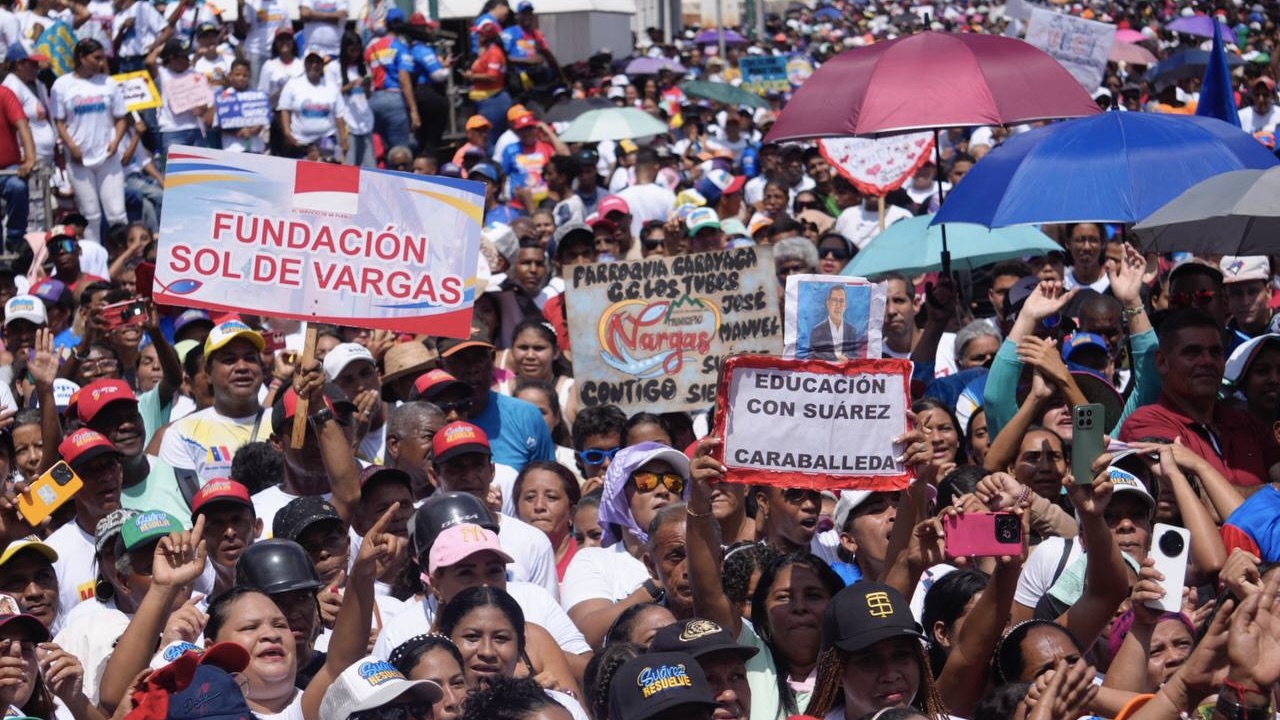
Closing campaign rally for José Suárez, candidate from the Great Patriotic Pole in La Guaira. Photo: VP Comunas
This Sunday, July 27, Venezuela will go to the polls. This time, 335 mayors and 2,471 councilors will be elected throughout the Caribbean country by popular vote, by name, and some, through Indigenous community-based processes that ensure Indigenous representation.
The president of the National Electoral Council (CNE), Elvis Amoroso, stated that everything is ready for the elections that seek to continue the electoral process that began last May, in which the ruling party, the United Socialist Party of Venezuela (PSUV), emerged as the overall winner.
According to the CNE, there are 53 parties that were authorized to carry out campaign activities, a period which ended on July 23. More than 7,000 polling stations have been set up in almost 15,000 electoral centers.
TeleSur informed that more than 6,000 candidates are running for mayor and councilor seats, making this election a fundamental milestone in Venezuelan democracy.
In addition, a popular consultation will be held for young Venezuelans, seeking to promote community projects in which young people can take on leading roles in municipal management.
A united ruling party and a divided opposition
According to a survey conducted by Monitor-Pais Hinterlaces, Chavismo is predicted to win over 90% of the municipalities, which would continue the trend of the previous elections in May 2025.
However, Jorge Rodríguez, president of the National Assembly and campaign director for the ruling coalition, the Great Patriotic Pole Simón Bolívar (GPPSB), said that it is important not to become disengaged even though victory seems close: “We cannot be complacent. This has been a hand-to-hand battle, man to man, woman to woman, house to house, street to street, and we must crown it with the machinery expressing itself and deploying next Sunday, July 27.”
For his part, the secretary of the interior and first vice president of the PSUV, Diosdado Cabello, called on his party’s supporters to go out and vote and give Chavismo another victory, which has rallied around the GPPSB.
A significant portion of the opposition, led by María Corina Machado and former presidential candidate Edmundo González, has decided not to participate in the elections, claiming that the electoral system does not allow for the defeat of Chavismo.
However, there is a section of the opposition that has decided to participate, calling on its supporters to go to the polls and exercise their right to vote. Antonio Ecarri, president of Alianza Lápiz, said: “On Sunday, the 27th, do what many do not dare to do: vote with conscience, not with resignation; vote with dignity, not with fear.”
After these elections, Venezuela will enter a period without elections that will last almost four years. As such, this moment has been perceived by various sectors of the opposition as the last opportunity to act and contest Chavismo in an official political space. The movement has been in power since 1999.
National Army will guarantee voters’ right to elections
For its part, as part of “Plan República”, the Bolivarian National Armed Forces (FANB) deployed more than 380,000 agents to guard the polling stations and prevent any problems that might arise.
In this regard, Defense Secretary Vladimir Padrino stated that the FANB is ready to enforce the voters decision and guarantee their right to democratically elect their representatives.