Cuba’s secretary of labor resigns after controversial statements
The official's opinions on homeless people in Cuba were harshly criticized by the president and the head of government, causing her departure.
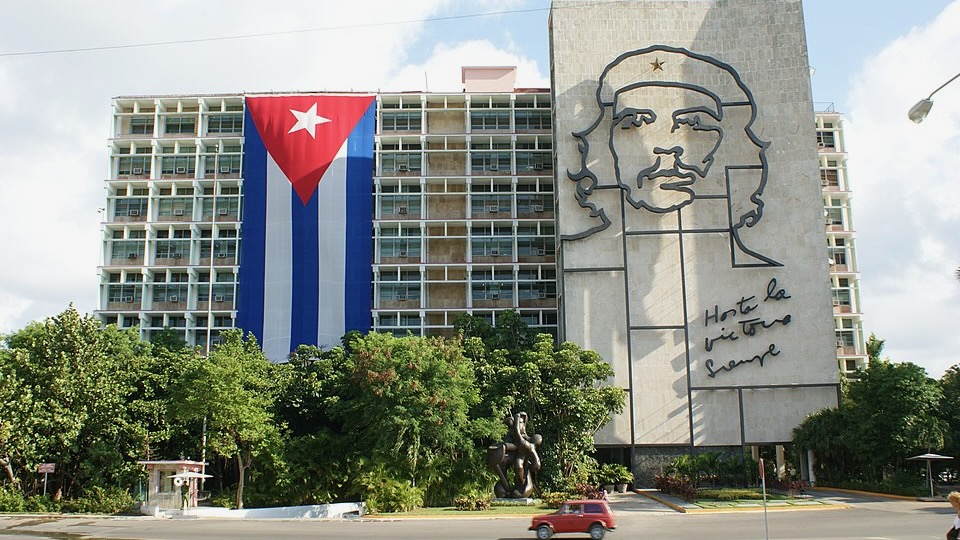
Ministry of Interior building at Plaza de La Revolución, Havana. Photo: Wikimedia Commons
Many were surprised when Cuban President Miguel Díaz-Canel accepted the resignation of one of his secretaries. It is an unusual move for the Cuban government, leading some to suspect that there had been a crisis in the cabinet.
The reality, however, is not the kind of cabinet crisis one might expect in most governments.
Several days ago, the Cuban secretary of Labor and Social Security, Marta Elena Feitó Cabrera, questioned the existence of homeless people in the Caribbean country. She said that many of those who appear to be in that situation only present that level of poverty to benefit in some way.
“No, that is not a homeless person, that is a person who has sought an easy way of life at a traffic light, cleaning the windshield, and possibly later, with that money, he goes to drink alcoholic beverages on the corner,” Feitó stated.
Most presidents of the world would have likely supported a statement that aims to protect the image of their government, but Diaz-Canel promptly criticized the comments of his secretary of labor, posting on X: “The lack of sensitivity in the approach to vulnerability is very questionable. The Revolution cannot leave anyone behind, that is our motto, our militant responsibility.”
In the same spirit, the head of government, Manuel Marrero, pointed out that such statements do not benefit a socialist government, as they prevent the recognition of the country’s pressing problems: “Sensitivity to vulnerability cannot be a discourse, it must be an action. Our government works tirelessly so that no disadvantaged Cuban is left helpless. Social justice and human dignity guide us.”
The blockade
For more than 60 years, Cuba has been under a US economic blockade aimed at suffocating the revolutionary project led by the Communist Party of Cuba. On several occasions, all members of the General Assembly of the United Nations – except the US and Israel – have condemned these coercive measures by the United States, which deplete the socialist economy and retard its development in practically all economic and social aspects.
Despite one of the longest blockades in human history, Cuba has been one of the countries with the highest levels of literacy, universal health coverage, athletic achievement, and employment in Latin America, becoming the most developed country in these aspects at various times in its history. At various times since the 1959 Revolution, Cuba has boasted one of the lowest poverty rates in all of Latin America.
Read more: Could any nation survive what Cuba endures?
However, the recent sanctions imposed by the United States – such as including the island on the list of countries that allegedly sponsor terrorism or obstructing any type of economic transaction with the island nation, such as sending foreign currency to Cuba, among others – are wreaking havoc on the Cuban people.
Thus, while the US government seems to have no concerns with impoverishing the Cuban population, at the same time, it denounces the increase in poverty on the island – assuming no responsibility for the increase. In this context, Díaz-Canel and the Cuban government have opted not to hide the social problems but to recognize them, even while faced with limited options for “unblocking” their economy.
And despite this, Cuba continues to find ways to remain on its feet, not by looking away, but by looking straight ahead into the abyss.