“Philadelphia Works Because We Do”: One week into strike, Philly city workers flex collective power
City workers in Philadelphia are struggling for a living wage and better benefits
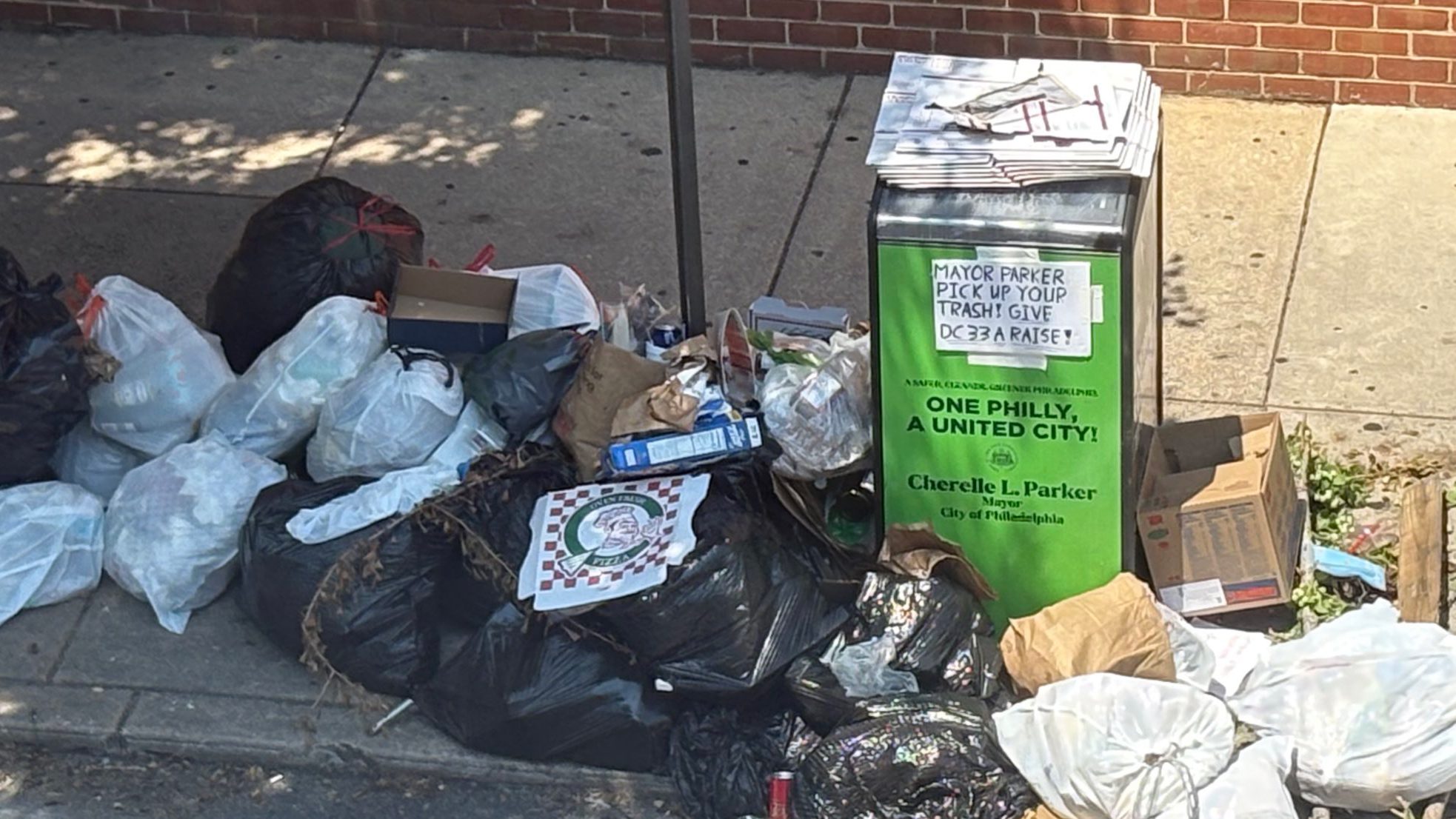
A sign near a trash pile up expresses support for DC 33 workers (Photo via @PAWorkFamilies/X)
As trash piles up on the streets of Philadelphia, nearly 10,000 city workers in Philly’s largest union have more than proven how essential they are to making their city run.
The slogan of American Federation of State, County and Municipal Employees District 33 (AFSCME DC 33), which is leading the strike, is “Philadelphia works because we do”. The sanitation workers, 911 dispatchers, crossing guards, airport staff, morgue personnel, and mechanics that work for the city have taken their energy to the picket lines to flex their role in the daily functioning of Philadelphia. The strike by DC 33 workers began at midnight on July 1, and after one week the city is certainly feeling the pressure as bodies pile up in the Medical Examiner’s Office and trash piles grow on the city’s streets.
Affordability and cost of living are central to this struggle. According to DC 33 President Greg Boulware, this strike is about winning city workers “who service the city everyday” an “adequate raise that actually meets the demands that [are] required to live inside of this city.” City workers opened the strike by asking for an 8% raise per year, but also now demanding a raise of 5%. The city government has not budged from its offer of 2.75%, 3%, then 3% raises over the course of a three-year contract.
The strike is quickly becoming a political disaster for the city’s mayor, Cherelle Parker, who claimed that the city’s offer was the “largest one-year raise for DC 33” for over three decades.
“I will not put the fiscal stability of the City of Philadelphia in jeopardy for no one. If that means I’m a one-term mayor, then so be it,” Parker said in remarks last Thursday, as negotiations between the union and the city remained at an impasse.
The estimated living wage in Philadelphia is USD 48,387 for a single adult with no children, according to the Massachusetts Institute of Technology living wage calculator. Yet, members of DC 33 earn an estimated salary of USD 46,000 per year.
Apart from a fair wage, city workers are also fighting for increased contributions from the city to their healthcare coverage, retirement equity for newer hires, more predictable scheduling, cost of living adjustments, and other benefits.
The strike is also deeply connected to the historic legacy of struggle of the Black working class in the US. Since the 1930s, public sector jobs have been a major pathway to economic stability for Black workers. In Philadelphia especially, Black workers in sectors such as sanitation have engaged in waves of struggle for respect, safety, and fair pay, laying the groundwork for the strength of DC 33 today.
Statements by DC 33 workers echo similar demands for respect. City worker Tarik Jackson, referencing Cherelle Parker’s “One Philly” messaging, told CBS News, “This supposed to be ‘One Philly,’ right? We’re not being treated like One Philly.”
“We all want to be treated the same way. We need good, decent pay. That’s what we all out here for. We shouldn’t have to work two jobs.”