Iran reasserts its right to maintain peaceful nuclear program as US talks show new promise
The US and Iran conducted their fourth round of indirect nuclear talks on May 11 in Oman, after which Trump claimed the US had submitted a written proposal to Iran for consideration.
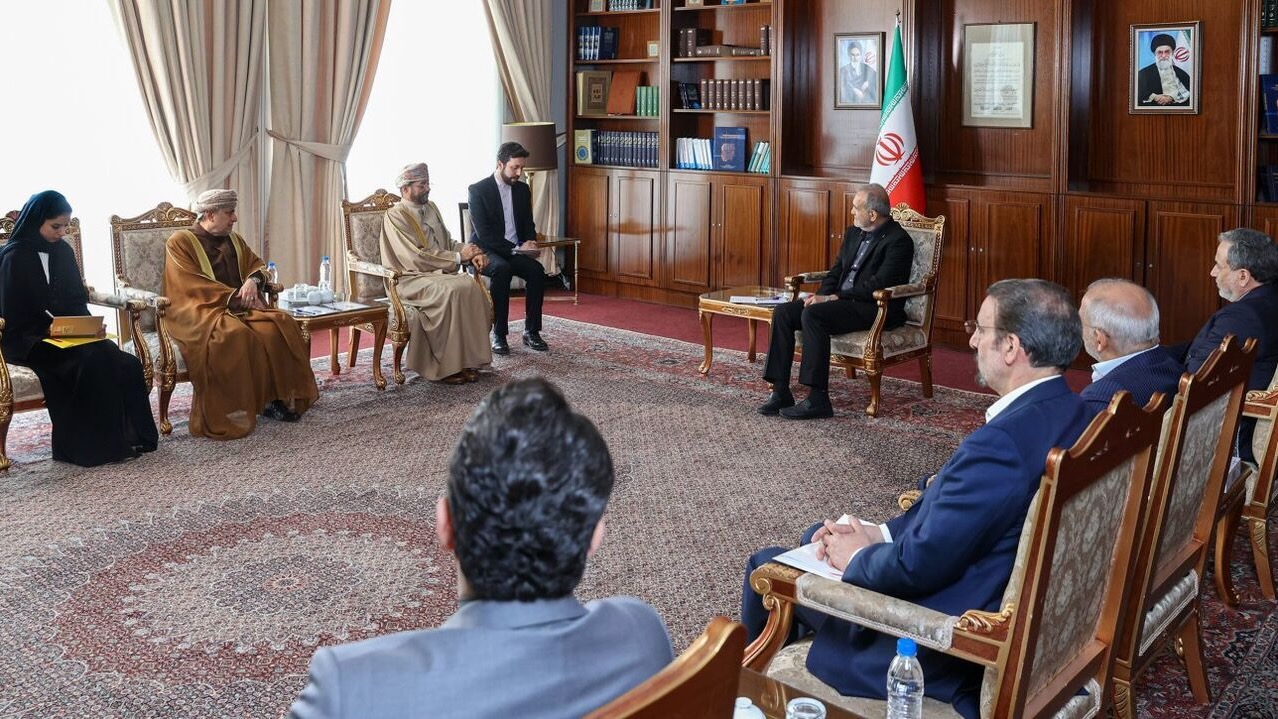
President Masoud Pezeshkian said he hopes that the ongoing negotiations between Iran and the United States would lead to a fair agreement. Photo: IRNA
Iranian President Masoud Pezeshkian said on Sunday, May 18, that he hopes that “talks [with the US] will lead to a just agreement that ensures lasting peace and stability in the region.” Pezeshkian was meeting with an Omani delegation led by its Foreign Minister Badr bin Hamad al-Busaidi.
Hamad al-Busaidi is the mediator in the ongoing indirect nuclear talks between the US and Iran. He was visiting Iran to attend this year’s Tehran Dialogue Forum.
Nuclear talks advance
Hamad al-Busaidi’s visit to Tehran has indicated fresh developments in the talks as he is reported to be in possession of a written US proposal for a deal, mentioned by President Donald Trump during his maiden visit to the Gulf countries last week.
The written proposal is expected to be presented to Iran during the visit. Iran has so far denied receiving any such proposal.
“Iran has not received any written proposal from the US, whether directly or indirectly,” Iranian Foreign Minister Abbas Araghchi said on Friday in a post on X.
Iranian and US delegations concluded their fourth round of talks in Oman on May 11. Meanwhile, Iran also held negotiations with the remaining European signatories of the Joint Comprehensive Plan of Action (JCPOA) on Friday in Istanbul.
The delegates of Britain, France, and Germany, known as E3, participated in the talks with the Iranian delegation, led by Iran’s Deputy Foreign Minister Kazem Gharibabadi, and resolved to continue their talks in the coming days.
The JCPOA, or the Iran nuclear deal, was signed by Iran with six other countries: the US, Britain, France, Germany, Russia, and China. The US unilaterally withdrew from it in 2018 under Trump’s first presidency and imposed sanctions on Iran. Now Iran and the US have been negotiating for a new deal to lift all the sanctions in return for curbs on Iran’s nuclear programs.
Iran will not give up its peaceful nuclear program
Pezeshkian, while addressing the Tehran Dialogue Forum on Sunday, reiterated his country’s position that Iran will “never give up” its peaceful nuclear program.
The claims were repeated by Iranian Foreign Minister Araghchi as well, citing “confusing messages” coming from the US.
During his visit to the Gulf countries, Trump made contradictory statements about Iran and the deal. In one statement, he claimed that Iran has agreed to almost all the terms set by the US, and a nuclear deal is a real possibility.
Though Trump has repeatedly said that Iran agreeing to abandon its nuclear arms program is the basic condition for the deal, he has not clarified whether that includes its civilian program as well. This has led to various speculations in the media.
“If the US is interested in ensuring that Iran will not have nuclear weapons, a deal is within reach, and we are ready for a serious conversation to achieve a solution that will forever ensure that outcome,” Araghchi claimed on Sunday in a post on X.
“Enrichment in Iran, however, will continue with or without a deal,” Araghchi clarified. He has repeated his country’s position several times recently.
In the post on Friday he had said that, “there is no scenario in which Iran abandons its hard earned right to enrichment for peaceful purposes: a right afforded to all other NPT [Non-Proliferation Treaty] signatories, too.”
Araghchi also warned the Americans of giving confusing messages in the public domain and advised caution, asking them to refrain from “negotiating in public.”
E3’s unclear position contrasts Russia and China’s support for Iran
Iran’s right to have its peaceful nuclear program was supported by all other signatories of the JCPOA. However, E3 has not made its position clear since the beginning of the indirect talks between the US and Iran and has even threatened to invoke “snapback” sanctions against Iran recently if it fails to go back to full compliance of the JCPOA.
Iran has invoked provisions within the JCPOA to scale back its commitments after the US withdrew and the E3 failed to defy US sanctions, which Iran calls “illegal”.
Russia and China, however, have opposed all threats of sanctions and supported Iran’s right to have a peaceful nuclear program.
Answering a question about the talks between Iran and other signatories of the JCPOA on Friday, Chinese Ministry of Foreign Policy spokesperson Lin Jian said that his country “respects Iran’s right to peaceful use of nuclear power, and opposes any illicit international sanctions.”