In South Korea, the US military is at war with nature
A 600-year-old tree, 330,000 migratory birds, and a city whose people’s livelihoods depend on the sea are fighting what may become the largest overseas US military base in the world.
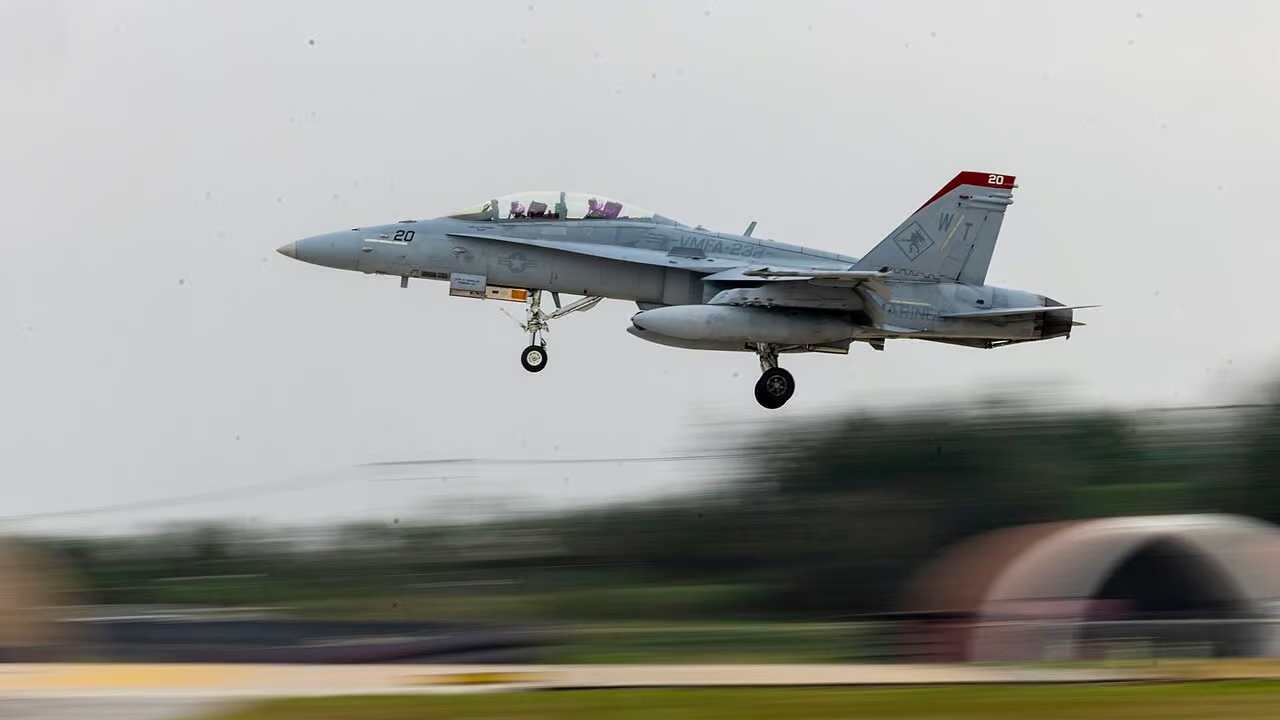
US Marine Corps Hornet aircraft with Marine Fighter Attack Squadron taking off at Kunsan Air Base. Photo: USMC
Signs of a deeper disturbance are not immediately visible along the western fenceline of Kunsan Air Base, the US Air Force’s second base in South Korea. Facing the sea, the area has been overtaken by brush, save for the occasional rice paddy worked by tenant farmers who rent the land from the Republic of Korea’s (ROK) Ministry of Defense.
An entire community once stood at this site. Known as Haje Village, the area was once home to 2,500 residents comprising 664 households who carved out a living from local shellfish beds and fisheries. Beginning in 2005, these families began to be displaced after the land they lived on was seized by the defense ministry to establish a buffer zone around Kunsan Air Base, where a new ammunition depot was being built.
Today, no buildings remain in Haje Village, only the occasional stone foundation plastered over the earth like a grave marker for some deceased giant. On my visit, I saw one such site where Haje Village’s former elementary school stood. Our guide, Gu Jung-seo, a local activist leader, tells us the last two families were evicted in 2022. He says the defense ministry brought excavators to erase their dwellings within a week.
Haje Village is gone, but the land has not been totally surrendered. At the edge of the former community remains one final monument to the past, which may well also be a guardian for this area’s future. It is a 600-year-old hackberry tree, older than the United States itself, that is also preventing Kunsan Air Base from expanding further in this direction.
Known as Celtis sinensis, the Asian hackberry tree is a large deciduous member of the hemp family. Prized for its ornamental and medicinal qualities throughout Northeast Asia, the hackberry can grow as tall as 20 meters in height and width, and has a lifespan of more than 150 years. At 600 years of age, the hackberry at the former Haje Village site is exceptionally long-lived.