US-Saudi strikes on Iraq kill 20 members of Popular Mobilization Forces
Analysts say the significant escalation in military operations across West Asia suggest the regional war has reached a tipping point.
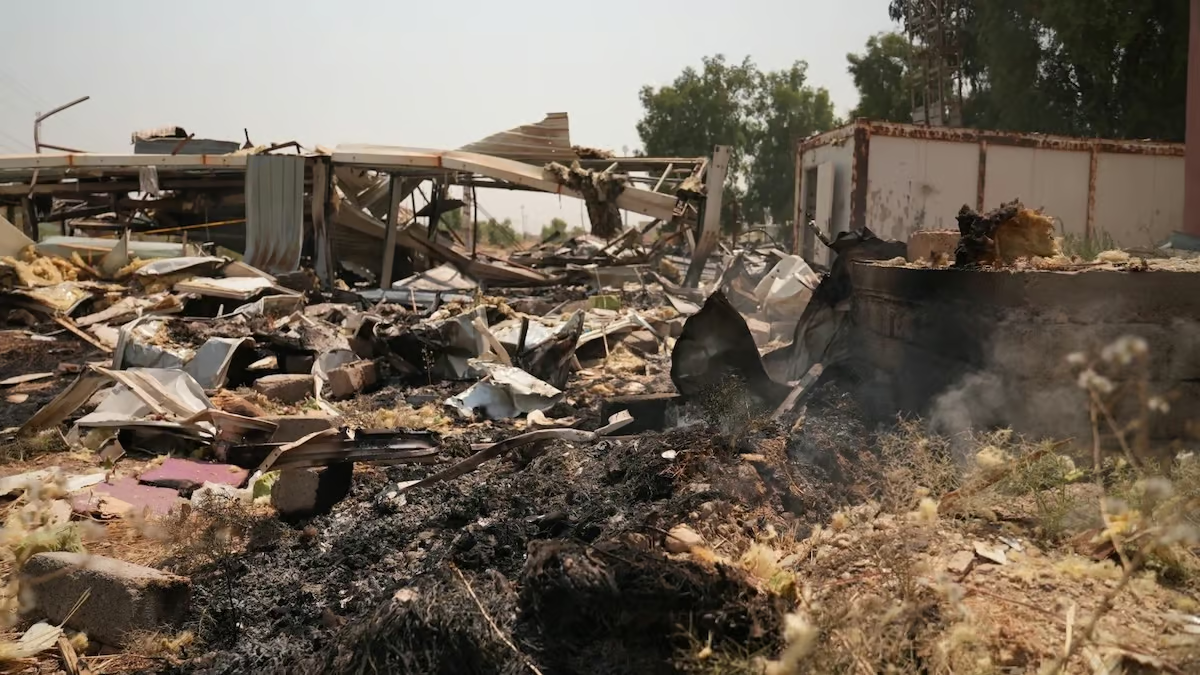
Damaged structures at the site of an airstrike on a Popular Mobilization Forces (PMF) base in Mosul, Iraq, Wednesday, July 29. Photo: AP
The Trump administration has expanded the regional war in West Asia by involving its regional allies, not merely as hosts for its military bases, but as direct aggressors against their neighbors.
On Tuesday, July 28, US Central Command (CENTCOM) and the Saudi Arabian Armed Forces launched joint airstrikes on the headquarters of the Popular Mobilization Forces (PMF) in different parts of Iraq.
The PMF announced the next day that the offensive resulted in the killing of at least 20 PMF members, while 32 others were wounded.
Washington and Riyadh claimed that the aggression on the Arab country was carried out in response to dozens of aerial drone attacks that they allege were launched by the PMF on Saudi oil facilities under the direction of Iran’s Islamic Revolutionary Guard Corps (IRGC) over the past few days.
However, these allegations were refuted by the Islamic Resistance in Iraq, an informal umbrella network of self-proclaimed resistance groups. The groups described the US-Saudi claims as “fabrications,” warning that “any foolish Saudi action will be met with a harsh response.”