US imposes even more sanctions on Cuba
Washington’s latest move will likely deepen the man-made economic crisis that millions of Cubans are currently suffering.
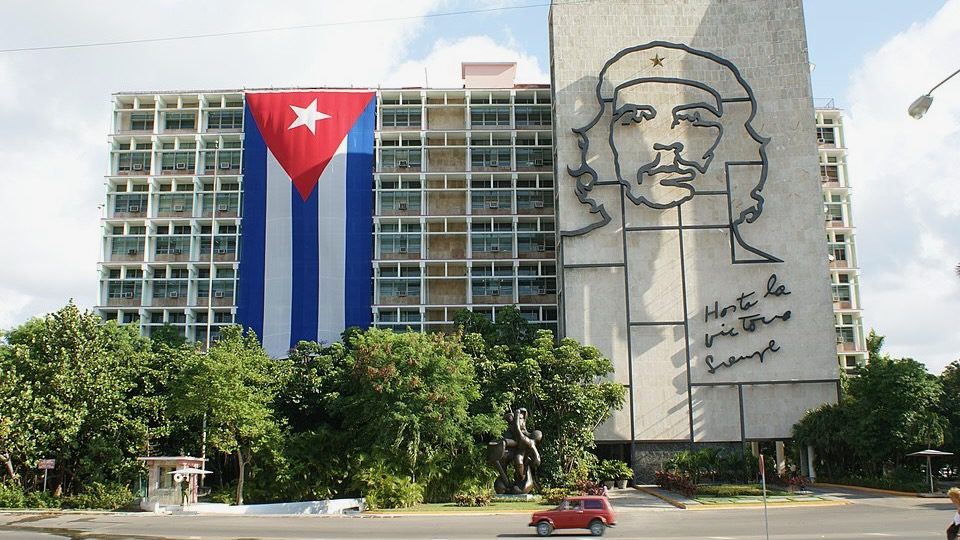
Ministry of the Interior of Cuba. Photo: Wikimedia Commons
Amid a humanitarian crisis caused by external factors, as reported by the UN several weeks ago, the US government has decided to strike another blow against Cuba’s blockaded economy. The sanctions now target the Cuban Army’s financial system (GAESA) and other state-owned companies, such as the mining company GeoMinera. In addition, US Secretary of State Marco Rubio has decided to sanction the wife of Alejandro Castro Espín, who had also been sanctioned previously.
“GAESA continues to operate as the financial muscle behind the Cuban regime’s repressive security apparatus,” the US State Department claimed, as it listed the “GAESA-linked financial institutions” and other targets it sanctioned.
Cuban Foreign Minister Bruno Rodríguez responded to the new sanctions: “The US government, led by its dishonest and deceitful Secretary of State, continues to take steps to tighten the noose around Cuba’s economy, even as Cuba has proven to be stronger, more capable, and more effective than he expected in the face of ruthless aggression and collective punishment against the people and their living conditions. What this individual is promoting from the world’s greatest power is a crime.”
A prolonged offensive against Cuba
Since the 1960s, Washington has imposed an economic and commercial blockade on the island of Cuba with the aim of undermining from within the revolutionary project launched in 1959. However, throughout those decades, Cuba managed to remain standing thanks to tremendous conviction and national unity, as well as the collaboration of friendly countries such as the former USSR, China, Vietnam, and Venezuela, among others.
Washington has responded to this resilience, from time to time, with an expanding series of sanctions to undermine the mechanisms devised by the government in Havana to circumvent the economic blockade. The unilateral US sanctions have been condemned on dozens of occasions by nearly all the countries of the world at the United Nations General Assembly.
The latest major blow by the world’s most powerful country against a Caribbean island with a population of barely 10 million occurred on January 3, 2026, following the US attack on Venezuela and the capture of then-President Nicolás Maduro and his wife, who are now imprisoned in New York. For most of the 21st century, Venezuela had been Cuba’s main oil exporter.
Following the attack, the United States banned the interim government in Caracas from selling oil to Cuba, which quickly sought other alternatives to supply its electricity, manufacturing, commercial, healthcare, and education systems – all of which depend almost exclusively on fuel-powered generators. But the Trump administration, in its eagerness to permanently strangle Cuba, warned at the end of January that it would sanction any country that sold oil to Cuba.
In response, only Russia dared to challenge Washington’s unilateral and controversial decision and managed to send a tanker to Cuba. But that oil ran out over a month ago, and the situation in Cuba is critical. Thousands of civilians are suffering the consequences of an energy blockade that has deprived them of access to medical care, education, food production, and even water, as many people depend on water tankers for drinking water, which are now stranded due to a lack of gasoline.
But the suffering of the civilian population does not seem to be among the main concerns of a hemispheric geopolitical landscape that has once again revealed itself in all its imperialist might, even at the expense of millions of people who have nothing to do with political disagreements.
New economic measures to address the crisis
A few days ago, under enormous pressure from the United States, the government of Miguel Díaz-Canel decided to open the Cuban market to private interests, in a move that has been described as historic. Nearly 176 measures are part of a package aimed at attracting private capital investment – not only from small investors but also from large ones.
The measures allow for the creation of private banks, the granting of loans by these banks, new private channels for sending remittances from abroad, the creation of private currency exchange bureaus, the importation of supplies and fuel by farmers, and the importation and sale of fuel by private capital.
Likewise, limits on bank transfers, state control of foreign trade, and the prohibition on an individual owning more than one private business are being eliminated. The measures also allow for the creation of companies that establish international chains and franchises in Cuba, direct investment in Cuban private businesses and cooperatives, as well as in the real estate sector, among many other measures.
Despite this clear move toward market liberalization, it appears that the United States does not want to miss the opportunity to bring down the only socialist country in the Americas – a country that has stood up to it forcefully since the 1960s, even if it has been forced to adapt to survive the longest economic embargo in modern history.