EXCLUSIVE: Family of Colombian asylum seeker detained by DHS alleges torture and persecution
The activist and influencer Beto Coral was detained by HSI on Tuesday, prompting accusations that the US government is acting in favor of right-wing candidate de la Espriella.
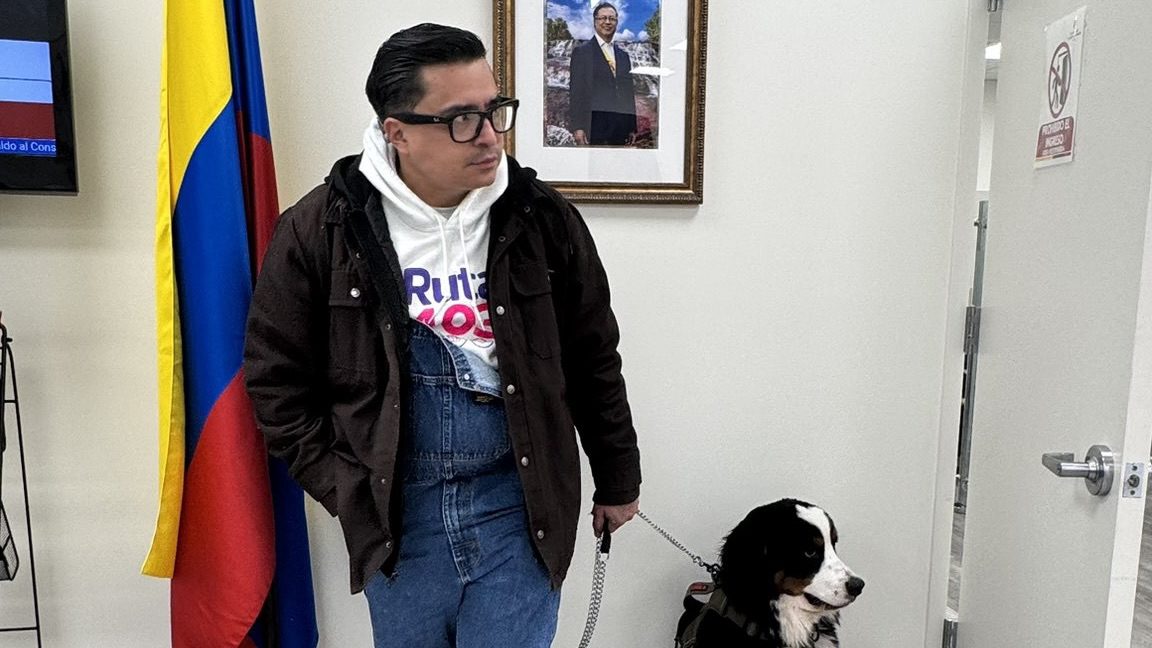
Beto Coral. Photo: Beto Coral / X
Colombian activist and influencer Beto Coral was detained in his home in Phoenix, Arizona by federal agents from Homeland Security Investigations (HSI) on Tuesday, June 16. When federal agents arrived at his home on Tuesday, they informed him that his work permit had expired and as such he was being detained. In public statements given by spokespersons from the Department of Homeland Security, they allege that Coral is an “illegal alien” and had overstayed his tourist visa.
Since his detention, Beto, whose full name is Franklin Humberto Coral Garrido, has been moved around to several different detention centers, he has alleged facing torture, and was also held incomunicado after his first days in detention.
Tatiana Camacho, the mother of Coral’s son, tells BreakThrough News in an exclusive interview that his detention is not simply a case of overstaying a visa, as right-wing media in the United States and Colombia is making it out to be. In fact, she detailed that since Coral first arrived in the United States in 2015, he immediately began his petition for asylum, having fled the country after facing threats to his life. When he was being detained by DHS, he presented them with a folder with all of the documents from his 10-year-long case petitioning for asylum in the US. His work permit, which he was told was expired, was valid until 2028, “that’s the first inconsistency we find,” she told BT.
What then is behind the targeting of the activist and media personality?
Detention ordered by Marco Rubio
“They showed me the letter, and it’s a direct letter, a direct order from Marco Rubio,” Coral told Camacho, the first night of his detention.
The New York Times gained access to the memo written by US Secretary of State Marco Rubio declaring that Coral is “deportable.” The memo acknowledges Coral’s pending asylum petition, but says “Coral Garrido has used his presence in the United States to conduct political activity in support of the Petro government.”
The memo outlines that the reason behind the decision is Coral’s political activism and his strong criticisms of US-backed far-right candidate Abelardo de la Espriella. De la Espriella, a far-right lawyer who has vowed to disembowel the left, will face off against progressive Colombian politician Iván Cepeda this Sunday, June 21, in the presidential run-off.
“Allowing Coral Garrido to remain in the United States … undermines US foreign policy interests in Colombia’s democratic processes and signals that foreign nationals may use US platforms to conduct politically motivated disinformation campaigns and litigation targeting foreign democratic actors without consequence,” Rubio wrote.
The “disinformation campaigns” Rubio refers to is the activism that Beto has done on social media through interviews and content creation regarding diverse social and political topics in Colombia. From demystifying corruption scandals to explaining candidates’ platforms in the ongoing electoral contest in his home country, Beto has become a leading voice and dependable source for Colombians at home and in the diaspora. He also ran for the seat in Colombia’s House of Representatives for Colombians abroad, a seat that means engaging in Colombian politics whilst abroad, the very “crime” that Rubio seems to have a problem with.
Read more: Colombia’s presidential race is between two models: far-right neoliberalism and progressivism
However, the main problem with his work for Washington it would seem, is not engaging in politics at all, but who he supports. In fact, in a recent trip to Miami, Coral exposed how right-wing groups were spreading misinformation against the Colombian government and campaigning in front of a polling center, in violation of Colombian electoral law.
Coral meanwhile, emphasizing his distance from the polling station, held up signs condemning de la Espriella for his role in corruption schemes. According to his posts, people frequently called the police demanding he be removed, and many people responded to his posts calling for him to be deported.
The morning of June 16, the day that Coral was detained, de la Espriella posted on X “There will be good news for Colombia and for patriotic Colombians abroad. Dura lex, sed lex (Latin for: the law is harsh, but it is the law) … Coming soon. (A.D.L.E.).”
He accompanied the post with an image (likely AI generated) of a night sky with two projected images, on the left an eagle with a flag of the US on a shield and the tagline “the one who takes away visas” and on the right, a tiger head with the tagline “tiger sign.”
The on-the-nose post by de la Espriella has been interpreted by many as a confession that he in fact was informed that Coral would be detained by DHS, though he hasn’t commented on it directly. Interestingly enough, the right-wing lawyer is a naturalized US citizen and has been campaigning heavily with Colombians abroad and right-wing US legislators and officials. Coral and de la Espriella had been at the center of a public controversy last month when the latter published a recording of a phone call between the two regarding diverse political issues, in violation of Florida law which requires two-party consent for recording.
Torture, uncertainty, and silence
The irregularities have only continued since being in ICE detention. Camacho told BT that in the few conversations they have been able to have, Coral has complained of severe mistreatment and physical and psychological torture, including beatings, being tied up with chains, being submerged in water, and agents demanding him to sign deportation orders under duress.
“This isn’t fair, why are they treating me like this?” he asked Camacho.
In the days since his detention, Coral has also been moved around between multiple detention centers in multiple states. For a nearly two day period, he was completely incommunicado, causing his family members and supporters to worry. He has also had issues securing legal representation due to the constant changes in where he is being held.
Like many asylum seekers, the threat of deportation is serious. Coral left Colombia in 2015 and sought asylum precisely because, according to him, the threats against his life were too many and too serious. For many years, he has been researching to find out the truth behind the assassination of his father, Humberto Coral Caballero, who participated in the police operation to find and kill Pablo Escobar in 1993. His research has made him many enemies of the still-powerful drug trafficking mafias in Colombia. Camacho told BT, her voice shaking, “the risk to his life is imminent if he were to return to Colombia. It is something that cannot happen right now.”
Outrage in Colombia and the US
Coral’s detention has sparked widespread outrage from politicians in both Colombia and the United States.
US Representative from Massachusetts Jim McGovern said in a statement that he was “very troubled by allegations of coordination between American officials and Colombian political actors in this arrest – that would amount to our government aiding and abetting transnational repression.”
Colombian President Gustavo Petro has raised his concerns over the detention of Coral and demanded that the US government respect his rights and due process: “The president of the Republic of Colombia demands that the president of the US tell the people of Colombia, where Alberto Coral, the son of the Colombian police official that discovered what place the biggest drug trafficker in the world of cocaine was: Pablo Escobar.”
In another message, the Colombia president “asked all governments in the world and human rights organizations in the world to stand in solidarity to release the prisoner of conscience Alberto Coral.”
He stated clearly that, “Beto is being politically persecuted for being a journalist and expressing opinions that are different from the candidate with powerful friends linked to drug trafficking, the genocide in Gaza, and the far right in Florida.”
For Camacho, the intent of his detention is clear in the result. “Beto’s voice has been silenced these days, even though Beto himself thinks it isn’t important … his voice has carried further than maybe even Beto himself realizes.”
As Colombians head into a polarized electoral process, Coral’s detention sets a dangerous precedent, threatening the fundamental civil liberties of people in Colombia and the United States.