US killed three Indian sailors last week during its blockade of Iran
Opposition parties also condemned the Narendra Modi-led government for failing to strongly condemn the US aggression, accusing it of surrendering India’s sovereignty to imperialist dictates.
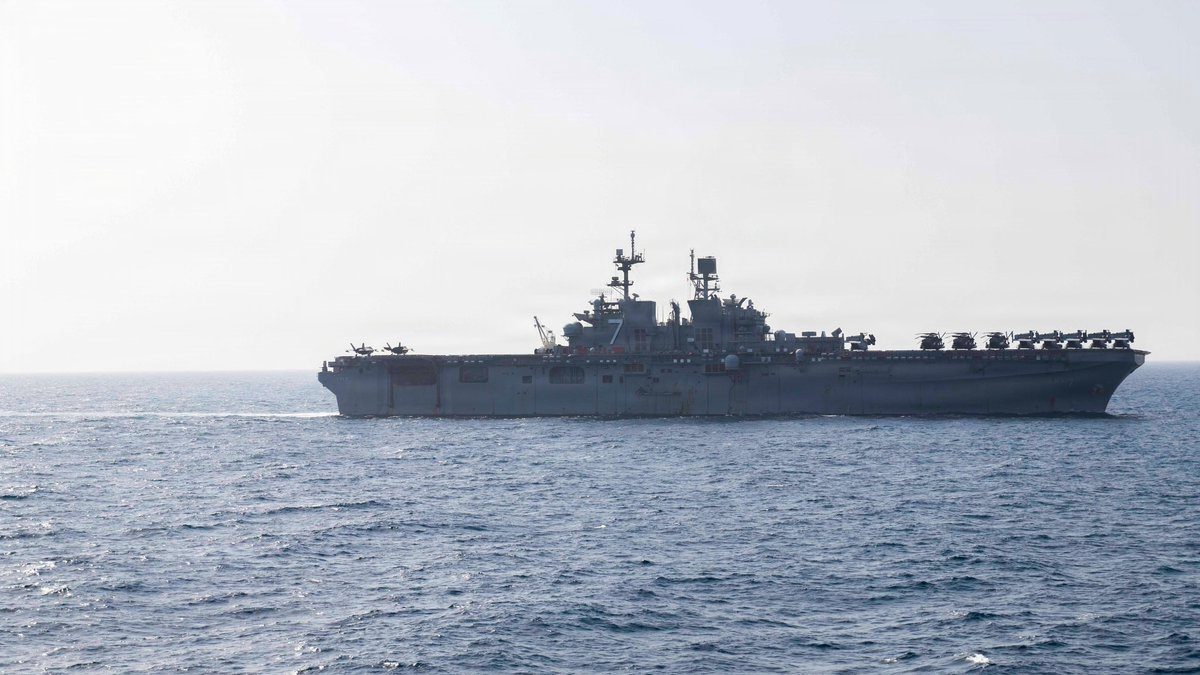
USS Tripoli (LHA 7) in the Arabian Sea supporting the ongoing US blockade against Iran. Photo: CENTCOM / X
After the signing of a Memorandum of Understanding with Iran on Wednesday, June 17, the United States has reportedly begun lifting its naval blockade of the country. Vice President JD Vance said that over a dozen ships have reached Iranian ports, in a White House briefing on June 18. The US naval blockade, however, has had deadly consequences as recently as last week.
On June 10, the US military killed three Indian sailors in an airstrike on a commercial oil tanker off the coast of Oman. At least three such US strikes on commercial tankers sailed by Indian crews have been reported in the region last week as part of the naval blockade.
US Central Command (CENTCOM) had accused the vessel of violating its blockade, claiming attacks were launched after it “failed to comply with directions from American forces.” Beyond the three killed, twenty-one other Indian crew members were rescued after the attack. Several of them were injured.
Meanwhile, the operator of “MT Settebello” stated that the vessel held no affiliation with Iran or Iranian oil.
Though the Indian government called a senior US embassy official and protested the killings, US Secretary of State Marco Rubio refused to express any remorse. He instead issued a strong warning against any further attempt to violate the naval blockade. Rubio had just visited Delhi last month to improve diplomatic relations.
Left parties in India condemn US killing of three seafarers
The left and other opposition groups in India condemned the Narendra Modi-led ultra-right-wing government in the country for failing to uphold the nation’s sovereignty in front of the US and demanded stronger action against its killing of the three Indian seafarers.
In a joint statement issued by five major communist parties in India, they condemned the killing, calling it a violation of the UN charter and the principles of free navigation. They also demanded a formal apology from the US and a formal diplomatic process for ensuring accountability for those responsible.
The signatories include the Communist Party of India (Marxist), the Communist Party of India (CPI), the Communist Party of India (Marxist-Leninist) Liberation, RSP, and Forward Block.
During his speech at the G7 meeting in France on Tuesday, Modi vaguely and indirectly raised the issue of the killings while Trump was in the audience, without naming the US or the naval blockade.
The US first announced the lifting of the naval blockade it had imposed following the finalization of a Memorandum of Understanding (MoU) with Iran on Monday, June 15.
Now that the MoU is signed, it has formally ended the war which began with the unprovoked aggression launched jointly by the US and Israel on February 28 against Iran.
The US naval blockade was imposed as a counter to the Iranians blocking the Strait of Hormuz in response to the war. India, like most countries in Asia, rely heavily on the strait for the transit of energy supplies and other essential commodities.
A junior partner to the US
The Indian opposition questioned the Modi government’s “meek response” to the killings and accused it of acting like a “junior partner” to the US who has surrendered the country’s sovereignty and independence.
“The US is acting like a gangster trying to impose its hegemony over the entire world,” the left parties’ statement said, claiming that the “BJP [Bharatiya Janata Party] led union government is abjectly failing in its duty by reneging on the independent foreign policy and becoming a junior partner to the US.”
The government’s “failure to force an apology from the US is the latest example” of its inability to protect India’s national interests from the Donald Trump administration’s consistent attacks.
India’s opposition has repeatedly questioned the Modi government’s failures to object to the Trump administration’s approach towards the country, claiming it an “affront to India’s sovereignty and self respect.”
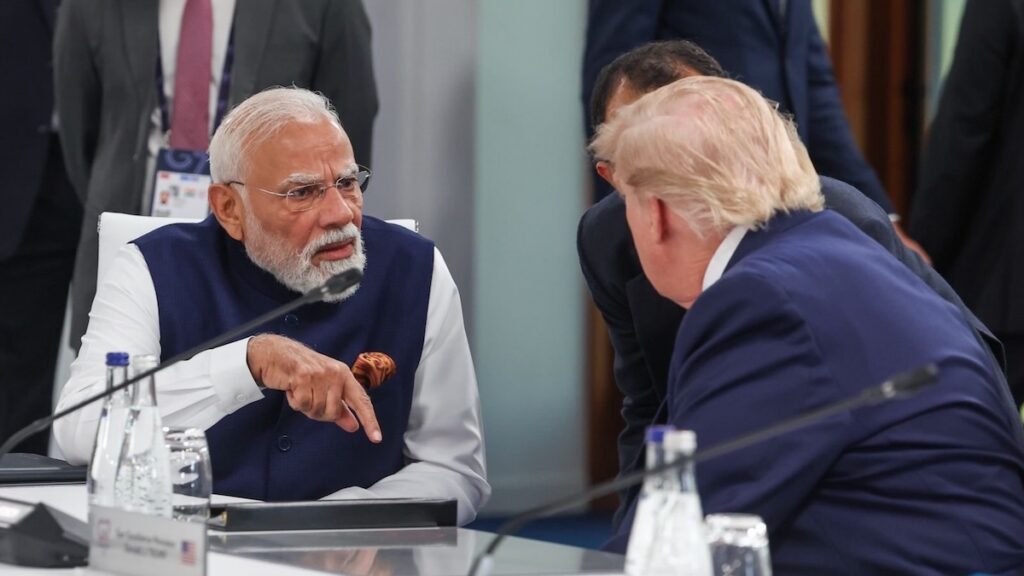
From the imposition of arbitrary tariffs, to threats to impose sanctions if India bought oil from Russia or Iran, to Trump’s repeated attempts to take credit for the ceasefire with Pakistan last year, the Indian opposition has found several occasions where the Modi government has shown reluctance to stand against what they call deliberate “humiliation.”
Read more: India trades in Russian oil for 7% reduction in US tariffs
Largely seen as an attempt to please the Trump administration, India had abstained from condemning the US-Israeli aggressions against Iran as well, despite the war affecting its energy supplies and causing significant economic damages.
Calling Prime Minister Modi “compromised” and an “obedient servant” of the US, Rahul Gandhi, the leader of the opposition in the Indian parliament, expressed doubts about the government’s ability to run the country’s foreign policy independently.
The opposition, including the left parties, had also criticized the Modi government’s failure to condemn the sinking of the Iranian ship “IRS Dena” in March in an attack carried out by the US navy in the Indian ocean.
More than 80 Iranian sailors were killed in the US attacks on Dena. Iran too had questioned the silence of the Indian government over the incident, pointing out that the ship was a guest of India when attacked.
In their statement on Monday, the communist parties demanded that “as an important country of the Global South, India should condemn US imperialist aggression” and “should lead the voices of the Global South in standing against the US.”
The left parties also called for mass protests against the US acts of aggression and the Indian government’s failure to protect the country’s basic national interests.