Michael Parenti, the Cuban Revolution, and the joy of reading red books
A tribute to Marxist thinker Michael Parenti for Red Books Day traces one reader's political awakening through reading, Cuba, and the revolution that feeds the children.
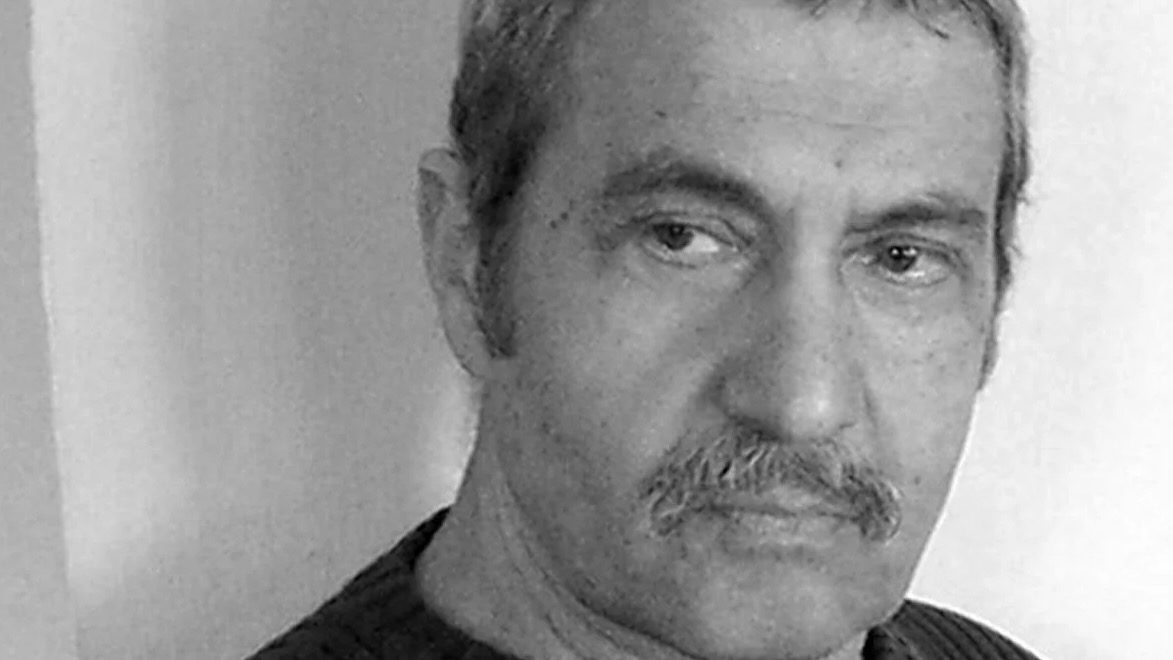
Michael Parenti September 30, 1933 – January 24, 2026. Photo: Michael Parenti Archive
Marxist scholar, public intellectual, and organizer Michael Parenti died on January 24, 2026. Though Parenti isn’t as widely read as other public intellectuals of his generation, for those of us who had the good fortune of finding his work early on in our political development, he was invaluable. For me, what made Parenti such a force and his work so indispensable was not only the content of his ideas but how he presented them: the wit and charm with which he spoke and, the clarity of his thought, and the sincere immediacy of his politics.
Pink books and reds
The first of Parenti’s books I read was the collection of essays titled “Dirty Truths (1996)”. I found it by chance in the used-books section of a tiny bookstore in Puerto Rico. At the time I was a twenty-something college student studying at the University of Puerto Rico, one of the few Puerto Rican public institutions Obama’s Fiscal Control Board hasn’t completely gutted (though not for lack of trying). Like many students, I was “political” – by which I mean perpetually high, at the occasional protest, and engaged in frequent meandering conversations with other perpetually high twenty-somethings about the evils of “the system”. I knew something around me was wrong, and though I had plenty of good professors with “left” politics, I wasn’t finding any political clarity in the classroom (I’m sure all the weed didn’t help!). But I was close. Your conditions and those of the people around you give you at least the certainty that society as currently organized is criminal. You see your parents working themselves to the bone, as they have done all their lives, and they still struggle to make ends meet. The same happens to you once you graduate and your days of working minimum wage jobs end, and you have to get a “real” job with a degree that starts decreasing in value the moment the ink dries on the diploma. And every day you see your country, one of the last colonies of the world’s remaining empire, being sucked dry by the local comprador class and their masters in Washington. You see all this and you start looking for answers, anything that can explain all the normalized deprivation and exploitation.
So you go looking for Red Books. But maybe, like a lot of working-class people, books, or just reading for pleasure, were never part of domestic life. It’s not that your parents discouraged learning. On the contrary, they saw it as essential. Part of the reason they worked so hard was to provide you with an education. But books were not part of their lives either. They implore to go to college, to get a “future”. And by the time you discover the joy of reading in university and are experiencing the first stirrings of class consciousness, you’re still too intimidated to try your hand at Marx, or you’ve absorbed so much anti-communism from your Cuban father that the idea of reading someone like Che seems taboo. So you finally crack open some “Marxist” text one of those lefty professors kept bringing up. Thinking you’ll find answers, you find something else: books with hundreds of pages of impenetrable, tedious prose that repeats the same mantra in ever more convoluted ways: “capitalism bad, but socialism… worse”. The kind of books that leave working-class readers (the political subject red books seek to move into action) feeling intellectually inadequate and demoralized. You struggle to understand what it is these highly regarded intellectuals are trying to say (which, it turns out, is not much!). Or, worse, you’re lulled into defeatism by the enlightened pessimism peddled by these so-called radicals, who dedicate entire careers to the lucrative cause of anti-actually-existing-socialism. Though these Pink Books contained a lot of critiques of capitalism, and some even of imperialism, again and again you turn the last page and realize that, for these so-called Marxists, the solution is never to change the world. It’s no surprise that so many of them have such long illustrious careers. They traffic in what Parenti called the “liberal complaint”. But there’s no emancipatory horizon in a complaint. It gives the illusion of political action. The self-satisfaction that comes from pointing out a problem and sitting comfortably idle. A “radical analysis”, on the other hand, can give one an orientation. Parenti was blackballed from mainstream academia not only for his radical analysis of imperialism, but for going beyond analysis into action – for organizing for socialism. Being “anti” this or that is perfectly acceptable to empire; it’s when you actually stand for something (namely communism) that doors no longer open, contracts fall through, and calls go unanswered.
When you read red books you feel pride in your class for the first time. You finally see who your enemy is (and who it isn’t) and you glimpse a path forward. The authors of these Red Books knew that feeling too. And they insist that politics begins not in anyone’s head, but in material life. Amílcar Cabral put it with characteristic bluntness: people are not fighting for ideas; they fight “to live better … to guarantee the future of their children”. Ho Chi Minh described the moment of finding that north star – reading Lenin on colonial liberation, he wrote: “What emotion, enthusiasm, clear-sightedness and confidence it instilled into me! I was overjoyed to tears … This is what we need, this is the path to our liberation!” Black Panther George Jackson, who spent the better part of his short, radiant life behind bars, wrote, “I met Marx, Lenin, Trotsky, Engels, and Mao when I entered prison and they redeemed me”.
“The revolution that feeds the children gets my support”
When I pulled Dirty Truths off the shelf I was struck by this particular edition’s cover, which featured a black-and-white picture of Parenti, in profile, smiling and giving a thumbs up to the camera. This was not like the covers of those Pink Books, with cold, minimalist designs that invoke empty gravity and inside-flap portraits of brooding academics in black turtlenecks looking at the camera with all the disdain the authors show their readers – and, indeed, to socialism and the people who fight for it. From the moment I picked up Parenti’s book I sensed that this Parenti guy was, as the saying goes, “a real one”.
I opened the book to the introduction. As I read, standing in the tiny bookstore, I was immediately struck by the lucidity of his prose. But I was struck, too, by what separated Parenti from the anything-but-socialism Marxists: a concern not only with ideas, but with people. The introduction, titled “Hidden Holocaust, USA”, begins with a list of the many crimes of the capitalist class against the working people of the United States. So obvious that a socialist would foreground people, but for someone who had trudged through dozens of Pink tomes and never once come across such forthright humanism, it was a revelation. More than anything, Parenti wrote with tenderness about the most vulnerable among us: women, the elderly, racialized people, and children. This was a striking contrast with the theory I’d been fed, where “the masses” appear only as an abstraction and the barbarity of capitalism is flattened into jargon.
The magnitude of the carnage Parenti spells out in numbers is staggering. It shows how much the ruling class truly cares about the toiling masses and how diligently it works (whether in the Global South or in the belly of the beast) to deprive, oppress, and butcher us. He stacks the ordinary catastrophes of working-class life: suicide, addiction, unsafe work, medical harm, the churn of prisons, child hunger. Three decades on, the toll has not waned: in 2023, 49,316 people died by suicide and 46,728 died from gun-related injuries; in 2024, 79,384 people died from drug overdoses; on a single night in January 2024, 771,480 people experienced homelessness. This is not to mention the frequent school shootings, cop killings, rising unemployment, precarity, social isolation, and now, ICE terror. All as the military budget reaches the trillion-dollar threshold.
In the book, you could feel Parenti’s rage coming off the page. He wasn’t writing about an abstract category. He was writing about his own class. In an April 15, 1986 lecture at the University of Colorado Boulder, Parenti talked about a trip to Cuba. He described travelling up into Cuba’s Escambray mountains and asking a campesino if he liked Fidel. The man answered, “Yes, with all my soul”, and pointed to the clinic on the hillside. Before the revolution, the campesino told him, they never saw a doctor. If someone fell gravely ill, twenty people had to carry them day and night for two days to reach a hospital, zigzagging around the latifundia because the landowner would kill them if they crossed. Now, he said, there was a full-time doctor up there, a dentist who came one day a week, and a larger hospital no more than twenty minutes away. “That’s freedom”, the campesino told him: “we’re freer today, we have more life”. In Havana, Parenti went on, another man pushed back against foreigners calling the city “drab and dull”. Yes, the paint peeled. But you no longer saw children begging in the streets. Then, almost in passing, the man told Parenti he was on his way to night school, and said (with a kind of astonishment) “I can read! Do you know what it means to be able not to read?” Parenti recalled dedicating his book “Power and the Powerless” to his father, a working-class Italian immigrant who had only finished seventh grade. He tells how his father opened the book to the dedication page, which read, “to my father with love”. With tears in his eyes, he turned to his son, “I can’t read this, kid”. Parenti slammed his fist on the podium, “The defeat – the defeat of this man. This is what illiteracy is! This is why people in Nicaragua walk proud now: because they can read.” That, he said, is why literacy programs make people “walk proud” – in Nicaragua, in Cuba – because they were treated like mere beasts of burden before, denied the right to read, denied dignity. And it is why, for Parenti, the real measure of a society was how it treats its people. And the real measure of a revolution is what happens after the revolution to the people capitalism once discarded – “those who couldn’t read”, “those babies that couldn’t eat”, “that is why I support revolution”, he said, “The revolution that feeds the children gets my support”. We should all be as angry as Parenti that so many continue to be deprived of the joy of reading and a dignified life. And we should all support the Cuban Revolution and steadfastly oppose any efforts to strangle it.
Killing hope
In its short life (lived under permanent siege) Cuba has managed not only to feed people and teach them to read, but to build a social life organized around dignity rather than profit.
In 2023 I went to Cuba as part of a May Day brigade organized by the International Peoples’ Assembly. By that time I had gone from Parenti to Cabral, Ho Chi Minh, George Jackson, and many other red books. As for any young socialist, the trip would be a formative experience. I didn’t know what to expect, but I knew it was important. When I told my father I was going back to his home country, which he left at the age of thirteen, just four years after the revolution, he had already made his peace with having a socialist son and was even a little excited, telling me stories, places I should visit, what he remembered from Havana (he grew up in Guantánamo). So I told him I’d call him every day and tell him everything I saw.
The first week we went to Old Havana, with its pastel arcades and stone colonnades, wrought-iron balconies, cobblestone streets that spill into plazas, and the sea breeze drifting in from the Malecón. Later that day, I called my father as promised. I told him how strikingly similar it was to Old San Juan (former colonial outposts are nothing if not consistent in their aesthetics). The only difference was who lived there. In Old San Juan only wealthy locals or rich foreigners own apartments, which most only use months out of the year. Many buildings are now owned by faceless LLCs, bought at pennies by the dollar thanks to government subsidies gifted to foreigners by the bootlicking local government to “stimulate the economy”. Cubans live in Old Havana. You also don’t see people begging on the streets. In Old San Juan it’s a common sight, many are addicted to heroin. I told my father that although people in Havana were no doubt struggling, they had their dignity, this was their country, and no one would price them out of it. After a long pause he changed the subject, not out of hostility. My father had spent most of his life in Puerto Rico, made a life there. He felt as much Puerto Rican as he did Cuban. It hurt him to see what he had long considered his home in such a state.
The second week we went to Contingente Blas Roca (the Blas Roca Contingent). It was the physical home of the largest construction union in Havana. The workers had built it themselves. They explained that they wanted to have a place for them and their families to relax, to have social events, to gather in community – to have a life. They had built a small zoo, with monkeys, birds, and even a couple of crocodiles. One of the workers explained to the brigade that one was Cuban and the other from the US, “to prove that we can get along”. Not even a sixty-year blockade can dull a Cuban’s sense of humor. They had also dug a small pond and put fish in it. The fish kept the water clean, they explained, and children could fish in the small boats they had found discarded and fixed up. There were swings and seesaws. They celebrated birthdays there. Due to the blockade-induced fuel shortage, driving out to get food was costly, so they started growing vegetables in a field nearby for their own consumption. They even kept pigs.
That afternoon around twenty union leaders from all over the world (Australia, Chile, New Zealand, Argentina, Germany) visited the center. We heard the Cuban workers talking about the difficulties they faced because of the blockade. Everything from being unable to track water consumption in the capital because water meters broke down and new parts were hard to come by to pipes that deteriorated and had to be replaced with different materials, leaving the water system with persistent leak points. They also talked about the many ingenious solutions they had come up with to fix and maintain the infrastructure in spite of the difficulties. Creative resistance isn’t just a slogan.
Then the visiting union leaders spoke about May Day and internationalist worker solidarity. These were men who had worked with their hands all their lives, with weathered faces from many shifts under the hot sun. One of them, from Australia, talked about how he and other union members had been demonstrating in front of the US embassy every week for the past twenty years. One of them, from Chile, got up and spoke about the inspiration Cuba represented for him and for the workers of the world, how this was a country that had stood up and said, “enough”, and carved its own path of dignity and sovereignty. He started crying. This huge man was overcome with emotion talking about Cuba. As I sat down to enjoy the lunch the workers of Contingente Blas Roca had prepared for us, from their own food supply, I understood what Cuba meant for these men, what it means for so many people.
When Trump and the gusano Narco Rubio say they want to kill the Cuban Revolution, what they actually want to kill is what it represents: hope. The hope such an example could give not only to people in the Global South but to the millions, as George Jackson wrote, condemned to “live poor half-butchered lives” in the heart of empire. That hope is not mere sentiment. It has material force. It’s in Contingente Blas Roca, it’s the thousands of Cuban doctors that have treated patients in every corner of the world, it’s the revolutionaries Cuba has embraced when their own countries hunted them, it’s the Cuban teachers who have exported literacy to millions as the US and its lackeys export only death and destruction. And that is precisely why it must be strangled – because it is contagious. And the stakes are not only ideological. Cuba sits on significant nickel and cobalt deposits; the US Geological Survey estimates Cuba’s cobalt reserves at about 500,000 tonnes (minerals that are central to the battery supply chains and industrial power now being reorganized worldwide). Washington understands that, so long as the Revolution stands, those resources will not be surrendered to foreign command. That’s the “unusual and extraordinary threat” the Trump administration talks about. They’ve been trying to kill hope in Cuba since Lester Mallory wrote in April 1960 that because the “majority of Cubans support” the Revolution then the “only foreseeable means of alienating internal support is through disenchantment … based on economic dissatisfaction and hardship … to bring about hunger, desperation and overthrow of government”. The blockade is punishment, an attempt to make an example out of any people that refuse to submit. Just as they’ve been doing to Haiti since a formerly enslaved people freed themselves and established the first Black Republic, and to Venezuela since Chávez was elected in 1998 and told the yankees to “go to hell”. Parenti would be furious at what the United States is trying to do to the Cuban people. And he would be shouting it into any microphone he could find.
So let us read more Parenti, Cabral, Ho Chi Minh, and Jackson. Let us read more red books (and use them). In their pages is clarity, and with clarity it is all the easier to act. The revolution that feeds the children gets our support. And any empire that tries to stop that (that tries to keep people in poverty, illiteracy, and hunger) deserves our undiluted animosity and opposition. Because what is being strangled in Cuba is not a government, but hope itself.
Eduardo Rodríguez is a Puerto Rican writer, editor, and translator. He is an editor at Tricontinental: Institute for Social Research.