Ahmad Al-Abed: The occupation is battling a suicide crisis among its genocidal ranks
Over 10,000 soldiers are currently receiving mental health treatment, while 3,769 have been officially recognized as suffering from PTSD.
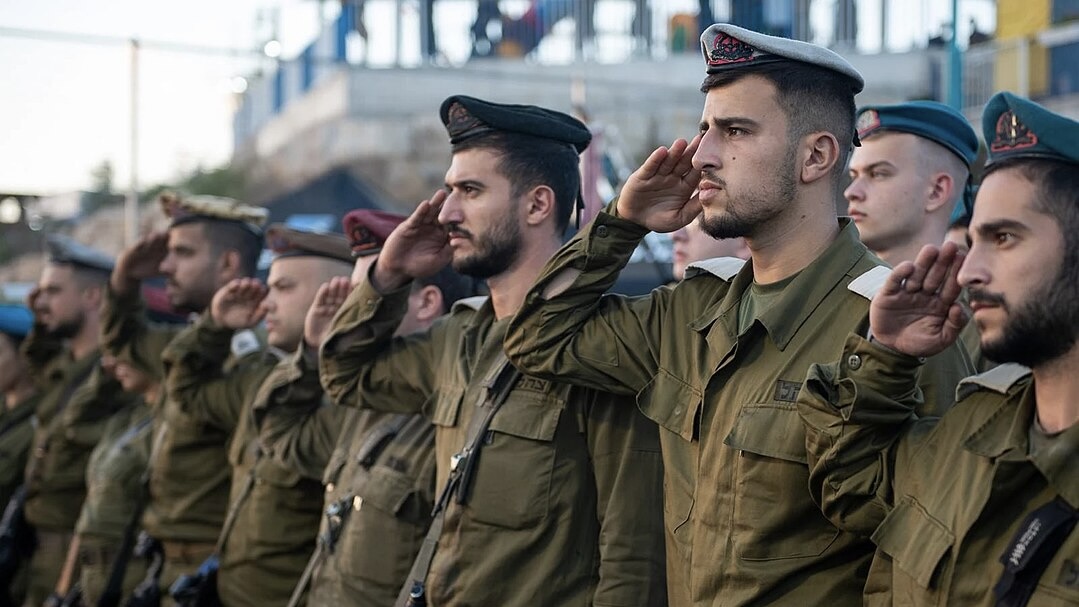
Israeli soldiers in a ceremony in September 2024. Photo: IOF Spokesperson's Unit
The wave of suicides among Israeli soldiers who took part in the genocidal war on Gaza continues to grow, despite the military establishment imposing a veil of secrecy. The phenomenon appears far deeper than what has been made public, with censorship concealing a crisis that threatens to erode the army’s morale.
According to Haaretz, a senior air force officer recently committed suicide after serving in a drone command unit that participated in the assault on Gaza. Weeks passed without any official acknowledgment of his death. The officer, whose name remains undisclosed, suffered severe trauma after witnessing and taking part in “scenes of killing and destruction”. He was described as “one of the most experienced and prominent drone operators in the Israeli military.”
Citing his colleagues, the report said he had shown clear signs of mental collapse, unable to live with the atrocities he had witnessed. “He saw everything. He knew exactly what was happening on the ground. We watched him wither day by day,” one said. Air force officers confirmed that he had been receiving mental health treatment before his death and that the army kept him in service despite having knowledge of his condition, considering him “indispensable” during Israel’s multi-front war.
Other officers revealed a wider crisis within Israeli drone units, where many soldiers face “moral and psychological breakdowns” after witnessing the carnage they unleashed. “We see everything clearly, hear the explosions, and know exactly who’s hit or killed,” one said. At times, they are instructed to attack targets that later prove harmless. They have killed children “by mistake”.
Another operator recounted a “haunting” incident: “I was ordered to fire on two figures near Nitsarim Road. They turned out to be children, probably searching for food. At first, I felt nothing, but afterward, I kept seeing their faces whenever I closed my eyes. I was filled with shame. I wasn’t the same person anymore.”
A military medical officer told Haaretz that the officer’s suicide “exposes the system’s failure to assess psychological risks.” The immense pressure, constant exposure to death, and lack of post-service support “create a deadly mix of isolation and guilt.” Many soldiers, he added, now feel “abandoned with their memories and nightmares,” and some “battle suicidal thoughts” after returning from Gaza.
Read More: Israel violates Gaza ceasefire deal with new massacres
Meanwhile, France’s Le Figaro highlighted the deteriorating mental health of Israeli soldiers, featuring the case of Yisrael Hayat, a medic who fought in Gaza and confessed to longing for “a bullet between the eyes.” “I’m a walking corpse,” he said. The French article added that he’s now unfit for service and diagnosed with post-traumatic stress disorder (PTSD). Appearing recently before Knesset members, he screamed at lawmakers: “Do you know what it’s like to lift your friends’ bodies? Every time I sit down, I see corpses, I see my friends exploding before me. I try to kill myself every day. My psychiatrist prescribed me 15 pills a day, enough to sedate a horse. Help me.”
Israel’s public broadcaster, KAN, recently reported 279 suicide attempts in the army over the past 18 months, 36 of which resulted in death. A Knesset Research and Information Center report noted that 12% of the attempts were classified as severe. Since 2017, 124 Israeli soldiers have taken their own lives, 68% of them in compulsory service, 21% in the reserves, and 11% in permanent service. The report noted a sharp rise in suicides among reservists since 2023, linking it to the increased mobilization after the Gaza war.
Yedioth Ahronoth warned that the growing suicide crisis, especially among reservists, poses “a major threat to Israel”, despite the army’s efforts to downplay its gravity. Israeli expert Yossi Levy Pelts cautioned that the Israeli entity could face a “mass wave of suicides”, explaining that wartime mobilization against an external enemy does not necessarily increase suicide rates, but when the fighting ends, many soldiers experience the delayed psychological collapse.
Israeli media revealed that over 10,000 soldiers are currently receiving mental health treatment, while 3,769 have been officially recognized as suffering from PTSD and are receiving specialized care.
This article was written by Ahmad Al-Abed and first published by Al-Akhbar.