After shocking defeat of the left, Rodrigo Paz wins Bolivian presidential race
After nearly two decades of the MAS-led process of change, Paz has promised to transform Bolivia by focusing on opening up trade, strengthening ties with the United States, and making capitalism popular.
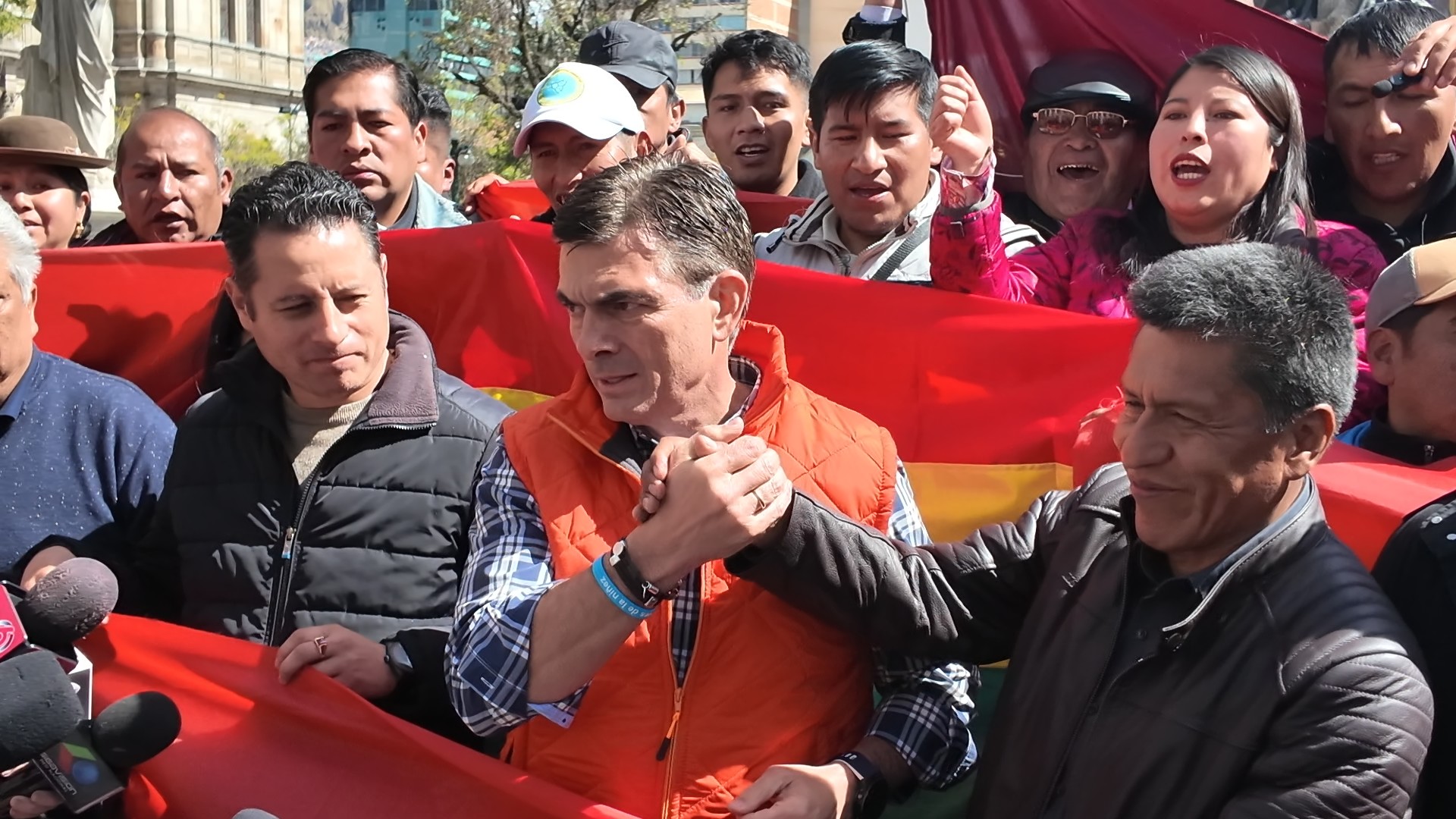
Rodrigo Paz won the second round of presidential elections on October 19, 2025 in Bolivia. Photo: Rodrigo Paz / X
On October 19, conservative politician Rodrigo Paz won the runoff election to determine Bolivia’s next president. According to the Plurinational Electoral Body (OEP), the country’s highest electoral authority, voter turnout was around 89%. This gave victory to the Christian Democratic Party (PDC) candidate, who, according to the rapid count won 54.53% of the valid votes (the official count released Monday indicated Paz won 50.6% of the vote).
Behind him was former right-wing president Jorge “Tuto” Quiroga, who won close to 45% of the votes (49.3% according to the official count). The results were largely in line with the first round, in which Paz came in first with 32.02% of the valid votes, while Quiroga made it to the final round thanks to his second-place finish with 26.7% of the valid votes.
Both results were completely different from what the polling companies had predicted. In the first round, most of them claimed that Samuel Doria would win the first round of the election, although in reality, he came in third place. Likewise, the pollsters announced that Quiroga, a true ideologue of neoliberalism in the Andean country, had an advantage of almost 8 points over Paz. Once again, reality destroyed the pollsters’ data.
Is Bolivia open to the world or to the United States?
After finding out the results, Paz promised a country of unity, through the liberalization of the economy. “Today, Rodrigo Paz does not win; Bolivia wins. In a democracy, we all win… God, family, and country are the basis of our commitment to Bolivia.”
Indeed, Paz has promised to “open Bolivia to the world,” which reflects the clear shift to the right that will take place during his term after two decades of public policies close to popular social democracy under the Movement Towards Socialism (MAS). “The new dimension of Bolivia that we are building together will be with our hands extended within the country to work with everyone… but we must also open Bolivia to the world, which is why I would also like to thank the Deputy Secretary of State [of the United States], Cristóbal Landau, who, on behalf of President Trump, has called us to assure us of his support and cooperation”, he said.
For his part, Quiroga quickly accepted the results and congratulated his opponent, whom he said he called to congratulate personally. However, he also announced that “This is a provisional result. Bolivia needs a mature, democratic, and statesmanlike attitude. That is why I have conveyed my congratulations.”
The shift to the right
After more than 20 years, the MAS has lost the presidential election. Its defeat has been resounding, and many analysts are still wondering how such an imposing political force could fail to reach even 3% of the vote.
Read more: Beyond defeat in Bolivia: the limits of left electoral strategy in Latin America
The truth is that the bitter internal disputes within the MAS, especially between former president Evo Morales (Bolivia’s first Indigenous president) and Luis Arce, the outgoing president, caused a decline that was exacerbated by the economic crisis and paved the way for a right-wing candidate such as Paz who, although he was the more moderate candidate compared to Quiroga, promises a clear shift to the right.
For now, Paz, the 58-year-old former mayor of Tarija, has spoken of promoting “capitalism for all,” which he says means reducing taxes and tariffs while making it “easy” to obtain loans and credit.
The attempt to revamp the word “capitalism” in a country that for decades extolled “socialist” values may be one of the most important ideological projects facing the election winner.
“Capitalism for all means money for the people, stability so that prices go down, clear rules for production with a state that helps you… There is a change from what the economic model used to be. We will move from state and clique capitalism to an open economy in which private and foreign investment is accepted,” Paz said.
Another important change that Paz has promised is the transfer of more resources to regional governments. Currently, the central government controls about 80% of resources, while Paz proposes that this amount be reduced to 50%. This decision, of course, is in line with the historic demand of eastern Bolivia, which for decades has been calling for greater autonomy from the central government.
Last but not least, Paz has promised a comprehensive reform of the Bolivian state. Among the measures announced are freezing the activities of public companies with operating deficits and strengthening anti-corruption systems: “I am going to cut off all benefits to politicians and the corrupt state,” Paz said.
In this sense, Paz promised a judicial reform so that judges are no longer elected by popular vote. However, several analysts argue that this change could require a comprehensive overhaul of the Bolivian constitution, which could be one of the major political objectives of Paz and his political and economic group. The Bolivian constitution prohibits several prerogatives that neoliberalism needs to function, so it would not be unreasonable to expect a constituent assembly to be proposed in the future.