“Russia and China respect us”: Burkina Faso affirms Sahel geopolitics are based on partnership
Advisor to the Burkinabé Prime Minister refutes the idea that Sahel countries are exchanging French imperialism for another.
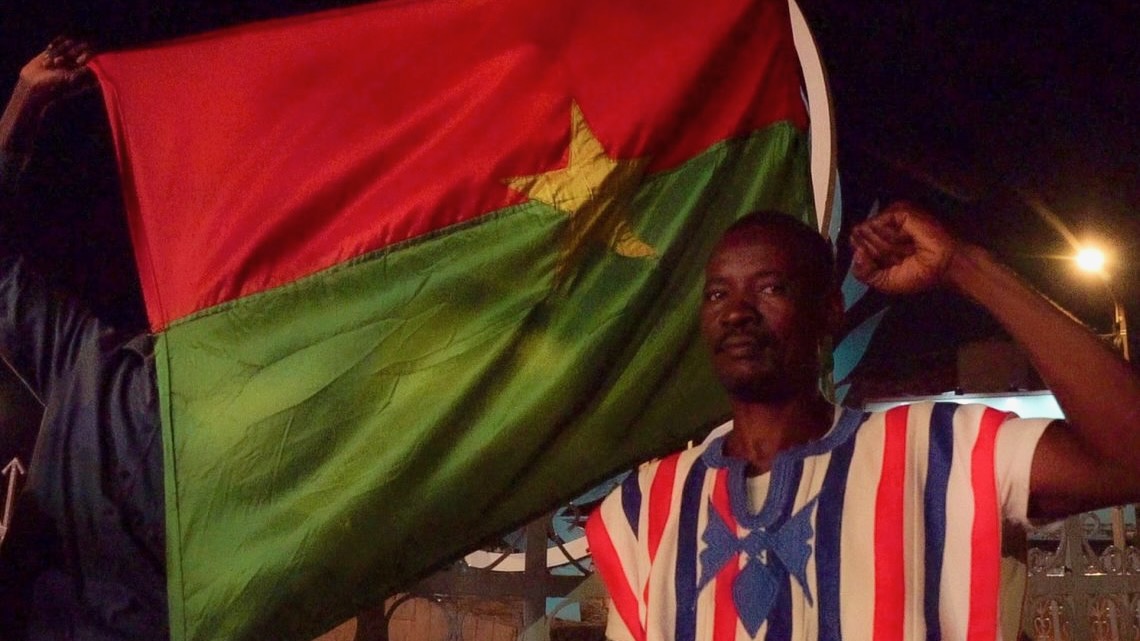
Man raises fist in front of the flag of Burkina Faso during a popular demonstration. Photo: Pedro Stropasolas/Brasil de Fato
The Thomas Sankara Memorial project – inaugurated in May this year at the site where the pan-Africanist leader was assassinated – is, for Luc Damiba, special advisor to the Prime Minister of Burkina Faso, clear evidence that President Ibrahim Traoré is committed to continuing the 1983 revolution.
Damiba received Brasil de Fato at the site where Sankara fell, along with 12 of his companions, in a massacre orchestrated by his then-friend Blaise Compaoré with support from France, on October 15, 1987.
Analyzing the country’s current situation, the advisor says he values the efforts of the Alliance of Sahel States (AES) countries in combating terrorism in the region. The “revolutionary entity” that brings together Mali, Burkina Faso, and Niger has led the project of rupture against French and US neocolonialism since its creation on September 16, 2023. He concludes: “We are winning the war.”
In the conversation, Damiba also discusses Burkina Faso’s relationship with BRICS countries, such as China and Russia. He argues that these are partnerships, an “exercise of sovereignty”, rejecting the idea propagated in Western media that the Sahel countries are simply trading one imperialism for another.
“What Russia does, France didn’t do. That makes a big difference. Russia and China respect us. And, in any case, we’re mature enough to know how to say ‘no’ when we perceive that China or Russia are being imperialist against us. We’re mature,” explains Damiba.
A member of the Thomas Sankara Memorial’s coordination team, Damiba also emphasizes the importance of the country’s main agricultural development program, launched by Traoré, the Agricultural Offensive, which has ensured security, food self-sufficiency, and political engagement for peasants. “We can only count on the rural world to make the revolution,” he says.
Check out the full interview:
Brasil de Fato: Many people today say that Ibrahim Traoré is the “reincarnation” of Thomas Sankara. What do you think?
Luc Damiba: In fact, there were two acts that he (Traoré) performed at this specific place, the memorial, that make him the reincarnation of Thomas Sankara. One: when he assumed power on October 14th, a day later, on October 15th, 2022, he came here, assumed leadership of the revolution, and said he would continue the revolution that Sankara had started.
Therefore, it is the continuity of the revolution that is present today. Secondly, he agreed to build this mausoleum project in the name of Thomas Sankara. He rehabilitated the memory of Thomas Sankara. So, every day, he quotes his quotes, his memory, his references, the work he accomplished, and says he will do better. Because in our country, there is a saying that shames anyone who doesn’t do better than their father. Sankara is the father of the revolution. Ibrahim Traoré is the son, and therefore, he must do better than Sankara.
BdF: For people in Brazil who don’t know what’s happening in the Sahel, don’t know what this is, can you explain to us a little about what this revolution is and what the role of the Alliance of Sahel States (AES) is?
LD: The AES was created because there is a war going on, a war in which terrorists fight the populations in the bases, in the jungles, and often in the cities. And, in fighting the terrorists, we realize that they are armed and financed by imperialism. Therefore, currently, the country as a whole is fighting. It is a war of national liberation, a war of true independence. And Ibrahim Traoré, Chiani (Niger), and Goïta (Mali) are the three leaders leading this war of liberation for the three countries.
Therefore, the AES constitutes itself as a revolutionary entity that strives daily to free itself from the clutches of monetary, financial, infrastructural, ideological, and other imperialism. What we must understand is that this is not a civil war, not a simple terrorist war; it is a war against imperialism and a war for the autonomy, liberation, and independence of our countries.
BdF: And what is the security situation in the country today, almost 3 years after Traoré came to power?
LD: Burkina Faso is safer today. We have more security today than we did before Traoré. You could say that because before Traoré, 50 km from Ouagadougou, it was difficult. Now, with Traoré, we can go beyond that. There were villages that were occupied. Today, many villages are liberated. So, I think these are essential points that we need to understand. They are visible signs that we can see.
Today, many cities are liberated, and security is gradually returning. There are still attacks, and not everything is clear yet, but we are progressing toward ending the war throughout the region, not just in Burkina Faso. This is no longer a war just for Burkina Faso, it’s a war in all the AES countries.
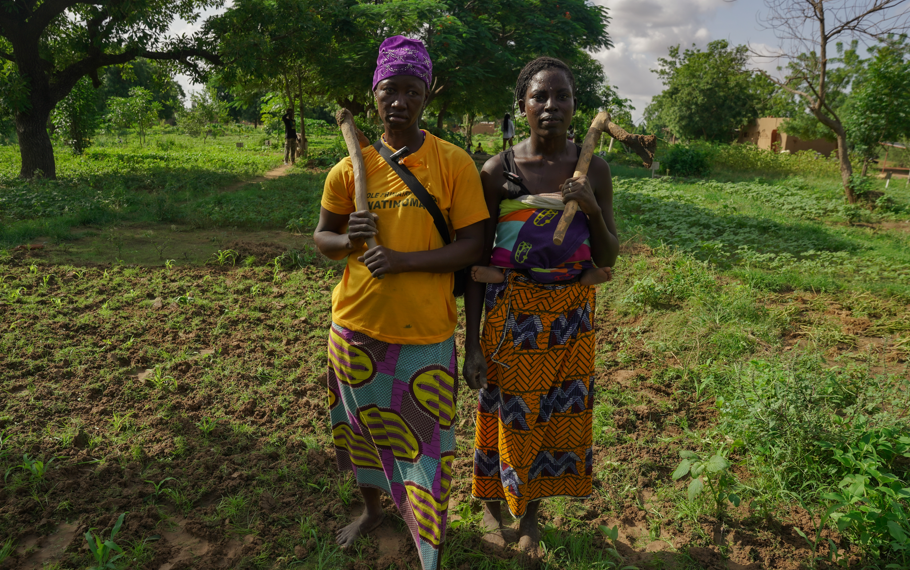 For Luc Damiba, peasants are the main political actors in the “march of revolution.” Photo: Pedro Stropasolas/Brasil de Fato
BdF: You’ve said before, that peasants are the main political force in Burkina Faso. Can you explain that a bit?
LD: The first thing a man wants is to eat. To eat morning, noon, and night. And so he (Traoré) launched the Agricultural Offensive. We have beautiful land, we have water everywhere, we have some rain, it’s true, but we need to reorganize all of this to produce enough food for the citizens, and that’s a strength. And since peasants are the most numerous in Burkina Faso, 90% of the population lives in rural areas, so we need to occupy them, we need to occupy them well. If we don’t occupy them, they will be occupied by terrorists. That’s the first gain we have.
The second benefit is that they will produce enough to achieve food self-sufficiency. The third benefit is that we will have political actors well-prepared for the march of the revolution. If we don’t have the peasants to carry out the revolution, we will fail.
Therefore, it is very important to first achieve the agricultural revolution. Then, we will have the other links in society that will join in: university intellectuals or those who went to school but are not revolutionaries.
The bourgeoisie, when an opportunity arises, switches to imperialism because they are very pro-imperialism. Therefore, you can’t count on intellectuals; you can only count on the rural world to make the revolution, and Traoré started well, with this offensive agricultural policy, mobilizing this world, which is an important political actor.
BdF: And regarding partnerships with China and Russia, how do you see this relationship?
LD: It’s a mutually beneficial partnership. China provides us with resources, just as Russia provides us with resources – weapons and machinery – but we buy them, we buy them outright. We move forward together.
BdF: Many people unfamiliar with the Sahelian process have been spreading the Western narrative that the Sahelian countries are swapping French imperialism for Russian and Chinese imperialism. What’s your take on this narrative ?
LD: That’s not true. First of all, it’s what China does, what Russia does, France didn’t do. This makes a big difference. Russia and China respect us. And, in any case, we are mature enough to know how to say no when we perceive that China or Russia are being imperialist.
Therefore, we are mature. When someone is grown up, they can talk to whomever they want, and that is our sovereign choice. We choose who we do business with, who we deal with on this and that. We are free. All free nations are free to decide who they will do business with.
First published by Brasil de Fato in Portuguese