Exclusive: Ten Months since His Abduction, Dr. Hussam Abu Safiya’s Family Tells His Real Story
From the moment he was appointed director of Kamal Adwan Hospital in Gaza at the start of the current war, Dr. Hussam Abu Safiya, a pediatrician, refused to leave his post. After Israeli forces demolished his home in Beit Lahia in Gaza’s north, the Abu Safiya family was forced to move into the hospital. During […]
Trump issues threats against Colombian President Gustavo Petro and Mexican President Claudia Sheinbaum. Photo: Peoples Dispatch
From the moment he was appointed director of Kamal Adwan Hospital in Gaza at the start of the current war, Dr. Hussam Abu Safiya, a pediatrician, refused to leave his post. After Israeli forces demolished his home in Beit Lahia in Gaza’s north, the Abu Safiya family was forced to move into the hospital. During the Israeli military’s repeated attacks on Kamal Adwan Hospital, they promised not to arrest Dr. Abu Safiya. Then, on December 27, 2024, Israeli forces abducted Dr. Abu Safiya. On March 25, 2025, an Israeli court sentenced Dr. Abu Safiya to 6 months in prison. Now, his family is waiting with anticipation and uncertainty for his release at the end of this month.
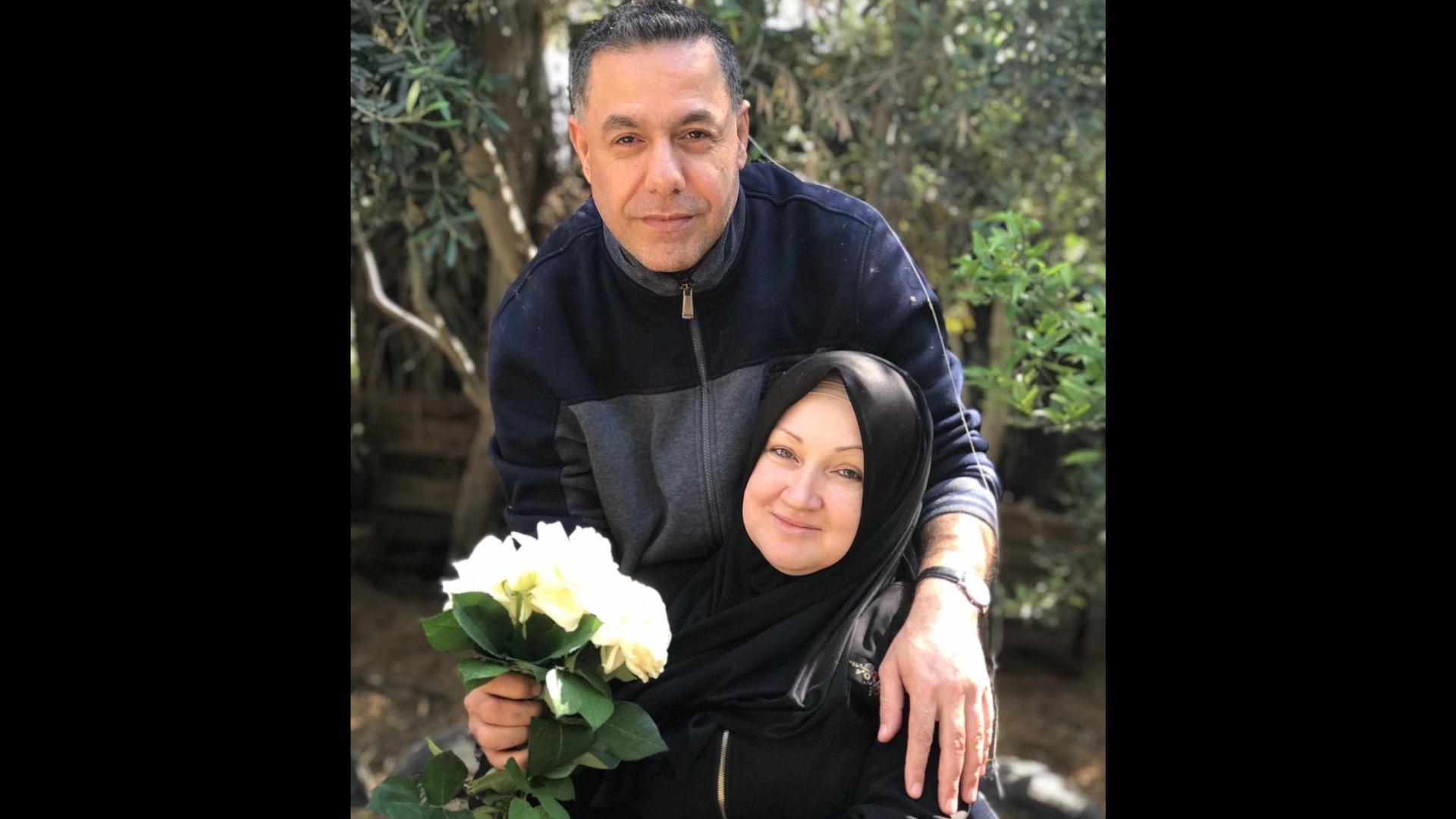
Albina Abu Safiya, 46, is married to Dr. Abu Safiya and has four sons and two daughters, including Ibrahim, who was martyred during the war on October 25, 2024. She recounted how she met her husband in her native Kazakhstan. “Dr. Hussam was studying pediatrics and neonatology in my city. We had mutual relations with a member of my family, and we met at a family wedding. He liked me and we started communicating,” she told BreakThrough News.
“I married Dr. Hussam in 1996 and moved with him to another city in Kazakhstan so he could complete his education. I gave birth to my first child, Elias, and then the doctor decided to return to Gaza. It was difficult at first because I knew nothing about Palestine. I learned about it through my husband. I was young, but what encouraged me to go to Gaza was Dr. Hussam’s kindness and his very good treatment of me. He was affectionate and helpful, so I decided to move with him and continue my life in Gaza.”
Dr. Abu Safiya did not hesitate to go into work as soon as the news broke on October 7th. Immediately, the family realized that his absence would be long.
For Albina, her husband’s family was a vital resource in helping her adjust to her new life. “I moved to Gaza in 1998 to the Jabalia camp. I was learning Arabic from my husband’s family. He has five brothers and five sisters. I learned a sentence from each one, and this developed my Arabic, and I learned it. They were a very caring family. I lived with them in a separate apartment within the family building. Dr. Hussam continued his work, and our life was good.”
“We continued to focus on our lives and the future of our children. My first son, Elias, got married and had two children. Four months before the war, we moved to a new house in the Sultans area on the coast of Beit Lahia, north of the Gaza Strip. Elias’ father was very happy with him and felt independent and comfortable in the new home. My son, Elias, lived in our apartment in the camp, and his apartment in our new house had not yet been furnished.”
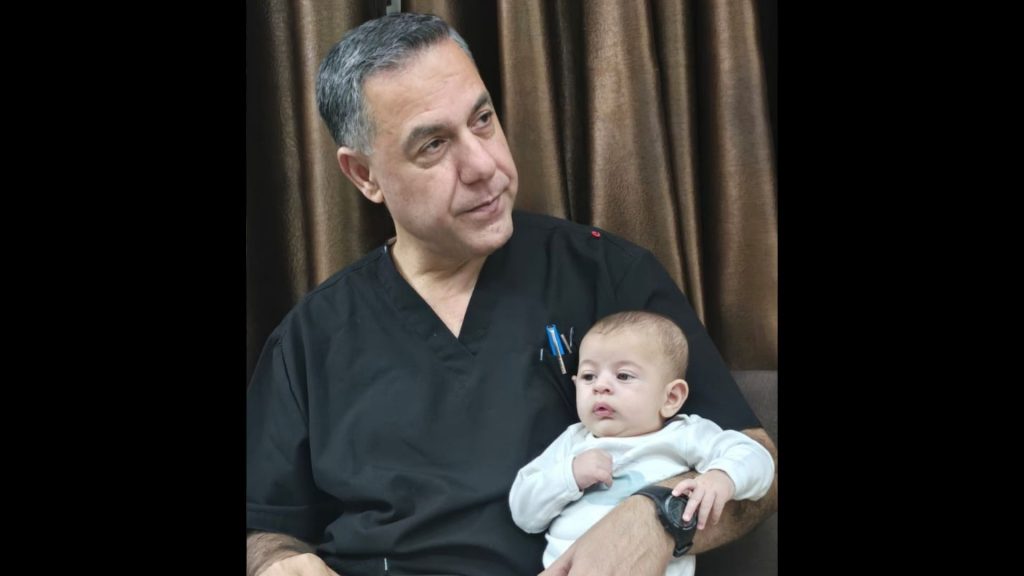
Dr. Abu Safiya did not hesitate to go into work as soon as the news broke on October 7th. Immediately, the family realized that his absence would be long. Although the family had another nationality and could travel, they chose to remain with Dr. Abu Safiya, who refused to leave Gaza or his hospital. For the next 448 days, the doctor remained at his post.
Soon, the Abu Safiya family found themselves targeted by the Israeli military. “The first displacement was to Jabalia camp. We didn’t stay there for long, only three weeks. The Israeli army called asking us to evacuate the house because the area was dangerous. They gave us only ten minutes to evacuate,” Albina Abu Safiya recounted for BreakThrough. “We left very quickly and went to a friend’s house. Dr. Hussam called us to go to Kamal Adwan Hospital. From then on, we stayed together until he was arrested.”
“The responsibility was great on Dr. Hussam because most of the doctors were displaced with their families to the south, and a number of them traveled to foreign countries with their wives or to Egypt. We had the opportunity to travel to Kazakhstan more than once, but the doctor refused to travel, so I stayed with him and didn’t leave him alone in Gaza.”
There was shelling from all sides, Israeli tanks surrounded the hospital, sound bombs and bullets were everywhere, explosive robots and everything they used.
During the Abu Safiya family’s period of displacement in Kamal Adwan Hospital, Israeli forces besieged the facility several times and repeatedly destroyed it. Dr. Abu Safiya lost his son, Ibrahim, next to the hospital in a tragic incident. On November 23, the doctor was injured when Israeli forces directly targeted his room in the hospital with an explosive devicel, but he continued to work until he was arrested on December 27, 2024.
Recalling his arrest, Albina said, “Suddenly, on December 27, the Israeli army entered the hospital again and informed us that Israeli bulldozers would enter the hospital to build a road. We did not understand what was happening. There was shelling from all sides, Israeli tanks surrounded the hospital, sound bombs and bullets were everywhere, explosive robots and everything they used.”
Amid the chaos, Israeli intentions soon became clear. “They asked to see Dr. Hussam when he went towards the tanks and gave him a list of four names they wanted from the hospital. Dr. Hussam told them that there was only one of them and he was injured. I unfortunately do not remember his name. He told them that he was ready to evacuate the hospital, but he wanted a truck to transport the diesel, the motor and some equipment to the Indonesian Hospital, and we wanted a bus to transport the escorts and medical staff, and ambulances to transport the critically ill patients. But the army called out with microphones and quadcopters for the patients who could walk to leave the Fallujah Road. They sent us a human shield to tell us that we had to leave the hospital as well.”
“We, the medical staff, and Dr. Hussam stayed in the hospital waiting to see what would happen to us from 9:00 AM that day. That evening, around sunset, a truck and a bus arrived to transport us to the Indonesian Hospital. During that time, the wards were bombed, and some patients suffocated from the smoke. The equipment, diesel, and motors were removed, and we boarded the bus. There were 30 of us. Dr. Hussam remained in the hospital, along with some patients and about 50 medical staff. They told us to go to the Indonesian Hospital and they would follow us.”
Dr. Hussam deserved huge international support because he sacrificed his life in his humanitarian work inside the hospital and he had no clear charges against him…He was doing his job monitoring the condition of patients under very difficult conditions in the north, and now he is being treated inhumanely in prison.
As it turned out, the Israeli forces had deceived the Abu Safiya family. “The bus left, and tanks were in front of us. I was worried about Dr. Hussam, what would happen to him and whether he would follow us or not. We arrived at the Indonesian Hospital around 10:00 PM. There weren’t many people in the hospital. A doctor opened the door for us. The hospital was badly damaged and unsuitable for us to sit in, but I was forced to stay to wait for Dr. Hussam.”
“At 9:30 AM the next morning, the ambulances arrived to transport the patients and medical staff. I asked them about Dr. Hussam. They were struggling to speak, and signs of beating and torture were evident on their faces, and their eyes were pale. Red from exhaustion, they told me that they had beaten Dr. Hussam and had asked the medical staff to go to the Indonesian Hospital. As for Dr. Hussam, they told him that they wanted him to stay so that they could use him as a human shield to continue working at Kamal Adwan Hospital.”
Dr. Abu Safiya’s mother, Samiha, passed away in January, after she had waited to see her son for more than 90 days. The Abu Safiya family told BreakThrough News the doctor’s mother was shocked by his abduction, and that they believe her grief led to a fatal heart attack.
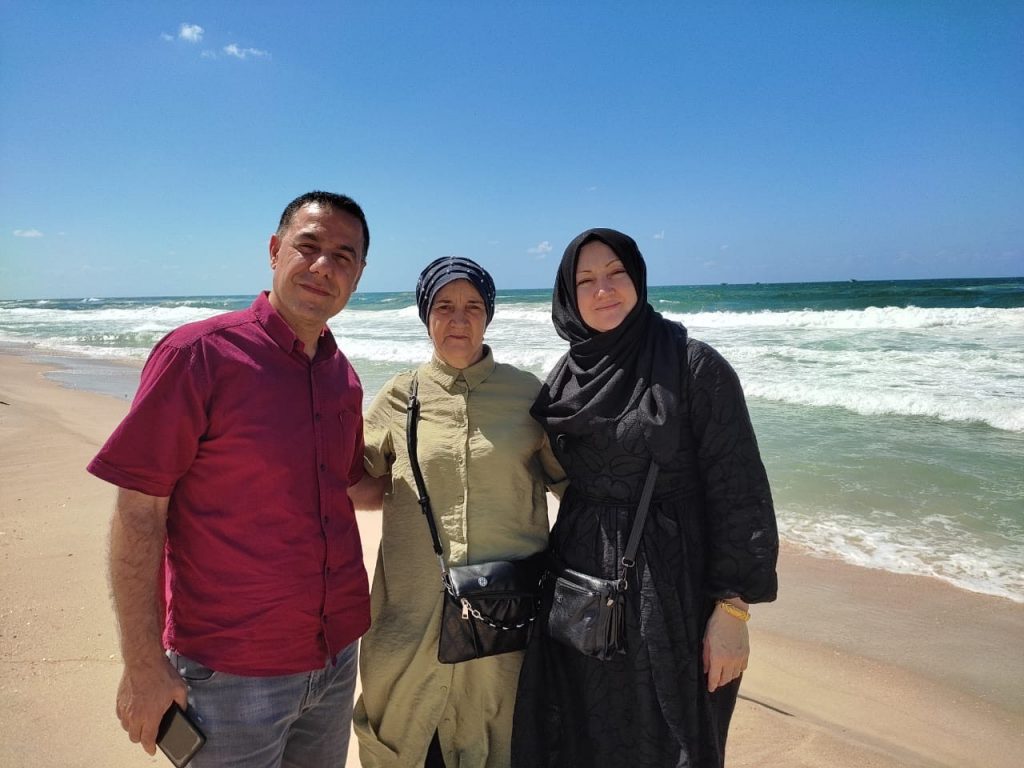
After her husband’s abduction, Albina Abu Safiya and most of her children left Gaza for Kazakhstan. “I left Gaza crying bitterly because the doctor was not with me, but I was forced to travel to protect my remaining family. I lost Ibrahim and left Elias, his son, and his wife because they were unable to travel because they did not have Kazakh passports,” she said.
She continues to hope for his release—but notes Israeli authorities have reneged on their word before. “During the ceasefire last November, there was great hope that Dr. Hussam would be released. The army repeatedly spoke through its media about his release as part of successive prisoner exchange deals, but the army let us down, just as it did the first time it arrested him,” Albina told BreakThrough.
Dr. Abu Safiya’s lawyer has drawn attention to his alleged mistreatment in Israeli custody, and international organizations, including Amnesty International, have called for his release. Denied a lawyer until February 11, more than six weeks since his detainment began, an Israeli court sentenced Dr. Abu Safiya to six months in prison on March 25. He is expected to be released at the end of this month.
“Dr. Hussam deserved huge international support because he sacrificed his life in his humanitarian work inside the hospital and he had no clear charges against him,” Albina added. “He was doing his job monitoring the condition of patients under very difficult conditions in the north, and now he is being treated inhumanely in prison. The lawyer told us about his condition and that he has been infected with scabies, which is a tragic matter that indicates the lack of health care and hygiene. I await the end of his prison term every moment and I hope he gets out alive.”
About a month after the war resumed in March, an Israeli court sentenced [Dr. Abu Safiya] to six months in prison. We are waiting for that term to end and for us to get out of there safely.
Elias, the firstborn son of the Abu Safiya family, was unable to travel to Kazakhstan because he lacked a passport. Nevertheless, he has continued to fight for his father’s release, while awaiting assistance from the government of Kazakhstan in evacuating his own family. “I worked hard to spread my father’s story to the world because he was doing humanitarian work and did not deserve to be arrested and tortured,” he told BreakThrough.
“I contacted all international media outlets and human rights organizations on his behalf. Unfortunately, the Israeli army deceived us three times during the ceasefire, claiming that my father would be released. However, about a month after the war resumed in March, an Israeli court sentenced him to six months in prison. We are waiting for that term to end and for us to get out of there safely.”
Elias is also concerned for his father’s health. “Everyone knows about my father’s health condition; he is receiving no care or attention. The news we receive from the lawyer increases our concern for his condition, and we pray that these days will pass without his health deteriorating. The scabies that has spread throughout his body is frightening and worries us greatly about his health.”
He added, “My family was forced to travel due to the complete lack of security. The army talked about occupying Gaza City, so they were evacuated a month ago. We have promises from the Palestinian embassy that my father will be evacuated after his release from prison outside Gaza. We told the lawyers that we want to get my father out of the Israeli prison and out of Gaza. I am striving to save my father from this injustice.”
As for himself and his own children, Elias is looking for a way to leave Gaza. “Life has ceased in Gaza. There are no hospitals, schools, or homes. Therefore, there is no life there at the moment. I am trying to travel to my mother with my child and wife, but the procedures are still ongoing. I hope that by the time they are completed, my father will be free. Everyone is waiting for him to be released from prison. A doctor who served the sick and injured in difficult wartime conditions is arrested and treated cruelly. This is inhumane. I hope he will soon receive the freedom he deserves. We are waiting for him.”